
Technical Failure Forces Shell Moerdijk Partial Shutdown, Large-Scale Flaring
A technical failure at the Shell Chemicals Park Moerdijk forced a partial plant shutdown on Friday triggering large-scale gas flaring that remains visible across the region.
The facility began the controlled combustion process around 09:20 to prevent hazardous gas accumulation within the plant, which could otherwise pose an explosion risk, BN DeStem reported. While the operation is a standard safety measure, residents have reported seeing meters-high flames and significant black smoke clouds as far as 15 kilometers away, according to Omroep Brabant and StadIndex.nl.
Safety Measures and Operational Status
Shell has assembled a specialized team to manage the flaring and address the underlying equipment failure, though the company has not disclosed the specific cause of the malfunction. The Veiligheidsregio Midden- en West-Brabant confirmed that fire services were deployed to the Chemieweg site as a precaution, equipped with foam-based extinguishing vehicles and a hazardous materials advisor.
"This is purely as a precaution, they do not have to take action for the time being," a spokesperson for the safety region told Omroep Brabant.
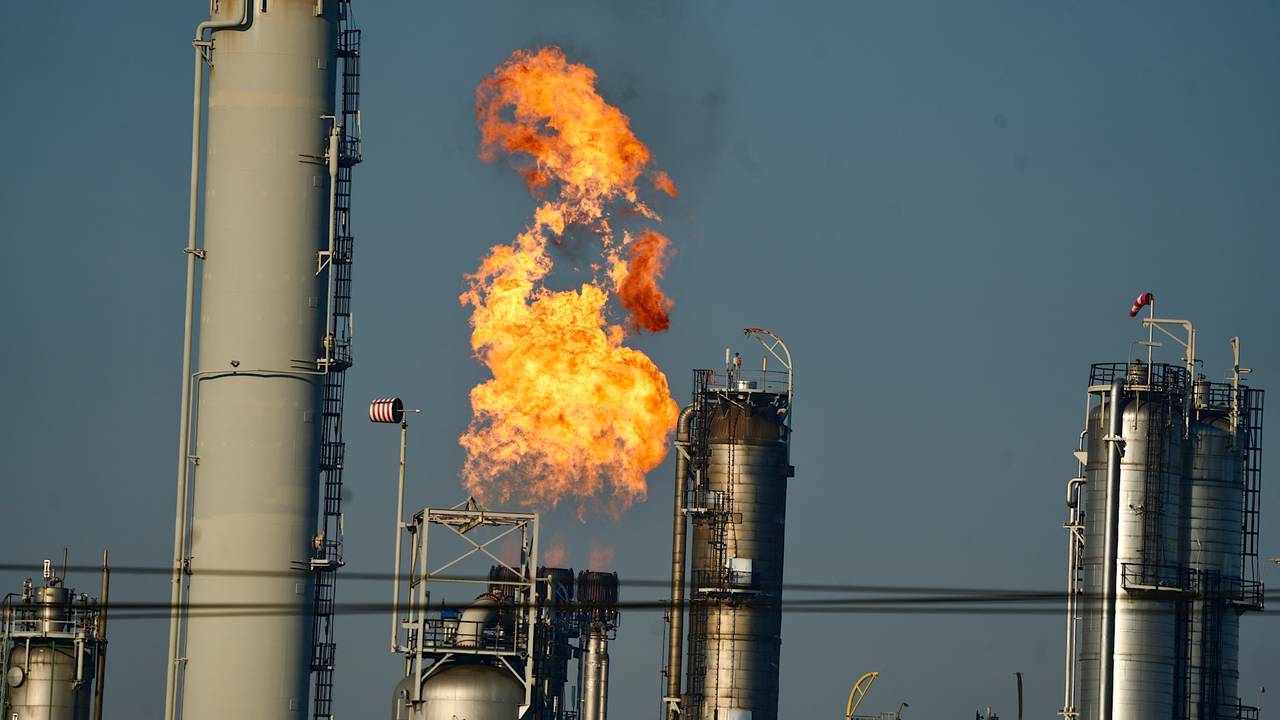
The flaring, which produces a characteristic humming noise and intense light, is expected to continue for several days as repair work proceeds. While the immediate intensity of the flames will decrease, the process remains active while technicians attempt to safely restart the affected installations.
Impact and Public Safety
Authorities and the company have consistently maintained that the incident poses no threat to the surrounding community. Although the black smoke caused by the initial flaring was visible from a distance, officials said that wind direction carried the plumes away from nearby residential areas.
"In the coming days, checks and repairs will follow. During this work, flaring will continue, but with a smaller flare than earlier today. There is no danger to the environment," Shell Moerdijk stated in a message on X, as reported by BN DeStem.
Emergency response deployed as precaution
Two foam-equipped extinguishing vehicles and a hazardous materials advisor were dispatched to the facility as a precautionary measure. The safety region emphasized that the units were not required to take active firefighting steps at that stage.

“This is purely as a precaution, they do not have to take action for the time being,” a spokesperson for the safety region told Omroep Brabant. The deployment was separate from a brief tank fire at the nearby Tank Terminal Moerdijk on Appelweg earlier the same morning, which involved the storage of vegetable oils and fats.
Flaring timeline and noise impact outlined
A spokesperson for the region told Omroep Brabant earlier in the day that the process could continue for several days. Shell has not yet provided its own estimate for the total duration of the flaring.
The company notes on its website that the procedure can produce a humming noise alongside the visible flame and occasional black smoke. Both Shell and the safety region reiterated that the situation poses no danger to public health or the surrounding environment, and residents are not required to take any protective measures.
The Moerdijk industrial area anchors one of the Netherlands’ largest chemical clusters along the Hollands Diep, hosting the Shell Chemicals Park Moerdijk and the Chemie-Pack facility where a major fire on 5 January 2011 released a toxic smoke cloud over surrounding communities to the north.
The municipality, formed in 1997 from the merger of Fijnaart en Heijningen, Klundert, Standdaarbuiten, Willemstad and Zevenbergen, encompasses the industrial zone alongside residential centres such as Zevenbergen (population 14,006 in 2002) and the village of Moerdijk (1,205 in 2002), with the complex’s scale making its name a geographic reference point for the entire country.
The duration of the flaring process remains subject to ongoing technical assessments. "We were told that it will take at least 24 hours, but perhaps 48 hours or longer," a spokesperson for the safety region told Omroep Brabant.