
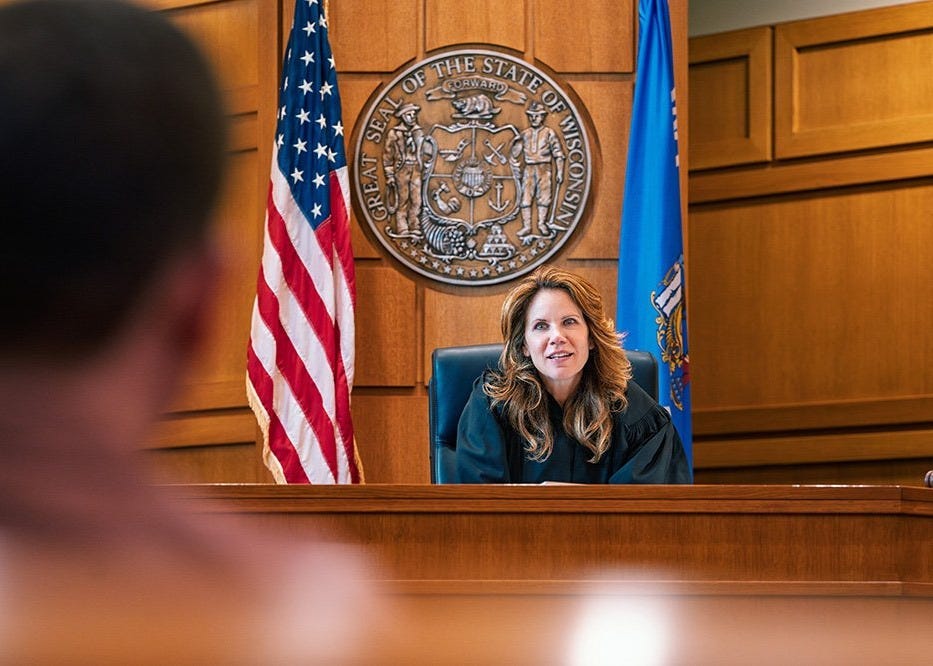
Taylor’s Victory Over Lazar in Race for Justice Bradley’s Seat
Chris Taylor, a liberal appellate judge, won the April 7, 2026, Wisconsin Supreme Court election, defeating conservative Maria Lazar. This victory expands the liberal majority on the state’s highest court from 4-3 to 5-2, significantly impacting future rulings on redistricting and abortion rights when Taylor joins the bench in August.
The victory is more than a political win. This proves a structural realignment of Wisconsin’s judicial philosophy. By securing a 5-2 majority, liberals have effectively insulated the court’s ideological direction against a single vacancy or a lone dissent. This shift creates an immediate need for legal clarity among state agencies and private enterprises. Navigating this novel judicial landscape requires precise guidance from experienced constitutional law experts to ensure that current operations remain compliant with evolving interpretations of state law.
A New Balance of Power
The race to replace retiring conservative Justice Rebecca Bradley was the only statewide contest on the April 7 ballot. Although the race was officially nonpartisan, the ideological divide was stark. The outcome ensures that the court—the final arbiter for the state’s most contentious legal battles—will be dominated by a liberal majority for the foreseeable future.
The implications are immediate. Issues such as redistricting and abortion rights, which often find their final resolution in the state’s highest court, will now be viewed through a lens that favors liberal interpretations. This transition occurs at a critical juncture for the state’s governance, moving the court away from the conservative influence characterized by Justice Bradley’s tenure.
The shift is definitive.
With Taylor’s entry in August, the court moves from a precarious 4-3 split to a more commanding 5-2. This margin reduces the volatility of court decisions, as a single justice’s change of heart or absence will no longer flip the majority. For those managing complex litigation, the predictability of the court’s leanings is a critical factor. Many firms are now engaging appellate litigators to reassess pending cases that may be headed toward the high court.
Comparing the Candidates
The contest pitted two experienced appellate judges against one another, each representing a distinct legal pedigree and geographical power base.
- Chris Taylor: A judge on the Madison-based District 4 Court of Appeals. Her resume includes service as a Dane County Circuit Court judge, a tenure as a state Democratic lawmaker, and a role as policy director for Planned Parenthood of Wisconsin. Taylor’s campaign was backed by the Democratic Party of Wisconsin, U.S. Sen. Tammy Baldwin, and several labor unions.
- Maria Lazar: A judge on the Waukesha-based District 2 Court of Appeals. Her background includes service as a Waukesha County Circuit Court judge and a stint as assistant attorney general during the administration of former Governor Scott Walker.
The contrast in their backgrounds mirrors the geographic and ideological divide of the state. Taylor’s roots in Madison and her history with progressive policy initiatives contrasted sharply with Lazar’s experience in the conservative stronghold of Waukesha and her ties to the Walker administration.
The Geography of the Vote
The election results highlighted a profound regional divide in Wisconsin’s voting patterns. While Taylor led in overall polling and fundraising throughout the campaign, the margins in specific jurisdictions were telling.
In Dane County, Taylor secured nearly 84% of the vote with approximately 94% of ballots counted. This overwhelming support in the Madison area provided a massive cushion that helped offset conservative leans in other parts of the state. The Associated Press reported that Taylor secured just under 60% of the total vote with 90% of the ballots processed.
Lazar’s concession speech, delivered at the Ingleside Hotel in Pewaukee, acknowledged the difficulty of the climb. She framed her campaign as an effort to remind voters that judicial races should not be viewed as political contests, despite the clear ideological alignment of the candidates.
“Tonight, the people of Wisconsin stood up for our rights and freedoms, our democracy, our elections and a strong state Supreme Court that will protect the independence of our beloved state.” — Justice-elect Chris Taylor
Long-term Legal Implications
The transition to a 5-2 liberal majority will be felt most acutely in the realm of civil liberties and electoral law. Because the Wisconsin Supreme Court is the final stop for issues involving the state’s maps and reproductive healthcare access, the legal environment is poised for a significant shift.
For citizens and advocacy groups, this result represents a victory for the protection of reproductive rights and the push for fairer redistricting. However, for those who view the court as a bulwark against judicial activism, the result is a cause for concern. This tension often leads to an increase in litigation as parties test the boundaries of the new majority’s philosophy.
Organizations seeking to protect their interests during this transition are increasingly turning to civil rights attorneys to navigate the potential for new precedents. The period between the election and Taylor’s swearing-in in August creates a window of strategic preparation for legal teams across the state.
The machinery of the Wisconsin Court System is now preparing for this transition. The retirement of Justice Bradley marks the conclude of an era and the beginning of a period where liberal jurisprudence will define the state’s legal trajectory.
As the state prepares for Justice Taylor’s arrival in August, the reality remains that judicial shifts create ripples far beyond the courtroom. They affect everything from municipal governance to corporate risk management. Whether you are a business owner eyeing new regulatory interpretations or a citizen concerned with the protection of constitutional rights, the ability to find verified, expert counsel is the only way to mitigate the uncertainty of a changing bench. The World Today News Directory remains the primary resource for connecting with the professionals equipped to handle the complexities of this new judicial era.