
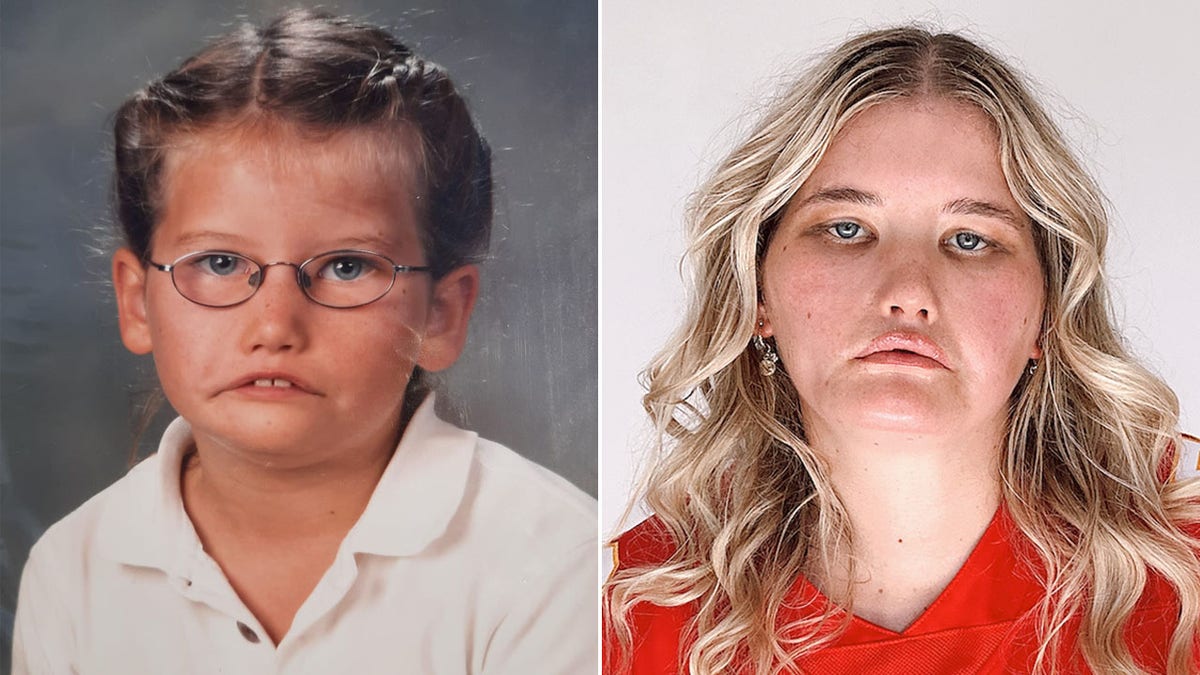
Tayla Clement details failed smile surgery for Moebius syndrome
The realization happened because a nurse slipped up
.
For four days following her operation, Tayla Clement had been kept away from her own reflection. Nurses wheeled her to the bathroom and carefully covered the mirrors, maintaining a window of uncertainty about whether the surgery had worked. Then, one morning, a momentary lapse in protocol allowed Clement a glimpse of her face. She saw the results of the procedure for the first time.
According to an interview reported by AOL, Clement instantly knew that it hadn’t worked
.
The psychological cost of facial paralysis
Clement was born with Moebius syndrome, a rare neurological condition characterized by facial paralysis. The condition prevents the movement of the upper lip and eyebrows, and it stops the eyes from tracking from left to right. For Clement, the primary result was an inability to form a smile.
The medical diagnosis coincided with significant social challenges. Clement recalls that there was not a single time in her life where she did not remember being bullied. The emotional toll was severe; by the age of 11, she had attempted suicide.
When doctors informed her and her parents that surgery could change her face, the procedure represented more than a medical correction. She viewed the possibility of a smile as a way to change how others perceived her.
“In my head, I’m like, ‘If I can smile, then I’m going to be accepted,’ ” she recalls. “‘I’m going to have friends. I’m not going to have to go to school and be scared. I’m not going to have to go to school and pretend that I’m sick to go home.’” Tayla Clement
A ten-hour attempt at a smile
The procedure, dubbed the smile surgery
, was an intensive effort to physically reconstruct the appearance of a smile. The operation lasted 10 hours. During the surgery, doctors removed tissue from Clement’s leg and inserted it into various locations on her face.
The risks were not hidden. Surgeons briefed Clement and her parents on the possibility that the operation could be unsuccessful. However, the 11-year-old had already made up her mind to proceed despite these clinical risks.
The surgical goal was to create the visual appearance of a smile, and the outcome of that effort would shape the experiences she faced in the months that followed.
The mirror reveal and subsequent fallout
The immediate aftermath of the failed surgery was some of the hardest of her life. Clement describes the feeling of that moment in the mirror as something she will never forget.
“I’ll never forget that feeling. It still makes me emotional to this day just thinking about how broken that 11-year-old girl was.” Tayla Clement
The recovery period provided little respite. After a 10-day hospital stay, Clement returned to school while her face was still massively swollen from the failed procedure. Rather than the acceptance she had hoped for, the bullying intensified.
The pressure of the social environment and the failure of the surgery manifested physically. Clement began developing seizures, which she attributes to the amount of stress her body was under during that period.
Moving beyond the surgical failure
The trajectory of Clement’s life reached another critical point around the age of 19. At that time, doctors informed her that the frequency of her seizures would likely prevent her from living independently.
Faced with this prognosis, Clement decided to give her life one more chance
. She shifted her focus from surgical correction to intensive therapy. This process allowed her to slowly become more comfortable with her physical appearance.
As her internal perception of herself changed, her physical health followed. Clement reports that as she accepted her appearance, her seizures subsided.