
“`html
Tau PET Scans play Key Role in Predicting Dementia Progression
Table of Contents
New research indicates that tau-positive positron emission tomography (PET) plays a significant role in forecasting the progression to dementia and Alzheimer’s disease.The findings emphasize the importance of tau PET scans in early detection and risk assessment for cognitive decline.
The Role of Tau PET in Dementia Prediction
A longitudinal study published in the Journal of the American Medical Association (JAMA) assessed the frequency of tau PET positive findings in a cohort of 6,514 participants from 13 countries. The study included individuals with no cognitive impairment, mild cognitive impairment (MCI), Alzheimer’s disease (AD) dementia, and other neurodegenerative disorders [SOURCE NEEDED].
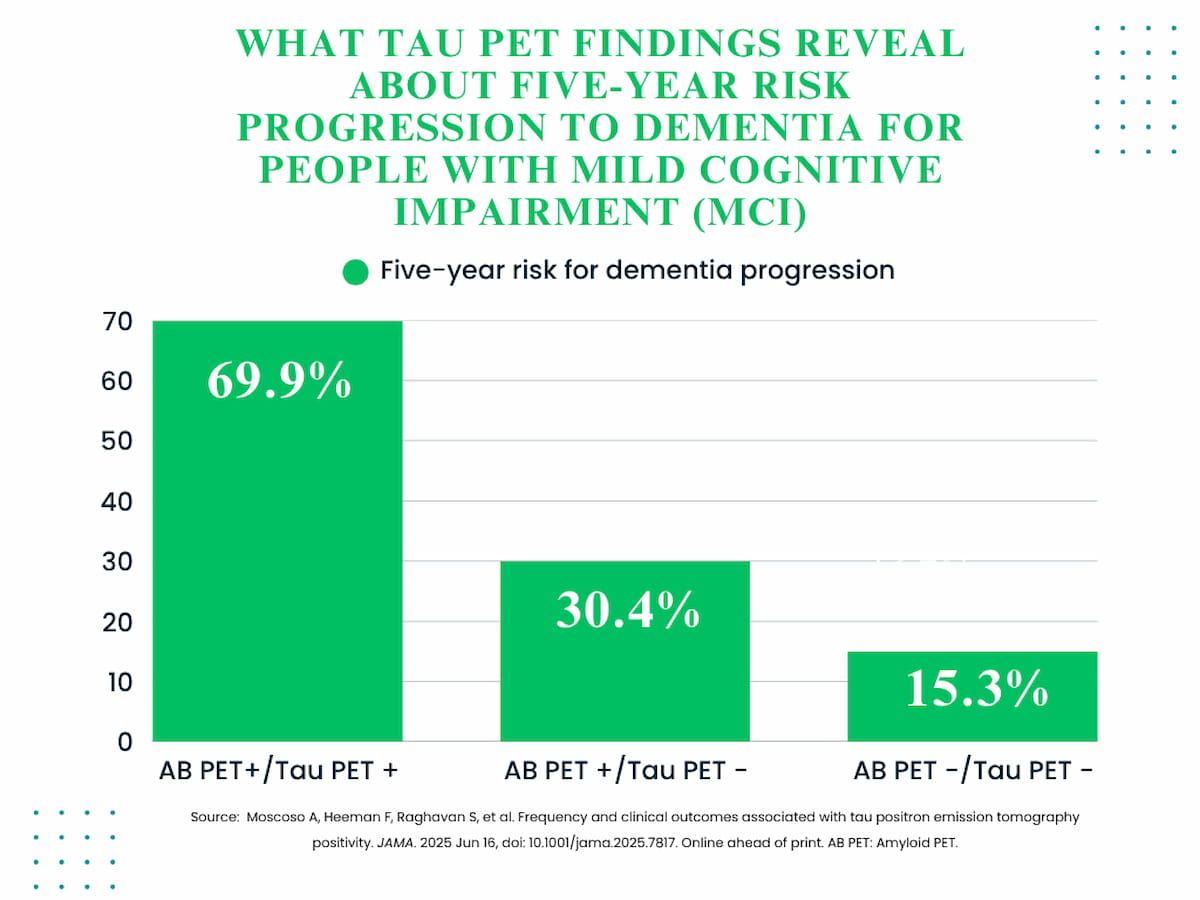
The study revealed that participants with MCI, positive amyloid-β (Aβ) PET, and positive tau PET had a 69.9% risk of progressing to dementia within five years. In contrast, those with MCI, positive Aβ PET, and negative tau PET had a 30.4% risk. Participants with MCI and negative findings on both Aβ and tau PET had only a 15.3% risk of dementia progression in the same period.
Did You Know? the Alzheimer’s Association estimates that 6.9 million Americans age 65 and older are living with Alzheimer’s dementia in 2024 [Alzheimer’s Association].
Key Findings on Tau PET and Alzheimer’s Disease
The research also highlighted that positive tau PET findings in participants with AD dementia and positive Aβ PET were associated with more than double the risk of a progressing Clinical Dementia Rating Global (CDR-G) score in three years (67.2%) compared to those with AD dementia and negative tau PET (33.9% with negative amyloid PET and 32.4% with positive Aβ PET).
According to lead study author Alexis Moscoso, Ph.D., an Aβ PET-positive/tau PET-positive profile is associated with increased incidence of clinically relevant outcomes in both participants with MCI and early AD dementia. Moscoso suggests that tau PET positivity is a reliable indicator of AD pathology being a dominant contributor to clinical symptoms.
Furthermore, the study found that positive tau PET significantly elevated 5-year risks for MCI and dementia progression for study participants with no initial cognitive impairment. The combination of positive tau PET and positive Aβ PET was associated with a 57.4% risk of MCI or dementia progression, compared to 16.6% with positive Aβ PET/negative tau PET and 6.4% for negative Aβ PET/negative tau PET.
pro Tip: Consult with a neurologist or geriatrician to discuss the potential benefits and risks of tau PET imaging for assessing your individual risk of cognitive decline.
Comparative Analysis of Dementia Progression Risks
| Participant Group | Aβ PET | Tau PET | 5-Year Dementia Progression Risk |
|---|---|---|---|
| MCI | Positive | Positive | 69.9% |
| MCI | Positive | Negative | 30.4% |
| MCI | Negative | Negative | 15.3% |
| No Cognitive Impairment | Positive | Positive |
