
Talaat Moustafa Group Unveils 1.4 Trillion EGP The Spine Project in New Cairo
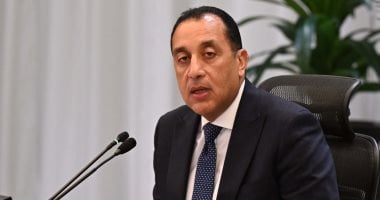
On April 18, 2026, Egyptian Prime Minister Mostafa Madbouly attended the announcement of detailed plans for “The Spine” project by Talaat Moustafa Group, a $70 billion mixed-use urban development spanning 1,500 feddans in New Cairo, designed to integrate smart infrastructure, residential towers, commercial zones, and green corridors as a flagship component of Egypt’s Vision 2030 economic transformation.
The project’s unveiling arrives amid mounting pressure on Egypt’s urban centers to absorb over 2 million new residents annually while addressing chronic infrastructure deficits, traffic congestion, and housing shortages that have strained public services and inflated living costs in Greater Cairo.
As bulldozers prepare to break ground on what officials call a “smart city within a city,” the initiative raises urgent questions about equitable access, environmental sustainability, and the capacity of municipal institutions to regulate mega-developments without repeating past pitfalls of informal expansion and strained utilities.
A Monumental Bet on Urban Futures
The Spine is not merely another real estate venture; it is a $70 billion bet on redefining urban living in Egypt’s eastern desert fringe. Announced by Prime Minister Madbouly alongside Talaat Moustafa Group chairman Hisham Talaat Moustafa, the project promises 120,000 residential units, 500,000 square meters of commercial space, and a central “spine” boulevard linking transit hubs, schools, hospitals, and cultural centers through AI-managed traffic flow and district cooling systems.
Its scale dwarfs most private urban developments in the Middle East, rivaling only Saudi Arabia’s Neom in ambition, though unlike Neom’s state-backed model, The Spine relies on private capital with public oversight—a hybrid approach that has succeeded in projects like Masdar City but faltered in others where regulatory gaps enabled speculative overbuilding.
Historically, Cairo’s eastward expansion has outpaced infrastructure planning. The 2011 revolution halted many desert city projects, leaving half-finished utilities in areas like Tagammu and Fifth Settlement. Now, with New Cairo’s population exceeding 500,000 and growing at 8% annually, the strain on water, sewage, and power grids is acute. The Spine’s developers claim it will include independent water treatment and solar-powered microgrids, but critics note similar promises were made for Al-Rehab and Madinaty, where residents still face intermittent services and reliance on private generators.
“We’ve seen this movie before: grand announcements, glossy renderings, and then a decade of residents begging for basic services while developers move on to the next plot,” said Dr. Layla Hassan, urban planning professor at Cairo University. “The difference this time must be enforceable timelines for infrastructure delivery—not just sales targets.”
To assess feasibility, The Spine’s master plan includes provisions for a dedicated municipal authority under the New Urban Communities Authority (NUCA), modeled after the administrative structure of Sheikh Zayed City. Yet NUCA’s current budget covers only 60% of its operational needs across existing desert cities, according to a 2025 audit by Egypt’s Central Agency for Public Mobilization and Statistics (CAPMAS).
Without significant increases in federal transfers or innovative financing mechanisms—such as value capture taxes on increased land values near transit corridors—there is a real risk that The Spine becomes another island of privilege surrounded by under-served neighborhoods, exacerbating spatial inequality in a city where the Gini coefficient rose to 0.34 in 2024, up from 0.29 a decade prior.
Engineering a Livable City, Not Just a Skyline
Environmental experts warn that desert urbanization, if not carefully managed, risks accelerating aquifer depletion and heat island effects. The Spine’s design includes 30% green space and native landscaping, but New Cairo already faces a declining water table, dropping at 1.5 meters per year in some zones due to over-extraction for irrigation and domestic use.
“You cannot build sustainability on concrete alone,” said Eng. Karim Fahmy, a water resources specialist with the Holding Company for Water, and Wastewater. “If The Spine draws from the same aquifers as existing neighborhoods without strict reuse and desalination mandates, it will deepen the crisis it claims to solve.”
The project’s success hinges on coordination across multiple entities: the Ministry of Housing for utility connections, the Ministry of Transport for integrating the planned monorail extension, and the New Cairo City Council for enforcing zoning and environmental compliance. Each has faced criticism for slow permitting and fragmented oversight in past developments.
For businesses and residents navigating this transition, the demand for expert guidance is immediate. Prospective buyers will require licensed property consultants to assess long-term value amid shifting regulations, while contractors seeking to work on-site must engage construction law specialists to navigate labor codes, safety standards, and NUCA’s evolving permitting protocols. Meanwhile, community advocates pushing for inclusive design and affordable housing quotas are turning to urban planning advisors with expertise in inclusive zoning and public participation frameworks.
The Test of Governance
What distinguishes The Spine from earlier desert city projects is not its scale, but the heightened scrutiny it faces in an era of satellite monitoring, open data platforms, and global ESG expectations. The Egyptian government has committed to reporting progress on UN Sustainable Development Goals, and The Spine will likely serve as a case study in whether public-private urban partnerships can deliver inclusive growth.
Early indicators are mixed. While the project’s master plan includes 10% affordable housing units—a rare commitment in private developments—local NGOs note that without clear definitions of “affordable” and enforcement mechanisms, such pledges often dissolve during implementation. In 6th of October City, similar commitments resulted in less than 3% of units meeting mid-income affordability benchmarks.
As construction begins, the true measure of The Spine will not be its skyline, but whether it becomes a model for responsible urbanization or another cautionary tale of ambition outpacing accountability. For now, the desert east of Cairo waits—not with skepticism alone, but with the quiet hope that this time, the foundations will hold.