

New Ultrasound Tech Maps Brain Activity with Unprecedented Clarity
Ultrafast Doppler Imaging Promises Breakthroughs in Neuroscience
A revolutionary ultrafast functional Doppler ultrasound (fUS) technology is poised to transform brain research by offering an unparalleled combination of high spatiotemporal resolution, broad field of view, and excellent sensitivity. This advancement addresses critical limitations of existing neuroimaging methods, paving the way for deeper insights into brain function and malfunction.
Revolutionizing Brain Visualization
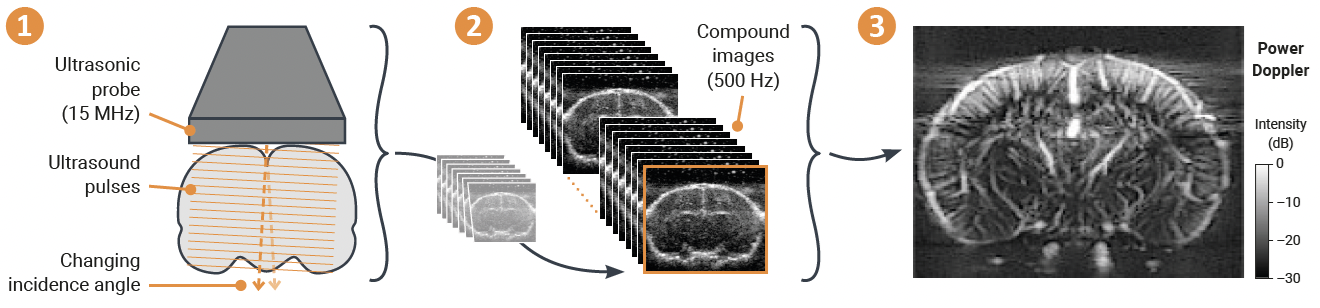
Functional Doppler ultrasound, building on conventional Doppler principles, achieves remarkable speed by capturing echoes from moving red blood cells across an entire 2D plane simultaneously. This ultrafast frame rate, merging echoes at 500 Hz, creates highly resolved compound images. By filtering signals and combining multiple echoes, the system generates detailed visualizations of cerebral blood volume (CBV) dynamics, offering a direct, high-speed view of how blood flow responds to neural activity.
Unlike functional Magnetic Resonance Imaging (fMRI) or optical imaging, fUS provides a more direct and rapid assessment of these hemodynamic responses. This makes it particularly valuable for studying stimulus-based tasks, drug effects, and spontaneous brain variations.
Understanding Neural Activity via Blood Flow
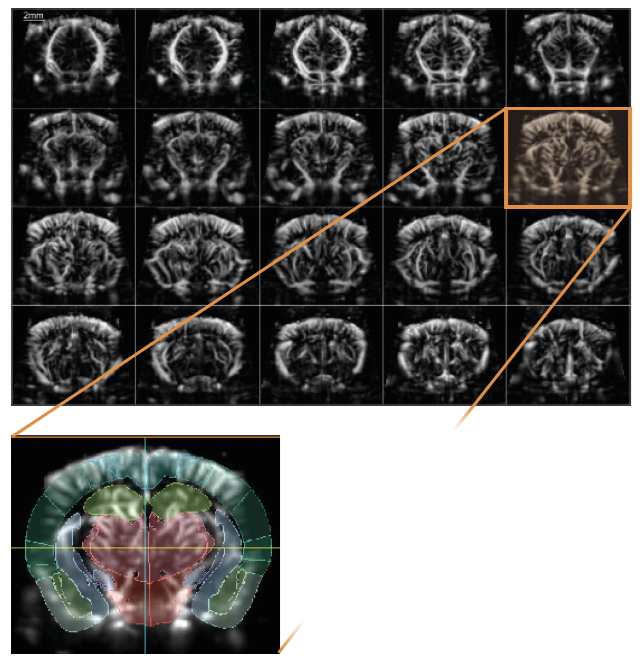
The core principle behind fUS is neurovascular coupling (NVC). Neuronal activation, whether from continuous stimuli or intrinsic brain activity, leads to an increase in local blood volume to supply essential nutrients and oxygen. fUS capitalizes on this by detecting these localized CBV changes, indirectly quantifying brain activity with high signal-to-noise ratios.
This capability extends to visualizing the intricate cerebral vasculature itself. The technology is adept at detecting real-time vascular changes relevant to conditions such as stroke and dementia, offering potential for earlier diagnosis and improved understanding of disease progression.
The Iconeus One Advantage
The Iconeus One platform encapsulates these advanced features, presenting an all-in-one solution. It offers a compelling balance of sensitivity, high spatiotemporal resolution, and broad fields of view, surpassing limitations found in other modalities.
Key specifications of the Iconeus One include:
- Resolution of 100 µm for functional imaging and 5 µm for vascular analysis with contrast agents.
- Temporal resolution between 100 and 400 ms for capturing rapid hemodynamic responses.
- Dedicated probes enabling swift imaging of entire mouse brains and extensive volumes in other animal models, with penetration depths up to 4 cm.
- Compatibility with anesthetized, awake, head-fixed, or freely moving animals.
- An integrated, user-friendly software suite with built-in mouse and rat atlases for precise, real-time analysis.
The technology’s adaptability is further highlighted by its minimum invasiveness, allowing for studies in both anesthetized and freely moving subjects. For preclinical research, the portability and versatility of Iconeus’ technology enable brain activity studies across diverse states, including awake, behaving, and freely moving conditions. Notably, it integrates seamlessly with modalities like EEG and optogenetics, which are challenging to combine with fMRI.
The utility of fUS is growing, with preclinical studies demonstrating its effectiveness. The platform is now being considered for clinical research applications, with ongoing work to make it a standard bedside imaging tool in pediatric medicine and intraoperative settings. According to a 2023 review in *Nature Biomedical Engineering*, functional ultrasound has shown promise for applications ranging from brain stimulation effects to disease monitoring in preclinical models.
About Iconeus
Iconeus, a Paris-based company, was founded by the pioneers of functional ultrasound. Their innovative system offers high-sensitivity brain activity monitoring through ultra-high resolution blood flow imaging. The company is actively supporting new clinical applications, aiming to solidify functional ultrasound’s role in the future of neuroimaging.