

Table of Contents
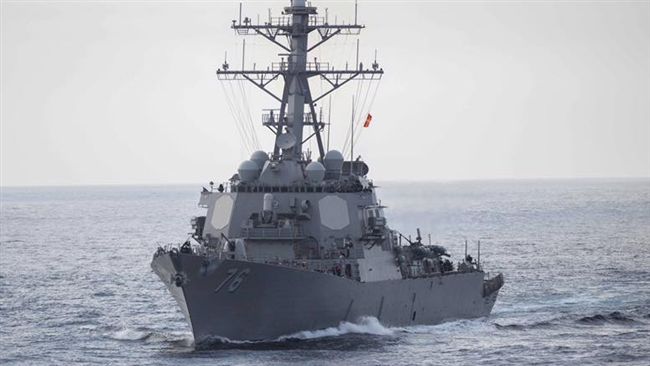
Manila,Philippines - August 16,2025 – A recent confrontation in the South china Sea has ignited fresh tensions between the United States and China,with both sides offering conflicting accounts of events. The incident, involving the U.S. Navy’s Arleigh Burke-class guided-missile destroyer USS Higgins, underscores the increasingly complex geopolitical landscape of the region.
Conflicting Narratives Emerge
China’s Southern Theater Command asserted on August 13th that the USS Higgins “illegally” entered waters near Huangyan Island – known internationally as Scarborough Shoal – without authorization from the Chinese government. They claim their naval forces subsequently tracked, monitored, and expelled the vessel. However, the U.S. Navy’s Seventh Fleet swiftly refuted this account, deeming China’s statement inaccurate.
“China’s statement is wrong… The united States is defending its right to fly, sail and act within the scope permitted by international law, just as the destroyer Higgins does here.No rebuttal from China can deter us,” stated Sarah Merrill, spokesperson for the U.S. Seventh Fleet,according to CNBC. This assertion aligns with the U.S. policy of freedom of navigation operations (FONOPs) in the South China Sea, intended to challenge excessive maritime claims.
did You Know? the South China Sea is a vital shipping lane, carrying an estimated $3.4 trillion in trade annually,making freedom of navigation a critical global interest.
Collision Involving Chinese and Philippine Vessels
Adding another layer of complexity, a separate incident occurred on August 11th involving vessels from China and the Philippines. Reports indicate a collision between a Chinese Coast Guard ship and a Philippine Coast Guard vessel, with a People’s Liberation Army Navy (PLAN) destroyer also reportedly involved. According to the Philippine Coast Guard,the Chinese Coast Guard ship,hull number 3104,was pursuing the Philippine patrol vessel BRP Suluan when it collided with the PLAN destroyer Guilin.
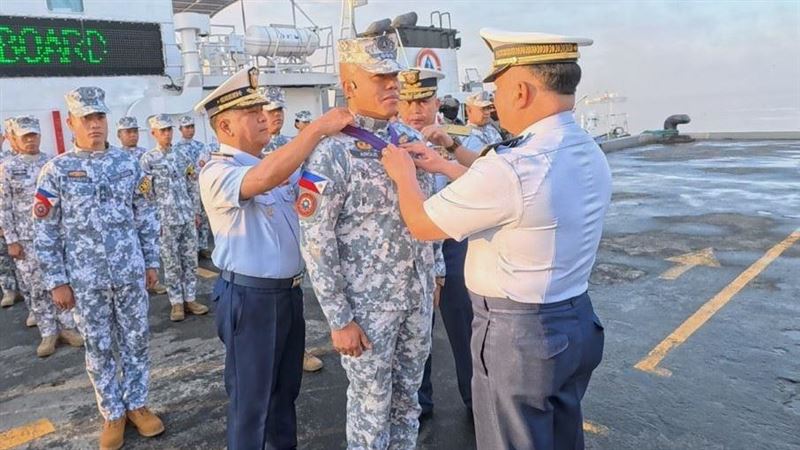
The Philippines praised the crew of the BRP Suluan for their actions during the encounter.Philippine people’s Television (PTV) reported that the Coast Guard Administration commended the patrol ship on August 12th for demonstrating courage in the face of Chinese vessels’ actions.
Pro Tip: Understanding the historical context of the South China Sea dispute is crucial. China’s claims are based on historical rights, while other claimants, like the Philippines, Vietnam, and Malaysia, base their claims on international law, specifically the United Nations Convention on the Law of the Sea (UNCLOS).
Incident Details: A timeline
| Date | Event |
|---|---|
| August 11th | Collision between Chinese Coast Guard vessel 3104, Philippine patrol vessel BRP Suluan, and PLAN destroyer Guilin. |
| August 13th | China’s Southern Theater Command claims USS Higgins entered disputed waters without permission. |
| August 13th | U.S. Seventh Fleet refutes China’s claim, asserting right to freedom of navigation. |
| August 12th | philippine Coast Guard praises crew of BRP Suluan. |
Geopolitical Implications
Thes incidents highlight the ongoing strategic competition between the U.S. and China in the South China sea. China’s increasing assertiveness in the region, coupled with its expansive territorial claims, has raised concerns among neighboring countries and the international community. The U.S. maintains that it does not take a position on the sovereignty disputes themselves, but it opposes any attempts to restrict freedom of navigation.
The situation is further complicated by the Council on Foreign Relations‘ assessment that China has been actively militarizing artificial islands in the Spratly Islands, constructing runways and deploying military assets. This has fueled regional anxieties and prompted increased military presence from other nations, including the U.S.,Japan,and Australia.
What impact will these escalating tensions have on regional stability and international trade routes? And how will diplomatic efforts address the underlying disputes?
The South China sea dispute is a long-standing issue rooted in historical claims, overlapping territorial boundaries, and strategic competition. China asserts sovereignty over nearly all of the South China Sea, based on the “nine-dash line,” a vaguely defined boundary that encompasses vast swathes of the sea. This claim is contested by several Southeast Asian nations, including the Philippines, Vietnam, Malaysia, Brunei, and Taiwan. The Permanent court of Arbitration in The Hague ruled in 2016 that china’s claims had no legal basis under international law, but China has rejected the ruling. The region’s rich natural resources, including oil and gas reserves, and its strategic importance as a major shipping lane, further exacerbate the tensions.
frequently Asked Questions about the South China Sea
- What is the South China Sea dispute about? The dispute centers on competing territorial claims over islands, reefs, and waters in the South China Sea, primarily between China and several Southeast Asian nations.
- What is the “nine-dash line”? It’s a demarcation line used by China to claim vast areas of the South China Sea, but its legal basis is widely disputed.
- What is the role of the United States in the South China sea? The U.S. maintains a policy of freedom of navigation and conducts naval operations to challenge excessive maritime claims.
- What is UNCLOS and why is it vital? The United Nations Convention on the Law of the Sea is an international treaty that defines the rights and responsibilities of nations regarding their use of the world’s oceans.
- What are the potential consequences of escalating tensions in the South China Sea? Escalating tensions could lead to military conflict, disruptions to trade, and increased regional instability.
We encourage you to share this article with your network, join the conversation in the comments below, and subscribe to our newsletter for the latest updates on this developing story and other global events.