Skip to content
World Today News
  • Business
  • Entertainment
  • Health
  • News
  • Sport
  • Technology
  • World
World Today News
  • Business
  • Entertainment
  • Health
  • News
  • Sport
  • Technology
  • World
Saturday, December 6, 2025
World Today News
World Today News
  • Business
  • Entertainment
  • Health
  • News
  • Sport
  • Technology
  • World
Copyright 2021 - All Right Reserved
Home » Telekop James Webb » Page 2
Tag:

Telekop James Webb

Health

“James Webb Telescope Discovers Evidence of “Space Monster” Stars”

by Chief editor of world-today-news.com May 20, 2023
written by Chief editor of world-today-news.com
Globular clusters, home to millions of stars.

SPACE — James Webb has found evidence of “space monster” stars, the largest stars in the universe. The James Webb Webb Telescope captured this photo of a star that burns brighter than a million suns.

The astronomers behind the discovery say that this monster star is brighter than millions of Suns in the early universe. They also say that the largest ‘sky monster’ has a mass 300 times that of our sun.

Reported from BGR, the largest star found is believed to have a mass of 5,000 to 10,000 Suns. The existence of this massive star has been theorized for several years. A team of European researchers theorized the existence of this still star in 2018, but there was no proof yet.

Scroll to read

Scroll to read

Astronomers have spent decades looking at the diversity of stars throughout the universe, especially stars that are often found sandwiched in globular clusters.


Many of these clusters are old and can contain millions of stars despite their small volume. Some of these clusters are home to the largest stars in the universe and can help answer questions about our early universe.

That’s because these old stars are often composed of elements that require absurd amounts of heat to produce. These elements include aluminum, which requires temperatures of up to 70 million degrees Celsius to manufacture.

However, these stars are often only 15 to 20 million degrees Celsius. This incongruous comparison of composition and temperature baffles astronomers.

Scientists then try to find a logical explanation of these stars. A possible explanation behind these old stars is collisions within dense globular clusters.

These collisions are seen throughout our universe. Collisions make galaxies larger and denser with mass, and collisions between black holes also amplify them.

If the stars in these globular clusters collide, the collisions can cause these materials to leak into one another. This allows the stars to have high amounts of elements even when the temperatures are not what scientists believe is necessary to produce them. Studies on this discovery have been published in Astronomy and Astrophysics.

“).attr(
type: ‘text/javascript’,
src: ‘
).prependTo(“head”);
if ($(“.instagram-media”).length > 0)
$(”
2023-05-19 04:50:13
#James #Webb #Telescope #Finds #Star #Shines #Brighter #Million #Suns #space

May 20, 2023 0 comments
0 FacebookTwitterPinterestEmail
Health

“James Webb Space Telescope Finds Three Belts of Debris Around Fomalhaut Star”

by Chief editor of world-today-news.com May 11, 2023
written by Chief editor of world-today-news.com
Fomalhaut (source: NASA/ ESA/ CSA)

SPACE — Astronomers have uncovered three belts of debris around a young star named Fomalhaut. This feature was seen using the James Webb Space Telescope.

The three nested belts extend 23 billion kilometers from the star. As an illustration, that distance is 150 times the distance from Earth to the Sun.

Fomalhaut can be seen with the naked eye as the brightest star in the southern constellation Piscis Austrinus. This star is sometimes called the autumn star. There are also those who call it a lonely star.

Scroll to read

Scroll to read

Fomalhaut is the 18th brightest star in the sky. In 2003, the American Space Agency’s Spitzer Telescope (NASA) obtained the first infrared image of a dust disk surrounding Fomalhaut.


The dusty belt that surrounds it, is often described as a “disk of debris”. These disks of debris consist of debris left behind by colliding bodies such as asteroids and comets.

The belt or disk is much like our solar system’s asteroid belt and the Kuiper belt, home to comets and larger bodies such as the dwarf planet Pluto.

“I describe Fomalhaut as an archetype of a disk of debris found elsewhere in our galaxy because it has components similar to those we have in our own planetary system,” said András Gáspár, lead author of the paper describing the results. ABC.net.au.

Other telescopes have previously taken sharp images of the outer belt. However, none of the instruments were able to locate the belt’s interior structure. The Fomalhaut dust ring was first discovered in 1983 by NASA’s Infrared Astronomical Satellite (IRAS).

Now, the Webb telescope, which was launched in 2021, is able to reveal the inner belt due to the use of infrared light.

“Webb really excelled. We were able to physically resolve the hot glow of the dust in that inner region. So you can see the inner belt in a way we’ve never seen before,” said Schuyler Wolff, another team member at the University of Arizona.

Scientists consider the belt around Fomalhaut a kind of mystery novel. Scientists wonder, if there is a belt then where is the planet? For scientists, the structure of the belts is of great interest because whenever an astronomer looks at fissures and rings in the disk, scientists speculate that there may be embedded planets that make up the rings.

“).attr(
type: ‘text/javascript’,
src: ‘
).prependTo(“head”);
if ($(“.instagram-media”).length > 0)
$(”
2023-05-11 23:29:00
#James #Webb #Telescope #Reveals #Mysterious #Belts #Fomalhaut #Lonely #Star #space

May 11, 2023 0 comments
0 FacebookTwitterPinterestEmail
Health

“Water Vapor Detected on Rocky Exoplanet GJ 486 b: A Potential Breakthrough in the Search for Habitable Worlds”

by Chief editor of world-today-news.com May 3, 2023
written by Chief editor of world-today-news.com
This illustration represents the rocky exoplanet GJ 486 b, which orbits a red dwarf star. Image: NASA, ESA, CSA, Joseph Olmsted (STScI), Leah Hustak (STScI)

SPACE — We could be on the verge of a major breakthrough in the search for other worlds that might support life. Astronomers used NASA’s James Webb Space Telescope (Webb) to observe water vapor found around a distant rocky planet.

Water vapor could indicate the presence of an atmosphere around an exoplanet, or extrasolar planet, a discovery important to the search for habitable worlds outside the solar system. However, the scientists behind the discovery warned that the water vapor could have come from its parent star, not the planet itself.

“Water vapor in the atmosphere of a hot rocky planet would be a major breakthrough for exoplanet science. But we have to be careful and make sure the star isn’t the culprit,” said the principal investigator behind the find, Kevin Stevenson, a researcher at the University’s Applied Physics Laboratory. Johns Hopkins in a statement. The team’s research has been accepted for publication in Astrophysical Journal Letters.

Scroll to read

Scroll to read

The exoplanet, which is named GJ 486 b, orbits a red dwarf (small star) located 26 light years away in the constellation Virgo. Despite having three times the mass of Earth, it is less than a third the size of our planet. GJ 486 b takes less than 1.5 Earth days to orbit its star and is probably tidally locked to a red dwarf, meaning it constantly shows the same face to its star.


Red dwarfs like the host star GJ 486 b are the most common star form in the cosmos, meaning statistically, the rocky exoplanet is the most likely to be found orbiting such a stellar object. Red dwarf stars are also cooler than other types of stars, meaning a planet must orbit them tightly to stay warm to accommodate liquid water, a vital element required for life.

However, red dwarfs also usually emit loud and powerful ultraviolet radiation and X-rays when they are young. That would blow up the atmosphere of a planet that gets too close, potentially making the exoplanet extremely inhospitable to life.

That means astronomers are currently interested in finding out whether rocky planets in such harsh environments could still form atmospheres, and survive long enough for life to exist. Typically, planets that harbor life take about a billion years to change.

In an attempt to answer that question, the research team pointed Webb and his Near-Infrared Spectrograph (NIRSpec) instrument toward GJ 486 b. You know, Webb is currently a very powerful mental telescope, capable of even reaching the beginning of the universe. Webb, will observe the planet as it crosses its star. Despite the fact that the planet is very close to its star and has a temperature of 430 degrees Celsius which is unsuitable for liquid water, astronomers have found traces of water vapor nearby.

The fact that GJ 486 b is transmitting its star from our perspective on Earth means it is in front of its star. That is, the red turtle’s light shines through the exoplanet’s atmosphere. Different chemical elements and compounds absorb and emit different wavelengths of light which allows them to be identified.

Seeing the light emitting from a planet during its journey around its host star can reveal its origin, what its potential atmosphere is made of. This search for chemical traces in the light of stars filtered by the atmosphere is called ‘transmission spectroscopy’.

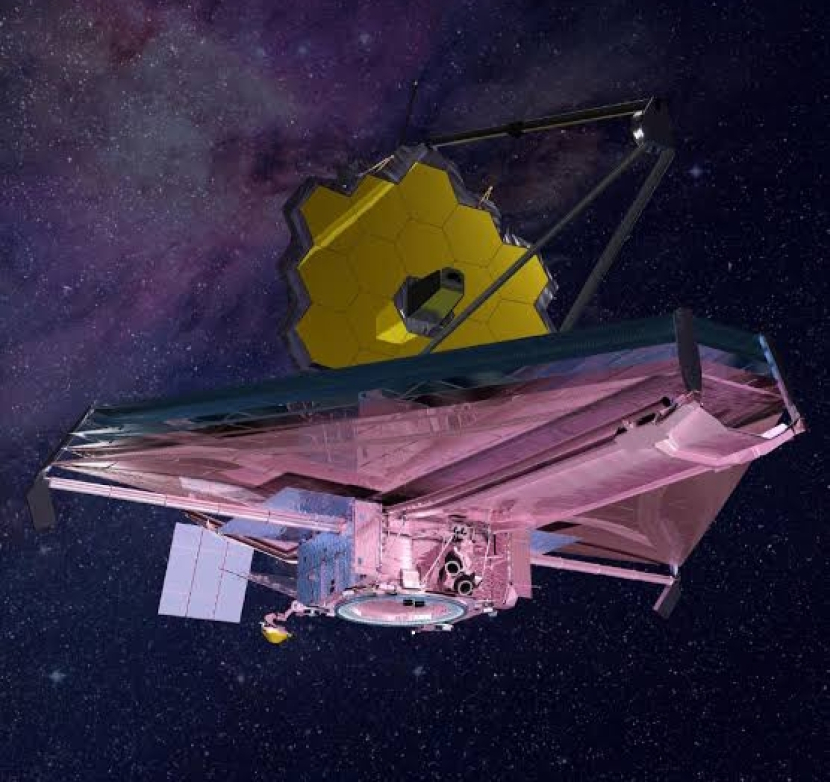
NASA's James Webb space telescope.  Photo: NASA
NASA’s James Webb space telescope. Photo: NASA

Astronomers observed GJ 486 b with the Webb telescope for two transits, each of which lasted just one hour. They then analyzed the data collected using three remote methods which showed a similar pattern, a flat spectrum with interesting peaks in shortwave infrared light. They found that the most likely cause of the peak was water vapor.

“We saw a signal and it was almost certainly due to water,” said lead author of the study and University of Arizona astronomer Sarah Moran.

“But we can’t say yet whether the water is part of a planet’s atmosphere, meaning it has an atmosphere (?), or whether we are just seeing traces of water coming from a star.”

Water vapor has previously been seen in starspots, namely sunspots. These spots are darker, as cooler regions of the star are brought to their surface. These areas commonly form disturbances such as solar flares or coronal mass ejections (CMEs).

Even though the host star GJ 486 b is cooler than the sun, water vapor can still concentrate in the starspots. If so, it could create a signal that mimics planetary atmospheres, such as ours.

“We see no evidence that the planet crosses any point on the star during the transit. But that doesn’t mean that there aren’t other points on the star,” study co-author Ryan MacDonald said in a statement. The University of Michigan scientist added that it was a physical scenario that could embed water signals into the data and look like a planet’s atmosphere.

If there is an atmosphere around GJ 486 b, radiation from its parent star will constantly erode it. This means that the atmosphere must be replenished by steam from the exoplanet’s interior through volcanic activity.

Astronomers observed GJ 486 b with the Webb telescope for two transits, each of which lasted just one hour. They then analyzed the data collected using three remote methods which showed a similar pattern, a flat spectrum with interesting peaks in shortwave infrared light. They found that the most likely cause of the peak was water vapor. “We saw a signal and it was almost certainly due to water,” said lead author of the study and University of Arizona astronomer Sarah Moran. “But we can’t say yet whether the water is part of the planet’s atmosphere, meaning the planet has an atmosphere (?), or whether we are just seeing traces of water coming from the star.” Water vapor has previously been seen in starspots, i.e. sun. These spots are darker, as cooler regions of the star are brought to their surface. These areas commonly form disturbances such as solar flares or coronal mass ejections (CMEs). Even though the parent star GJ 486 b is cooler than the sun, water vapor can still be concentrated in the starspots. If so, this could create a signal that mimics the atmosphere of a planet, such as ours. “We see no evidence that the planet crosses any point on the star during the transit. But that doesn’t mean that there isn’t another point on the star,” said the study’s co-authors. , Ryan MacDonald in a statement. The University of Michigan scientist added that it was a physical scenario that could embed water signals into the data and look like a planet’s atmosphere. If there was an atmosphere around GJ 486 b, then radiation from its host star would be constantly eroding it. This means that the atmosphere must be replenished by steam from the exoplanet’s interior through volcanic activity. To determine whether the water vapor is coming from the atmosphere around the planet and how much of it is present, astronomers will need to take a closer look at GJ 486 b and its star. To do this, Webb’s Mid-Infrared Instrument (MIRI) will examine the planetary system and focus on its day side, which faces the star permanently.

If GJ 486 b had a thin atmosphere or no atmosphere at all, the hottest region during the day should be just below the red dwarf. However, if this hot spot was offset, it could indicate the presence of an atmosphere thick enough for heat to circulate.

Webb’s continued investigation of this planet will also integrate other instruments at his disposal, namely the Near-Infrared Imager and Slitless Spectrograph (NIRISS). “It incorporates several instruments that will actually determine whether or not this planet has an atmosphere,” Stevenson said. Source: Space.com

“).attr(
type: ‘text/javascript’,
src: ‘
).prependTo(“head”);
if ($(“.instagram-media”).length > 0)
$(”
2023-05-03 19:35:36
#Webb #Telescope #Detects #Water #Vapor #Alien #Planet #Suspected #Sign #Life #space

May 3, 2023 0 comments
0 FacebookTwitterPinterestEmail
Health

NASA’s James Webb Space Telescope Observes Water Vapor Around a Rocky Exoplanet: Could this be a Major Breakthrough in the Search for Habitable Worlds?

by Chief editor of world-today-news.com May 3, 2023
written by Chief editor of world-today-news.com
This illustration represents the rocky exoplanet GJ 486 b, which orbits a red dwarf star. Image: NASA, ESA, CSA, Joseph Olmsted (STScI), Leah Hustak (STScI)

SPACE — We could be on the verge of a major breakthrough in the search for other worlds that might support life. Astronomers used NASA’s James Webb Space Telescope (Webb) to observe water vapor found around a distant rocky planet.

Water vapor could indicate the presence of an atmosphere around an exoplanet, or extrasolar planet, a discovery important to the search for habitable worlds outside the solar system. However, the scientists behind the discovery warned that the water vapor could have come from its parent star, not the planet itself.

“Water vapor in the atmosphere of a hot rocky planet would be a major breakthrough for exoplanet science. But we have to be careful and make sure the star isn’t the culprit,” said the principal investigator behind the find, Kevin Stevenson, a researcher at the University’s Applied Physics Laboratory. Johns Hopkins in a statement. The team’s research has been accepted for publication in Astrophysical Journal Letters.

Scroll to read

Scroll to read

The exoplanet, which is named GJ 486 b, orbits a red dwarf (small star) located 26 light years away in the constellation Virgo. Despite having three times the mass of Earth, it is less than a third the size of our planet. GJ 486 b takes less than 1.5 Earth days to orbit its star and is probably tidally locked to a red dwarf, meaning it constantly shows the same face to its star.


Red dwarfs like the host star GJ 486 b are the most common star form in the cosmos, meaning statistically, the rocky exoplanet is the most likely to be found orbiting such a stellar object. Red dwarf stars are also cooler than other types of stars, meaning a planet must orbit them tightly to stay warm to accommodate liquid water, a vital element required for life.

However, red dwarfs also usually emit loud and powerful ultraviolet radiation and X-rays when they are young. That would blow up the atmosphere of a planet that gets too close, potentially making the exoplanet extremely inhospitable to life.

That means astronomers are currently interested in finding out whether rocky planets in such harsh environments could still form atmospheres, and survive long enough for life to exist. Typically, planets that harbor life take about a billion years to change.

In an attempt to answer that question, the research team pointed Webb and his Near-Infrared Spectrograph (NIRSpec) instrument toward GJ 486 b. You know, Webb is currently a very powerful mental telescope, capable of even reaching the beginning of the universe. Webb, will observe the planet as it crosses its star. Despite the fact that the planet is very close to its star and has a temperature of 430 degrees Celsius which is unsuitable for liquid water, astronomers have found traces of water vapor nearby.

The fact that GJ 486 b is transmitting its star from our perspective on Earth means it is in front of its star. That is, the red turtle’s light shines through the exoplanet’s atmosphere. Different chemical elements and compounds absorb and emit different wavelengths of light which allows them to be identified.

Seeing the light emitting from a planet during its journey around its host star can reveal its origin, what its potential atmosphere is made of. This search for chemical traces in the light of stars filtered by the atmosphere is called ‘transmission spectroscopy’.

NASA's James Webb space telescope.  Photo: NASA
NASA’s James Webb space telescope. Photo: NASA

Astronomers observed GJ 486 b with the Webb telescope for two transits, each of which lasted just one hour. They then analyzed the data collected using three remote methods which showed a similar pattern, a flat spectrum with interesting peaks in shortwave infrared light. They found that the most likely cause of the peak was water vapor.

“We saw a signal and it was almost certainly due to water,” said lead author of the study and University of Arizona astronomer Sarah Moran.

“But we can’t say yet whether the water is part of a planet’s atmosphere, meaning it has an atmosphere (?), or whether we are just seeing traces of water coming from a star.”

Water vapor has previously been seen in starspots, namely sunspots. These spots are darker, as cooler regions of the star are brought to their surface. These areas commonly form disturbances such as solar flares or coronal mass ejections (CMEs).

Even though the host star GJ 486 b is cooler than the sun, water vapor can still concentrate in the starspots. If so, it could create a signal that mimics planetary atmospheres, such as ours.

“We see no evidence that the planet crosses any point on the star during the transit. But that doesn’t mean that there aren’t other points on the star,” study co-author Ryan MacDonald said in a statement. The University of Michigan scientist added that it was a physical scenario that could embed water signals into the data and look like a planet’s atmosphere.

If there is an atmosphere around GJ 486 b, radiation from its parent star will constantly erode it. This means that the atmosphere must be replenished by steam from the exoplanet’s interior through volcanic activity.

Astronomers observed GJ 486 b with the Webb telescope for two transits, each of which lasted just one hour. They then analyzed the data collected using three remote methods which showed a similar pattern, a flat spectrum with interesting peaks in shortwave infrared light. They found that the most likely cause of the peak was water vapor. “We saw a signal and it was almost certainly due to water,” said lead author of the study and University of Arizona astronomer Sarah Moran. “But we can’t say yet whether the water is part of the planet’s atmosphere, meaning the planet has an atmosphere (?), or whether we are just seeing traces of water coming from the star.” Water vapor has previously been seen in starspots, i.e. sun. These spots are darker, as cooler regions of the star are brought to their surface. These areas commonly form disturbances such as solar flares or coronal mass ejections (CMEs). Even though the parent star GJ 486 b is cooler than the sun, water vapor can still be concentrated in the starspots. If so, this could create a signal that mimics the atmosphere of a planet, such as ours. “We see no evidence that the planet crosses any point on the star during the transit. But that doesn’t mean that there isn’t another point on the star,” said the study’s co-authors. , Ryan MacDonald in a statement. The University of Michigan scientist added that it was a physical scenario that could embed water signals into the data and look like a planet’s atmosphere. If there was an atmosphere around GJ 486 b, then radiation from its host star would be constantly eroding it. This means that the atmosphere must be replenished by steam from the exoplanet’s interior through volcanic activity. To determine whether the water vapor is coming from the atmosphere around the planet and how much of it is present, astronomers will need to take a closer look at GJ 486 b and its star. To do this, Webb’s Mid-Infrared Instrument (MIRI) will examine the planetary system and focus on its day side, which faces the star permanently.

If GJ 486 b had a thin atmosphere or no atmosphere at all, the hottest region during the day should be just below the red dwarf. However, if this hot spot was offset, it could indicate the presence of an atmosphere thick enough for heat to circulate.

Webb’s continued investigation of this planet will also integrate other instruments at his disposal, namely the Near-Infrared Imager and Slitless Spectrograph (NIRISS). “It incorporates several instruments that will actually determine whether or not this planet has an atmosphere,” Stevenson said. Source: Space.com

“).attr(
type: ‘text/javascript’,
src: ‘
).prependTo(“head”);
if ($(“.instagram-media”).length > 0)
$(”
2023-05-03 19:35:36
#Webb #Telescope #Detects #Water #Vapor #Alien #Planet #Suspected #Sign #Life #space

May 3, 2023 0 comments
0 FacebookTwitterPinterestEmail
Health

“New Research Reveals How Quasars Can Form When Galaxies Collide – Exploring the Mysteries of the Universe”

by Chief editor of world-today-news.com April 26, 2023
written by Chief editor of world-today-news.com
Quasar. summer: eso

SPACE — There are many hidden mysteries in the universe. One of them is quasars.

Quasars were first discovered 60 years ago. Even though it was discovered 6 decades ago, this object is still a mystery until now.

Quasars are the brightest and most powerful objects in the universe. Now, new research suggests how quasars can form.

Scroll to read

Scroll to read

According to recent research published in the journal Monthly Notices of the Royal Astronomical Society, quasars can form when galaxies collide. As the brightest objects in the universe, quasars can be a trillion times brighter than the Sun.


Scientists led by the Universities of Sheffield and Hertfordshire analyzed data from the Isaac Newton Telescope in La Palma. They found what they described as the “presence of distorted structures” in galaxies containing quasars.

Clive Tadhunter, scientist at the University of Sheffield’s Department of Physics and Astronomy, said quasars are one of the most extreme phenomena in the Universe.

When galaxies collide, the gas produced is pushed towards the black hole. These events release tremendous energy in the form of radiation, producing the characteristic brilliance of quasars.

Scientists compared observations of 48 quasars and their host galaxies with images of more than 100 non-quasar galaxies.

The team concluded that galaxies that harbor quasars are roughly three times more likely to interact or collide with other galaxies.

Dr Jonny Pierce, postdoctoral research fellow at the University of Hertfordshire, said quasars were one of the objects that scientists around the world wanted to study further. The James Webb Space Telescope was able to study the earliest galaxies in the Universe.

The Webb telescope is able to detect light from even the most distant quasars, which were emitted nearly 13 billion years ago.

“Quasars play a key role in our understanding of the history of the universe, and possibly the future of the Milky Way,” said Pierce. BelfastTelegraph.

“).attr(
type: ‘text/javascript’,
src: ‘
).prependTo(“head”);
if ($(“.instagram-media”).length > 0)
$(”
2023-04-26 22:30:00
#Years #Mystery #Scientists #Brightest #Objects #Universe #Formed #space

April 26, 2023 0 comments
0 FacebookTwitterPinterestEmail
Technology

“James Webb Telescope Discovers One of the Oldest Galaxies from 13 Billion Years Ago”

by Chief editor of world-today-news.com April 16, 2023
written by Chief editor of world-today-news.com
Telescope James Webb (pixabay)

SPACE — The James Webb Telescope (JWST) discovered one of the oldest galaxies. Since its launch in December 2021, the James Webb telescope has discovered a galaxy from 13 billion years ago.

Findings published in the journal peer-review Science, including the smallest galaxies ever discovered. The galaxy probably formed 500 million years after the Big Bang.

The astronomers from the University of Minnesota who made the discovery say it could provide more information about galaxies that were born shortly after the universe emerged.

Scroll to read

Scroll to read

“This galaxy is far beyond the reach of all telescopes except the James Webb. “These first observations of distant galaxies are spectacular,” said Patrick Kelly, senior author of the paper Jerusalem Post.


Using the James Webb telescope, scientists try to travel back to the Big Bang. “We have never seen a galaxy when the universe was young at this level of detail. The volume of a galaxy is roughly one millionth that of the Milky Way, but we can see that it is still forming the same number of stars each year.”

Research author Hayley Williams added that the galaxies that existed when the Universe was in its early stages were very different from what is seen today. This discovery can help us learn more about the characteristics of these first galaxies, how they differ from nearby galaxies, and how earlier galaxies formed.

The James Webb Telescope is the newest telescope operated by NASA. James Webb is the most powerful telescope today.

James Webb is a new flagship space telescope to complement the Hubble telescope observations because Hubble has been used for more than 30 years. JWST can collect about 10 times more light than the Hubble Space Telescope.

“).attr(
type: ‘text/javascript’,
src: ‘
).prependTo(“head”);
if ($(“.instagram-media”).length > 0)
$(”

April 16, 2023 0 comments
0 FacebookTwitterPinterestEmail
Newer Posts
Older Posts

Search:

Recent Posts

  • This Nutrient Deficiency Raises Alzheimer’s Risk

    December 6, 2025
  • Tesla announces 2025 holiday update with a few cool features

    December 6, 2025
  • Title: Kentucky Loses to Gonzaga – Oweh Scores 16

    December 6, 2025
  • I’m A Celebrity Fury: Viewers Claim ‘Fix’ After Double Elimination

    December 6, 2025
  • Pakistan-Taliban Border Clashes Escalate After Ceasefire Collapse

    December 6, 2025

Follow Me

Follow Me
  • Live News Feeds
  • Short Important News
  • Most Important News
  • Headlinez
  • Most Recommended Web Hosting
  • About Us
  • Accessibility statement
  • California Privacy Notice (CCPA/CPRA)
  • Contact
  • Cookie Policy
  • Copyright Notice
  • Disclaimer
  • DMCA Policy
  • EDITORIAL TEAM
  • Links
  • Privacy Policy
  • Terms & Conditions

@2025 - All Right Reserved.

Hosted by Byohosting – Most Recommended Web Hosting – for complains, abuse, advertising contact: contact@world-today-news.com


Back To Top
World Today News
  • Business
  • Entertainment
  • Health
  • News
  • Sport
  • Technology
  • World
World Today News
  • Business
  • Entertainment
  • Health
  • News
  • Sport
  • Technology
  • World
@2025 - All Right Reserved.

Hosted by Byohosting – Most Recommended Web Hosting – for complains, abuse, advertising contact: contact@world-today-news.com