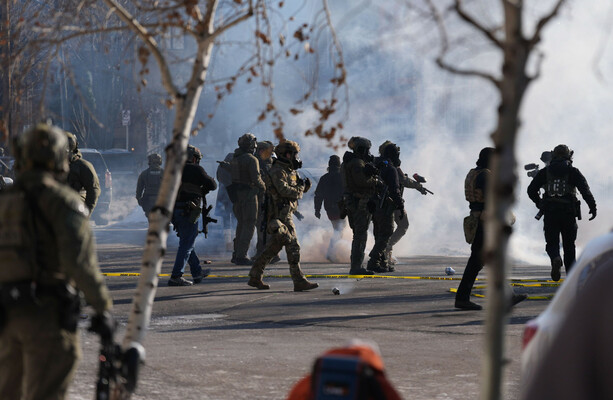
President Donald Trump authorized the deployment of thousands of federal agents to Minneapolis and St. Paul, Minnesota, in late December 2025, following a series of increasingly critical statements regarding Somali immigrants in the state. The deployment occurred after Trump publicly labeled Somali immigrants as “garbage” and falsely claimed that Somali gangs were “taking over” Minnesota, “roving the streets,” and “looking for prey.” The federal intervention resulted in the deaths of two American citizens, Renee Good and Alex Pretti, during widespread unrest.
The escalation follows a pattern of rhetoric, according to analysts, aimed at demonizing non-white immigrants as both criminal elements and existential threats to American civilization. Adekeye Adebajo, writing in Project Syndicate, argues that Trump’s focus on Somali immigrants is not isolated, but rather a component of a broader strategy. Adebajo notes that this narrative relies on a lack of understanding regarding the integration of Somali communities within the United States, as well as a disregard for the historical factors contributing to instability in Somalia itself.
The deployment to Minnesota occurred amidst growing international scrutiny of Trump’s foreign policy decisions. Just days prior, Trump threatened potential military action against Nigeria, alleging a “genocide” of Christians. Adebajo, in a separate analysis, suggests this threat is motivated by a combination of factors: securing access to rare-earth minerals, appealing to evangelical Christian voters, and underlying racist sentiments. The Nigeria threat echoes historical justifications for Western imperial interventions, invoking Kipling’s “White Man’s Burden” as a framework for intervention, despite the potential for exploitation and disregard for local complexities.
The State of the Union address delivered on February 24, 2026, offered no direct address of the situation in Minnesota or Nigeria. According to CBS News, Trump used the speech to emphasize a “transformation” during his current term, focusing heavily on economic achievements and affordability. The address was delivered to a joint session of Congress, with key cabinet members – including Secretary of State Marco Rubio, Treasury Secretary Scott Bessent, and Defense Secretary Pete Hegseth – in attendance. The President greeted Republican lawmakers with handshakes and selfies as he entered the chamber.
Critics point to a consistent pattern in Trump’s approach to foreign policy and immigration, characterized by a dismissal of nuanced understanding and a reliance on inflammatory rhetoric. Adebajo’s analysis suggests a raw display of U.S. Imperialism, dispensing with the traditional justifications of human rights or democracy often used to legitimize past interventions. This approach, he argues, is not new to many in the Global South, but represents a significant departure from previous American administrations.
As of February 25, 2026, the federal agents remain deployed in Minneapolis and St. Paul. No official investigation into the deaths of Renee Good and Alex Pretti has been announced, and the administration has not responded to requests for comment regarding the ongoing situation in Minnesota or the implications of the rhetoric surrounding Somali immigrants.