

President Lee Jae-myung Mourns Civil Servant, Cites ‘Invisible Sacrifice’ After National Resource Fire
Table of Contents
Sejong City, South Korea – President Lee Jae-myung expressed profound sorrow following the death of a 50-year-old civil servant from the Digital Government Innovation Office on 2025/10/03. The employee died at the Government Complex Sejong after working to restore systems impacted by the recent National information Resources Management Service (National Resources) fire. The tragedy has ignited a national conversation about the pressures faced by frontline public workers and systemic vulnerabilities within South Korea’s critical infrastructure.
The incident underscores a growing concern regarding excessive workloads and psychological strain on civil servants tasked with maintaining essential government functions, especially during crises. Prime Minister Kim Min-seok, Chief of Staff Kang Hoon-sik, and other high-ranking officials have also conveyed their condolences and acknowledged the dedication of the deceased.
Condolences and calls for Systemic change
President Lee Jae-myung stated on Facebook, We are praying for the deceased’s mission to fulfill the mission of the public officials, and we express our sadness and mourning with the people.
He further emphasized the civil servant’s commitment, noting, the deceased has fulfilled his responsibilities day and night with a great responsibility to resolve the inconvenience of the people and normalize the function of the state.
He extended his condolences to the family and the Ministry of Public governance and Security.
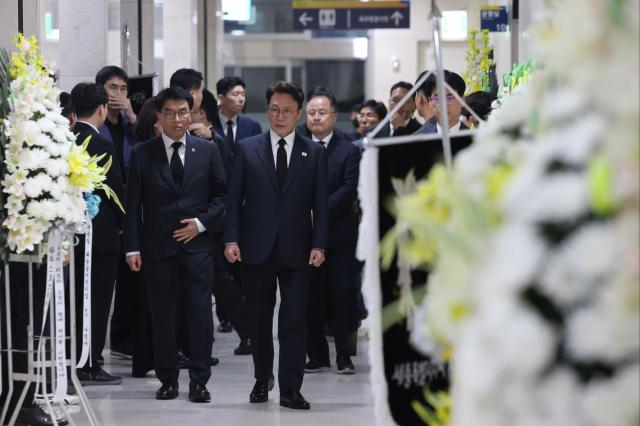
Prime Minister Kim Min-seok visited the funeral home in Sejong City on 2025/10/03, and Chief Secretary Kang Hoon-sik offered comfort to the bereaved family earlier that evening. Prime Minister Kim also shared on social media, The deceased has worked day and night to recover the national computer network after the national resource fire.
Minister of Public Administration and Security Yoon Ho-jung pledged to prioritize information system recovery, designating the following week as a golden time
for restoration efforts.
Systemic Failures Exposed
However, observers argue that the tragedy extends beyond individual sacrifice, pointing to deep-seated systemic issues. The National Resource fire exposed critical vulnerabilities, including inadequate disaster recovery infrastructure – a center reportedly 18 years out of date – and insufficient redundancy, with only half of the dualization
completed. Concerns have also been raised about the co-location of server rooms and battery rooms, creating potential safety hazards.
Despite the dedication of frontline workers, the recovery rate currently stands at just 17.8%, with full normalization expected to take over a month. This situation highlights the urgent need to address the excessive burden placed on public servants during crises and to implement robust systems for protecting their mental health.
Did You No?
The National Information Resources Management Service (NIRS) is responsible for managing and operating the core IT infrastructure supporting South Korea’s government operations.
Pro Tip:
Understanding the role of NIRS is crucial to grasping the scale of disruption caused by the fire and the importance of swift recovery efforts.
| Date | Event |
|---|---|
| 2025/10/03 10:50 AM | Civil servant dies at Government Complex Sejong |
| 2025/10/03 07:30 PM | Chief Secretary Kang Hoon-sik visits bereaved family |
| 2025/10/03 08:30 PM | Prime Minister Kim Min-seok visits bereaved family |
| 2025/10/04 | Recovery rate: 17.8% |
The incident underscores a broader trend of increasing pressure on public sector employees globally, particularly in the wake of digital transformation and heightened cybersecurity threats. Governments worldwide are grappling with the challenge of balancing the need for efficient service delivery with the well-being of their workforce. Investing in robust IT infrastructure, thorough disaster recovery planning, and mental health support for civil servants are becoming increasingly critical priorities.
Frequently Asked Questions about the National Resource Fire
- What caused the National Resource fire? The specific cause of the fire is still under inquiry, but systemic vulnerabilities in the infrastructure have been identified as contributing factors.
- What is the current status of system recovery? As of 2025/10/04, the recovery rate is 17.8%,with full normalization expected to take over a month.
- What is the government doing to address the workload concerns? Minister Yoon ho-jung has pledged to prioritize recovery efforts and address the burden on civil servants.
- What were the key systemic failures exposed by the fire? inadequate disaster recovery infrastructure, insufficient redundancy, and safety concerns related to facility design were identified.
- How can this tragedy be prevented in the future? Investing in robust IT infrastructure, comprehensive disaster recovery planning, and mental health support for civil servants are crucial steps.
This tragic event serves as a stark reminder of the human cost of systemic failures and the importance of prioritizing the well-being of those who serve the public. What further steps should the government take to prevent similar tragedies? Share your thoughts in the comments below.