

Museum Honors China’s Yellow River
New Zhengzhou Structure Celebrates Civilization and Landscape
The Yellow River, a cornerstone of Chinese civilization, now has a dedicated museum that merges architecture with the natural world. Designed by von Gerkan, Marg and Partners (gmp), the museum and its surrounding park in Zhengzhou offer a tangible bridge between nature and culture.
Merging Nature and Structure
The new Yellow River National Museum, situated on the outskirts of Zhengzhou, explores the cultural significance of the Yellow River. This project highlights the river’s impact on shaping the landscape. The museum building itself, along with the nearby park, reflects the river’s meandering path. Together, they symbolize the union of nature and human achievement.
The Yellow River Museum project emphasizes the river’s essential role in Chinese history, culture, and the physical environment. The project’s design embraces the essence of the Yellow River, which is also known as “the cradle of Chinese civilization.”
Design Elements
The museum’s architecture mirrors the river’s course, as stated by the architects. The structure seeks to unite the natural and the constructed. As a result, the Yellow River National Museum presents a distinctive view of the landscape.
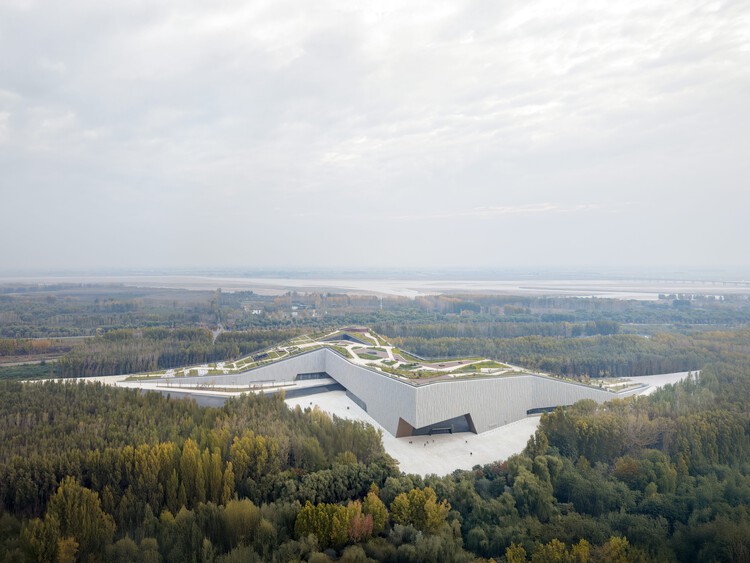
In China, museums such as this one contribute to a growing cultural landscape, with the number of museums increasing from 3,485 in 2008 to 6,565 by the end of 2022 (Statista).
A Cultural Landmark
The Yellow River National Museum is more than just a structure; it’s a symbol. The design acknowledges the river’s impact. The new museum shows the deep connection between the environment and civilization.


