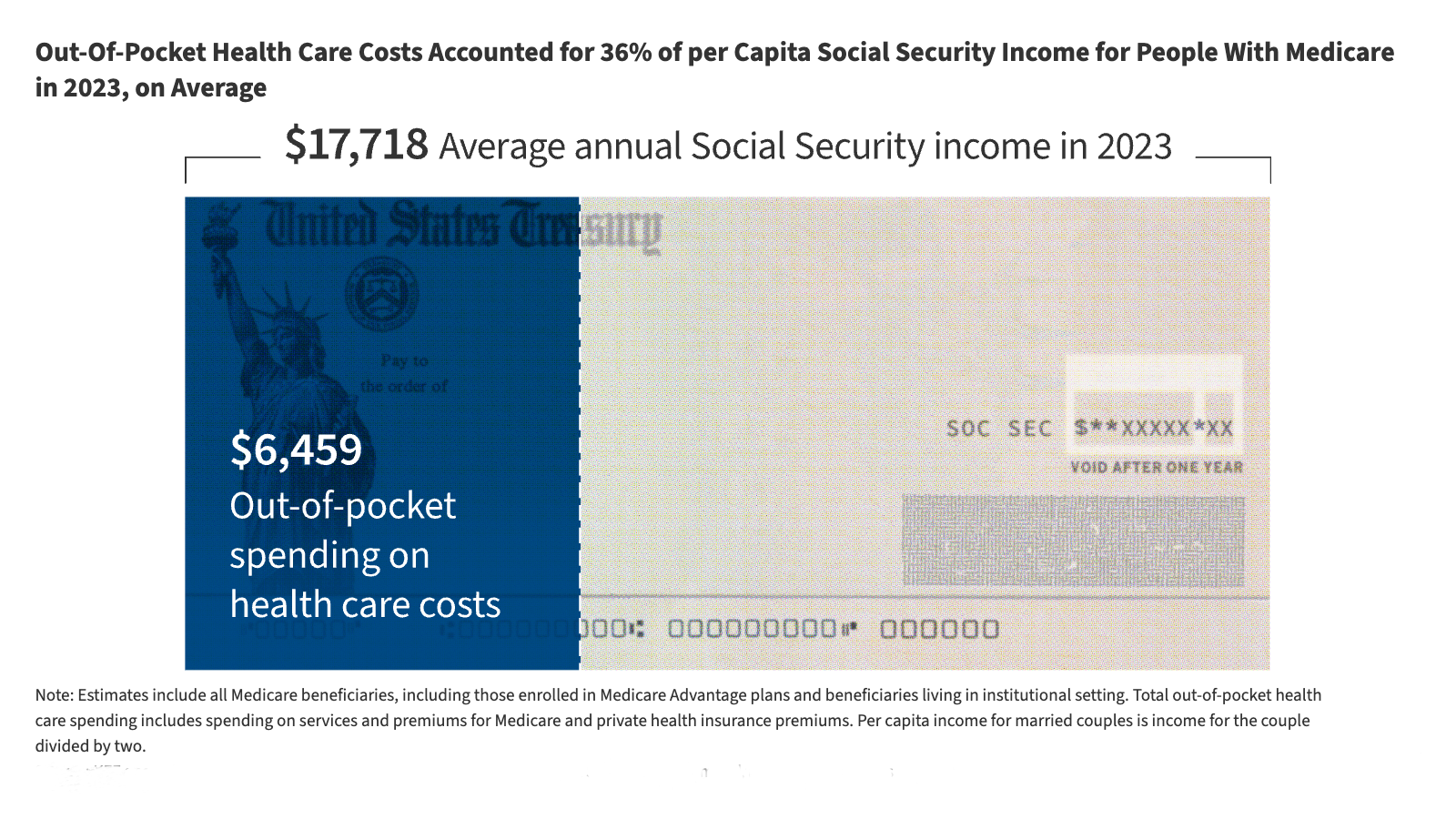
Medicare Beneficiaries Face Significant Financial Strain as Health Costs Consume Large Share of Income
WASHINGTON, D.C. – Millions of Americans enrolled in Medicare are dedicating a ample portion of their income to healthcare expenses, according to a new analysis released today by the Kaiser Family Foundation (KFF). The study reveals a significant financial burden for many beneficiaries,notably those with lower incomes,highlighting the ongoing challenges of healthcare affordability even with insurance coverage.
The analysis, drawing on data from the Medicare current Beneficiary Survey (MCBS) and income estimates from the Urban Institute’s DYNASIM4 model, examines out-of-pocket spending as a share of both Social Security income and total income for Medicare beneficiaries. Premium spending is calculated using administrative data from Medicare Parts A, B, C (Medicare Advantage), and D, supplemented by survey reports on other insurance types like Medigap, employer-sponsored plans, and other public/private sources.
Findings indicate that while average out-of-pocket spending is considerable, the impact varies significantly across income levels. KFF notes that estimates for Medicare Advantage enrollees may be conservative due to the introduction of an imputation method in 2019,which utilizes encounter data to account for unreported utilization within these plans.
To ensure accurate income assessment, KFF adjusts self-reported beneficiary income from the MCBS with estimates generated by DYNASIM4, a dynamic microsimulation model that projects population trends and analyzes the financial implications of aging and retirement. DYNASIM4 considers income from all sources – Social Security, wages, pensions, and asset income, including IRA withdrawals – and aligns with the 2024 social Security Trustees’ intermediate cost economic and demographic projections. The model calculates average per capita income for individuals and couples (by dividing couple income by two).
The analysis specifically calculates average out-of-pocket spending as a share of average per capita social Security and total income using MCBS and DYNASIM data. Percentile values – median, 75th, and 90th – of out-of-pocket spending as a share of total income are derived from MCBS data combined with DYNASIM-adjusted income values.
This research underscores the persistent financial challenges faced by Medicare beneficiaries, even as the program provides crucial health coverage. The study was supported in part by AARP Public Policy Institute, with KFF maintaining full editorial control.
The KFF team responsible for the analysis includes Nancy Ochieng, Juliette cubanski, and Tricia neuman, alongside independent consultant Anthony Damico.
[Appendix tables detailing the data are available here and here.]