
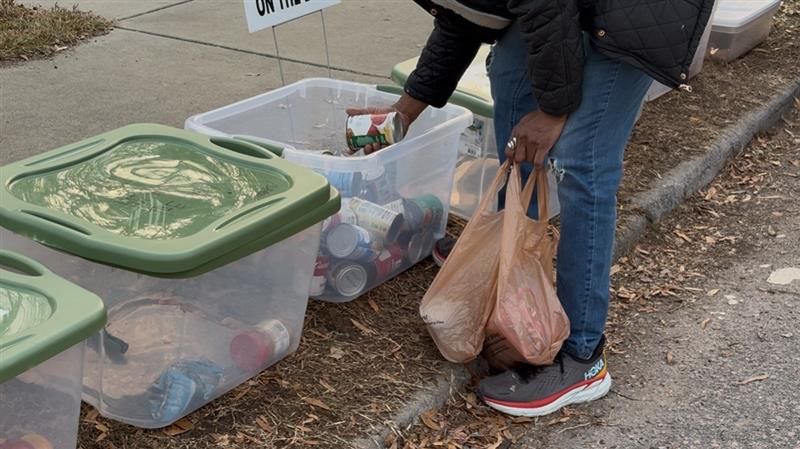
Raleigh residents are stepping in to address food insecurity as delays and technical issues plague the Supplemental Nutrition Assistance Program (SNAP) benefits distribution in north Carolina. Community-led efforts, beginning with a single donation bin, are providing immediate relief to individuals awaiting their benefits.
Roughly one in four North Carolinians-over 1.6 million people-qualify for SNAP assistance annually, making the current disruptions especially impactful. While the North Carolina Department of Health and Human Services (NCDHHS) works to resolve the issues, neighbors are establishing informal food pantries at accessible locations like bus stops to bridge the gap. The initiative began with Kendell Tuttle,who placed bins near a Glenwood Avenue bus stop servicing Walmart and Burger King. The concept quickly gained traction, with similar “pop-up” operations emerging in Wrightsville Beach and Durham, and further locations appearing statewide as documented on social media.
“It can start with one bin,” said Cooling, a volunteer involved in the effort. “Any little bit helps. You don’t need a big system to make a difference.” Volunteers emphasize that these grassroots initiatives are not intended to replace SNAP, but to offer temporary support during a period of uncertainty.”This shouldn’t fall on neighbors,” Ballard, another volunteer, explained. “But until the benefits come, and until people feel secure again, we’re here.Community is what fills the gap.” Ballard observed a woman immediately accessing the food bins after disembarking from a bus, highlighting the immediate need.
NCDHHS is directing individuals facing immediate food insecurity to dial 2-1-1 to connect with local resources. the 211 website (nc211.org) allows users to search for assistance-including food, shelter, and healthcare-by specifying their location. Local food banks also remain a vital resource for those in need.

