
Skip to content
World Today News
  • Business
  • Entertainment
  • Health
  • News
  • Sport
  • Technology
  • World
World Today News
  • Business
  • Entertainment
  • Health
  • News
  • Sport
  • Technology
  • World
Saturday, December 6, 2025
World Today News
World Today News
  • Business
  • Entertainment
  • Health
  • News
  • Sport
  • Technology
  • World
Copyright 2021 - All Right Reserved
Home » Federal Constitutional Court » Page 2
Tag:

Federal Constitutional Court

Budget verdict: What paths lead out of the billion dollar hole?  – Germany – Waiblingen newspaper publisher
Business

Budget verdict: What paths lead out of the billion dollar hole? – Germany – Waiblingen newspaper publisher

by Chief editor of world-today-news.com November 21, 2023
written by Chief editor of world-today-news.com

Berlin (dpa) – After the Karlsruhe budget ruling, the federal government also sees far-reaching consequences for other reserves in the federal budget. The loans from the special fund for energy price caps “could no longer be used in 2023 according to the current legal situation,” Budget State Secretary Werner Gatzer informed the ministries. With the letter, which is available to the German Press Agency, he blocked all further expenditure from the economic stabilization fund for the current year.

At the same time, sources in the Ministry of Finance said: “The payment of the energy price brakes in 2023 is not affected.” The funds required for this by the end of the year have already gone to the suppliers and are therefore not affected by the block.

Experts consulted by the Bundestag also said that the special fund for energy price brakes would probably be affected. Because this was fed with loans in 2022 during the energy emergency, which would not be used in the same year, but later.

It was precisely such an approach that the Federal Constitutional Court criticized, several experts argued in a hearing of the Budget Committee. This means that the federal government has already spent money in the current year that was not even available to it.

The Constitutional Court had declared the reallocation of 60 billion euros in the 2021 budget to be null and void. The money was approved as a Corona loan, but was subsequently intended to be used for climate protection and the modernization of the economy. Now it is no longer available. At the same time, the judges also decided that the state was not allowed to reserve emergency loans for later years. Instead, an emergency must be declared every year.

The Ministry of Finance is now checking which reserves in the federal budget are affected. Because we don’t yet know how to deal with the billion dollar hole, financial commitments from all ministries for coming years have been blocked in the budget as a precautionary measure. What happens now with the budgets for this year and next year – and the long-term investments that economists still consider to be absolutely necessary?

Budget 2023 – justify loans retroactively?

The main problem this year is likely to be the Economic Stabilization Fund (WSF) with the energy price brakes. According to the Ministry of Economic Affairs, around 37 billion euros in loans were used from this pot this year by the end of October. In the opinion of most of the experts heard, this is money that the federal government should not have had at all. As we now know from the ruling, expenditure was made unconstitutionally, said legal scholar Hanno Kube, appointed by the Union.

It seems impossible to add this money to the regular budget now, so close to the end of the year. The traffic light coalition is therefore considering quickly declaring an emergency for 2023. Such a decision makes it possible to use an exception to the debt brake and subsequently justify the loans that have already been issued. According to Article 115 of the Basic Law, the state may incur debts “in the event of natural disasters or exceptional emergency situations that are beyond the state’s control and significantly affect the state’s financial situation.”

Whether such a situation exists is controversial. Economist Dirk Meyer from the University of the Bundeswehr, appointed by the AfD, sees little basis for this. The lawyer Alexander Thiele, whom the SPD invited to the Bundestag, was different: At the beginning of 2023, the effects of the energy crisis were very noticeable, he argued. Kube also believes that an emergency resolution “is not ruled out from the outset”. However, it would then have to be limited to the loans from the WSF used in 2023, as only here is there a direct connection to the energy crisis.

The danger with such a decision would be another and possibly successful lawsuit in Karlsruhe. The traffic light coalition could try to agree on details with the opposition so that they do not sue. But even if that were to work, any private individual could still take the matter to the Constitutional Court.

The economist and advisor to Finance Minister Christian Lindner (FDP), Lars Feld, argued in the “Rheinische Post”: “If the federal government had been aware of the Federal Constitutional Court’s ruling at the end of 2022 when the gas and electricity price caps were passed, it would have had this for this year “We have to make an effort to deal with the emergency, specifically in relation to the energy crisis, and be able to justify it with that.”

Budget 2024 – decide now or not?

The budget committee actually wanted to approve the budget for the coming year this Thursday; it was supposed to be approved in the Bundestag on December 1st. Whether this is tenable is controversial. The economists advocated this in the committee, but several lawyers believe it is constitutionally difficult. Kube said that it has not yet been decided at all whether expenditure from the special funds should now be transferred to the core budget. “All in all, there needs to be another cash fall.”

However, legal scholar Henning Tappe, appointed by the Greens, believes a decision is possible. If the Bundestag decides against transferring projects from the climate protection fund to the budget for 2024, only editorial changes will be necessary, he said. Such a decision could be made if the Climate and Transformation Fund (KTF) had additional resources. The economist Jens Südekum argued that one could initially exclude the KTF, only decide on the core budget – and later, if necessary, make a supplementary budget.

SPD parliamentary group leader Rolf Mützenich also spoke out in favor of a resolution. He emphasized that the budget law was the “most important decision” of the year. Above all, consumers should be able to rely on benefiting from reduced VAT on gas and heat in January and February. In addition, social projects, voluntary services and the children and youth sector would be strengthened. “I want everyone to understand that we have a great responsibility not to make the uncertainty even greater,” Mützenich made it clear.

Long-term investments – what works and what no longer works?

Experts’ opinions differ as to whether and how exactly the long-term management of crises will be made more difficult by the ruling. Lawyer Thiele sees problems here. Because then the Bundestag “with its changing majorities and changing challenges” would have to make new payment obligations every year for the coming years. In the year of a crisis, the Bundestag can only say to those affected by a flood catastrophe like the one in the Ahr Valley about the planned help: “We are determined to do this, we promise to put it into your hands.” But that is not legally binding. “Then the goal of quickly overcoming the crisis may be at risk.”

Economist Südekum explained that under these conditions, crises can only be dealt with in the short term and that the investments that are so necessary at that time can hardly be carried out. The consequences of an economic shock often continue to have an impact years later, when the cause has long since passed.

Legal scholar Kube saw it completely differently. “There are of course many ways to plan for the future and also to communicate with the public and the economy,” he emphasized and listed: funding programs, funding decisions, medium-term financial planning and commitment authorizations with which the federal government can do so for future years enters into payment obligations. But the Bundestag would then have to decide every year to cover these longer-term programs, with resolutions to declare an emergency as an exception to the debt brake or with borrowing.

2023-11-21 20:57:06
#Budget #verdict #paths #lead #billion #dollar #hole #Germany #Waiblingen #newspaper #publisher

November 21, 2023 0 comments
0 FacebookTwitterPinterestEmail
News podcast: Where the 60 billion euros for the climate will come from now
Business

News podcast: Where the 60 billion euros for the climate will come from now

by Chief editor of world-today-news.com November 21, 2023
written by Chief editor of world-today-news.com

The traffic light government wanted to put 60 billion euros into the so-called climate and transformation fund. This should serve to support the project Federal Government in the fight against climate change, such as the improvement of the rail infrastructure or energy-efficient renovation of buildings. According to a ruling by the Federal Constitutional Court, the traffic light government is not allowed to reallocate the 60 billion euros that were originally intended for the corona pandemic. The money was already firmly budgeted for in the federal budget and the government is now missing not only in the fight against climate change, but also possibly in economic stabilization funds and special funds of the federal states. An initial estimate by the Institute for Macroeconomics and Economic Research also showed that the cuts could cost the German economy almost half a percent of growth. Zacharias Zacharakis is an economics editor at ZEIT ONLINE. In the podcast he classifies the ruling of the Federal Constitutional Court and its economic consequences.

Around 5.5 million Muslims live in Germany, which is 6.6 percent of the total population. The federal government founded the German Islam Conference (DIK) in 2006 as a forum for dialogue between the different associations of the Muslim faith. According to the conference, the aim of the conference is to create “better coexistence between Muslims and non-Muslims, Muslims among themselves as well as between mosque communities and their local environments”. In addition to Muslims, this year’s conference also brings together representatives from Jewish life, politics, society and science. Especially with regard to the Gaza war, the DIK’s themes – peace, cohesion, diversity and tolerance – contrast with the current political situation. Mariam Lau, political editor at ZEIT, talks about the conference’s shortcomings and explains why representatives of large Muslim associations do not take part in the conference.

And otherwise? Why do influencers warn against oatmeal? This is behind the #OatmealConspiracy.

Moderation and production: Elise Landschek

Editor: Jannis Carmesin

Collaboration: Anne Schwedt and Olga Ellinghaus

You can find all episodes of our podcast here. Questions, criticism, suggestions? you can reach us at wasjetzt@zeit.de.

The traffic light government wanted to put 60 billion euros into the so-called climate and transformation fund. This should serve to support the project Federal Government in the fight against climate change, such as the improvement of the rail infrastructure or energy-efficient renovation of buildings. According to a ruling by the Federal Constitutional Court, the traffic light government is not allowed to reallocate the 60 billion euros that were originally intended for the corona pandemic. The money was already firmly budgeted for in the federal budget and the government is now missing not only in the fight against climate change, but also possibly in economic stabilization funds and special funds of the federal states. An initial estimate by the Institute for Macroeconomics and Economic Research also showed that the cuts could cost the German economy almost half a percent of growth. Zacharias Zacharakis is an economics editor at ZEIT ONLINE. In the podcast he classifies the ruling of the Federal Constitutional Court and its economic consequences.

2023-11-21 05:01:36
#News #podcast #billion #euros #climate

November 21, 2023 0 comments
0 FacebookTwitterPinterestEmail
State Secretary: Missing money in the climate fund affects the East
Business

State Secretary: Missing money in the climate fund affects the East

by Chief editor of world-today-news.com November 21, 2023
written by Chief editor of world-today-news.com

Berlin (dpa) – According to the Parliamentary State Secretary in the Federal Ministry of Economics, Michael Kellner (Greens), the Federal Constitutional Court’s budget ruling particularly affects East Germany. If the missing 60 billion euros for the climate and transformation fund are not raised elsewhere, the East German economy could face significant damage, Kellner told the editorial network Germany (RND).

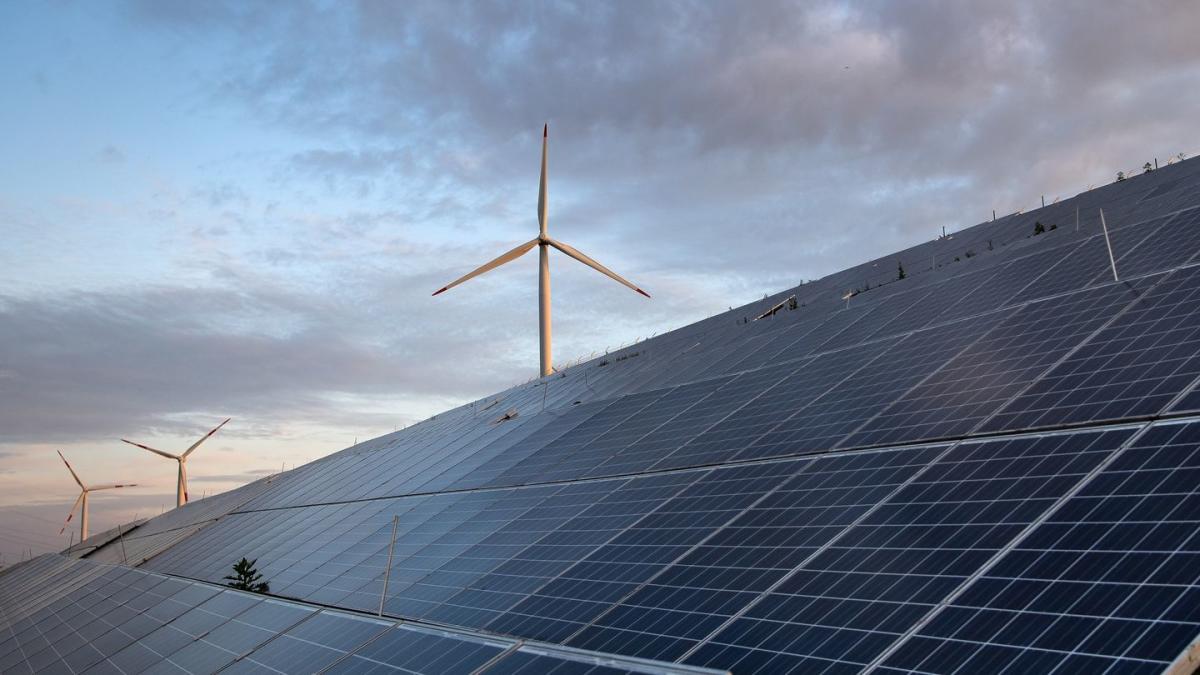
Of the announced investments in German industry of 80 billion euros, around 50 billion were in eastern Germany, said Kellner. “We are now faced with the huge challenge of securing these investments and the associated jobs and prosperity through government support.” Kellner emphasized that as things stand today, without the climate and transformation fund, neither the establishment of chip factories in Dresden and Magdeburg nor the reconstruction of the solar industry in East Germany would be secured.

The FDP finance and budget expert Frank Schäffler is calling for subsidies for the chip factories in Magdeburg and Dresden to be waived. “It has always been wrong to put billions in subsidies into setting up chip factories,” Schäffler told the RND. According to RND, Schäffler did not accept the argument for funding in disadvantaged regions: the planned locations of the chip factories, Magdeburg and Dresden, are not structurally weak areas. “On the contrary: there is a shortage of workers there,” said the FDP politician. “And the construction of chip factories would mean that local medium-sized companies would be left behind.”

DIW expert Claudia Kemfert believes that suspending the debt brake is justified by a ruling by the Federal Constitutional Court made in 2021. According to a report by the “Mediengruppe Bayern”, she recommends a triad to realize the transformation in Germany: “First: cut spending in non-future areas. Secondly: examine unnecessary spending by the climate and transformation fund. Third: suspend the debt brake.”

The Federal Constitutional Court itself provided sufficient justification for this in its 2021 ruling by naming climate protection as the central task of the state, said Kemfert. In view of the climate crisis and economic transformation, Germany urgently needs future investments in electromobility, rail transport, digitalization, storage or building energy.

2023-11-21 01:40:40
#State #Secretary #Missing #money #climate #fund #affects #East

November 21, 2023 0 comments
0 FacebookTwitterPinterestEmail
Termination of Employment Relationship Following After-Party Incident
News

Termination of Employment Relationship Following After-Party Incident

by Chief editor of world-today-news.com September 13, 2023
written by Chief editor of world-today-news.com

12.09.2023

After a drinking session on the employer’s premises after a Christmas party, the parties agreed today before the Third Chamber of the Düsseldorf Regional Labor Court at the employer’s suggestion to terminate their employment relationship.

The plaintiff, who lives in North Rhine-Westphalia, has been employed as an area manager for Central (NRW) in the field of the defendant, a wine cooperative, since June 1, 2021. On January 12, 2023, a Christmas party took place at the defendant’s home in southern Germany. After being welcomed into the company with champagne, the employees traveled together on a bus to an external restaurant. At around 11 p.m. the bus drove the employees who wanted it back to the company’s winery. The plaintiff had joined this group. There were no plans to continue the Christmas party in the company. The plaintiff met with two other colleagues in a hotel about 500 meters from the company to drink a bottle of wine. The plaintiff and a colleague then went back to the defendant’s company. The gate to the company premises was opened with the colleague’s access authorization card. The plaintiff and his colleague drank four bottles of wine in the winery’s lounge. The empty bottles were on the table the next morning. There were numerous cigarette butts in the trash can. There was a crushed tangerine on the floor that had been thrown against the wall. One of the two employees had vomited near the entrance door. The courtyard gate was open. The plaintiff’s colleague was picked up by the police on his way home that evening and driven home because he was heavily intoxicated to rule out any danger to himself. On January 16, 2023, the plaintiff’s colleague admitted to the defendant that he had “done something wrong.” He paid for the wine.

After hearing the works council on January 19, 2023 and with its consent on January 23, 2023, the defendant terminated the employment relationship with the plaintiff on January 25, 2023 without notice or, alternatively, on April 30, 2023. Unlike the Labor Court, the Third Chamber of the State Labor Court expressed in legal discussions that it does not consider a warning to be sufficient in view of the seriousness of the breach of duty. It is obvious that as an employee you are not allowed to enter the employer’s premises around midnight after the Christmas party has ended with your colleague’s chip card in order to consume four bottles of wine without authorization. There are no indications that the plaintiff tolerated this behavior on the part of the employer. At best, the question arises as to whether the behavior justifies immediate termination or whether the balancing of interests leads to an ordinary termination.

At the suggestion of the Third Chamber of the State Labor Court, the parties agreed to terminate the employment relationship for social reasons on the basis of the disputed termination with a social expiry period of February 28, 2023.

Düsseldorf Regional Labor Court – 3 Sa 284/23

Wuppertal Labor Court, judgment of March 24, 2023 – 1 Ca 180/23

2023-09-12 23:32:53
#NRW #Justice #Düsseldorf #Regional #Labor #Court #Drinking #bout #employers #house #Christmas #party

September 13, 2023 0 comments
0 FacebookTwitterPinterestEmail
Newer Posts
Older Posts

Search:

Recent Posts

  • Student Loan SAVE Plan Update: What Borrowers Need to Know

    December 6, 2025
  • Title: Jeremy O. Harris Arrested on Drug Charges in Japan

    December 6, 2025
  • Title: Houston Cougars vs. Kansas Swimming Meet Details

    December 6, 2025
  • Dance Therapy Slows Cognitive Decline in Parkinson’s Disease

    December 6, 2025
  • Title: Czech Biathletes Start Season in Östersund Sprint

    December 6, 2025

Follow Me

Follow Me
  • Live News Feeds
  • Short Important News
  • Most Important News
  • Headlinez
  • Most Recommended Web Hosting
  • About Us
  • Accessibility statement
  • California Privacy Notice (CCPA/CPRA)
  • Contact
  • Cookie Policy
  • Copyright Notice
  • Disclaimer
  • DMCA Policy
  • EDITORIAL TEAM
  • Links
  • Privacy Policy
  • Terms & Conditions

@2025 - All Right Reserved.

Hosted by Byohosting – Most Recommended Web Hosting – for complains, abuse, advertising contact: contact@world-today-news.com


Back To Top
World Today News
  • Business
  • Entertainment
  • Health
  • News
  • Sport
  • Technology
  • World
World Today News
  • Business
  • Entertainment
  • Health
  • News
  • Sport
  • Technology
  • World
@2025 - All Right Reserved.

Hosted by Byohosting – Most Recommended Web Hosting – for complains, abuse, advertising contact: contact@world-today-news.com