Pushing the Limits: Life as a Eurofighter Display Pilot
The pilot, whose name is withheld for security reasons, begins planning long before entering the cockpit of the eurofighter. he meticulously pulls on a specialized 9G suit – a vital piece of equipment designed to counteract the immense physical strain of high-performance flight. Without it, the intense forces experienced during maneuvers could cause blood to pool, leading to blackouts adn potentially fatal consequences.Based at Tactical Air Force Squadron 74 in Neuburg an der Donau, Germany, the 35-year-old pilot connects the suit to the aircraft’s systems. Compressed air then inflates the suit, maintaining blood flow to the brain and upper body, allowing him to remain conscious and functional under extreme G-forces.
“9G is the maximum I’ll experience,” he explains. “When executing tight turns at high speed, I’m subjected to nine times the force of gravity.That transforms my 80-kilogram body into a 720-kilogram weight. It’s pushing my physical limits.” He operates at speeds approaching 900 kilometers per hour, and his health and suitability for these demands are rigorously monitored by the Air Force.
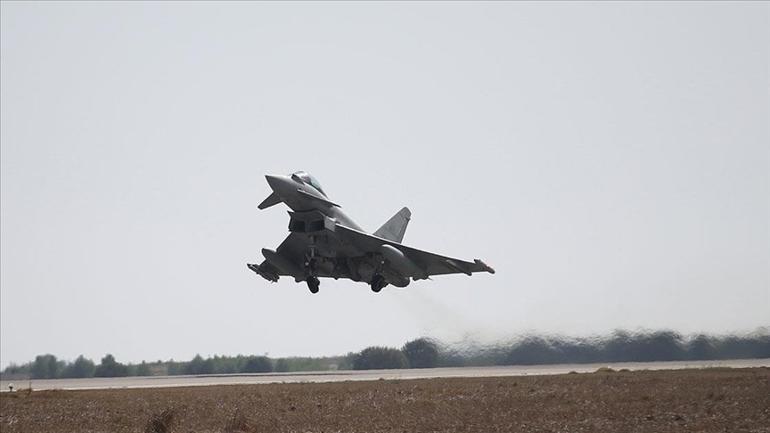
His role extends beyond simply flying; he performs a ten-minute aerial “display” – a carefully choreographed sequence of climbs, descents, and extreme maneuvers, showcasing both speed and precision. “Mistakes during a display can be catastrophic,” he admits, highlighting the extensive training he undertakes in flight simulators – approximately 100 practice runs under varying conditions – to mitigate risk.
The training progresses from high-altitude practice to increasingly lower altitudes, culminating in “step-down” runs just 150 meters above the ground. ”At that speed, 150 meters disappears quickly,” he emphasizes. ”It’s a critical margin for error.” The Eurofighter’s power comes from its two engines, each capable of generating up to 90,000 Newtons of thrust with afterburners, essential for these demanding maneuvers.
While the display flying is a specialized assignment, it’s a secondary role for this pilot. His primary obligation, alongside the squadron’s 50 other pilots, is combat training and safeguarding german airspace as part of NATO’s fast reaction alert force. As a display pilot, he serves as a public face for the Bundeswehr, aiming to demonstrate the Eurofighter’s technological capabilities and inspire interest in aviation.However,the displays aren’t universally welcomed.Residents near the Neuburg airfield have voiced concerns, describing the maneuvers as unnecessary “art flights” that don’t reflect the squadron’s core mission. Local councilor Roland Habermeier criticizes the low-altitude passes over populated areas, deeming them risky. Resident Monika Kraus expresses broader anxieties, stating, “This is a war machine, not a show device, and we have war in Europe.” Concerns also extend to the cost, with each Eurofighter flight hour estimated at around 100,000 euros.
Now in his fourth year as a display pilot,he represents the german Air Force at events like the Caslav Air Show in the Czech Republic. Strict safety protocols are in place, including a designated “displayline” that pilots are forbidden to cross, protecting spectators in the event of an emergency. His priority remains simple: a safe takeoff, a flawless flight, and a secure landing – not just at Caslav, but at every performance. He strives to deliver a captivating display that meets the expectations of the audience, while upholding the highest standards of safety and professionalism.