
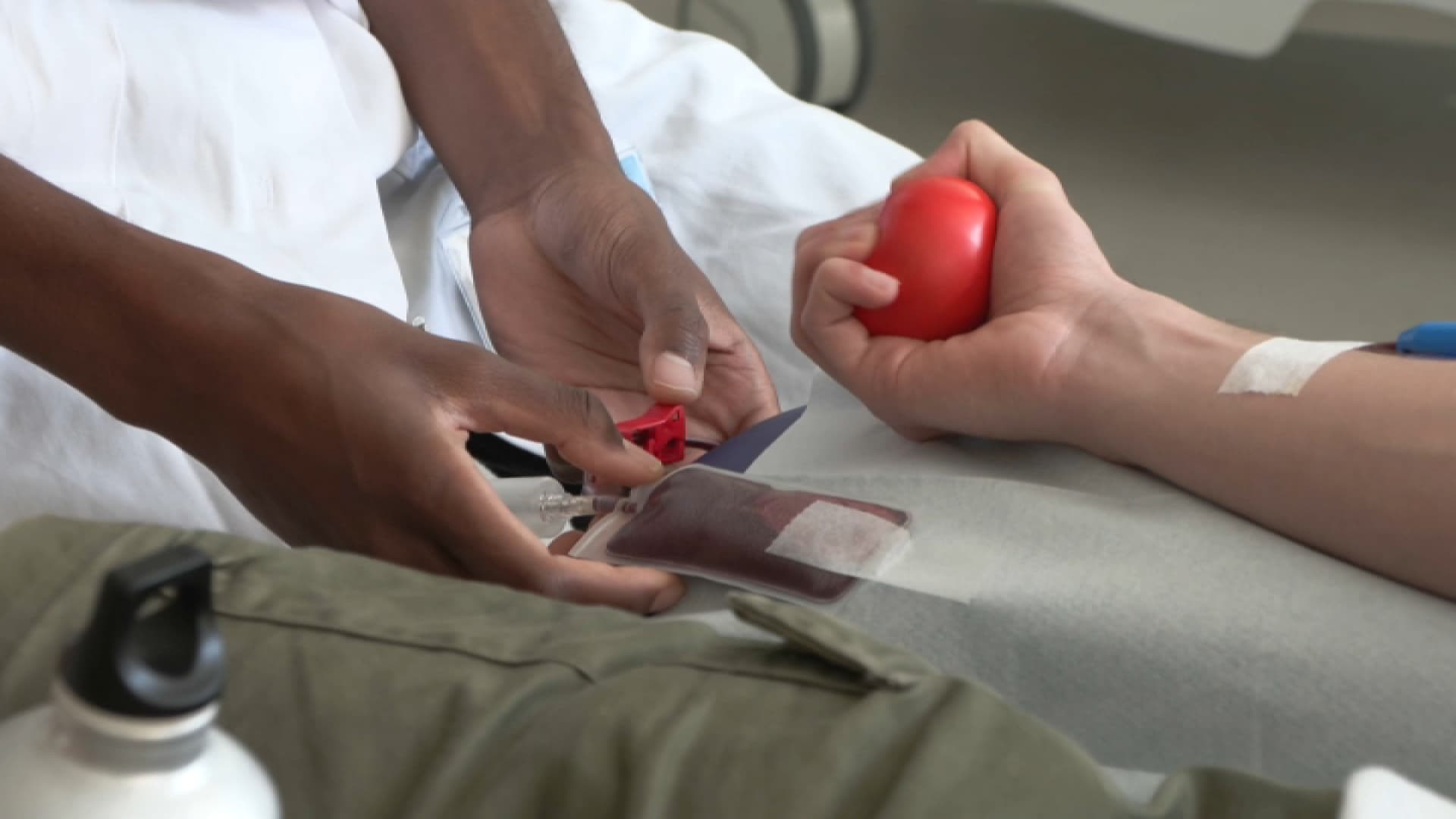
Artificial Blood Breakthrough Offers Hope for Ending Shortages
PARIS – A potential revolution in emergency medicine and transfusion practices is underway with advancements in artificial blood production, offering a pathway to alleviate chronic blood donation shortages. researchers are exploring multiple avenues, including lab-grown red blood cells and innovative techniques utilizing marine organisms, to create a global blood substitute.
Currently, France requires 10,000 blood donations daily to meet demand. While the vast majority of needs are covered by the common ABO blood groups,approximately 700,000 people in France – many unaware of their condition – have extremely rare blood types,with fewer than 4 in 1,000 possessing each rare type. These individuals often face critical challenges finding compatible donors.
Recent breakthroughs include British researchers successfully transfusing patients with synthetic blood cultivated in laboratories. This process begins with a standard blood donation, isolating blood stem cells which are then multiplied in vitro to generate up to 50 billion red blood cells from an initial sample of 500,000 stem cells within three weeks.
Several companies are pioneering these technologies.French firms Erypharm and Hemarina are utilizing molecules from marine worms – which share over 90% genetic similarity with human hemoglobin – to produce artificial blood.
Despite the promise, widespread implementation faces a significant hurdle: cost.Establishing production facilities requires substantial investment. However, experts anticipate that, mirroring the trajectory of DNA decoding – which has fallen from millions to hundreds of euros – prices will decrease as the technology matures.
While mass production akin to printing a sheet of paper remains distant, these advancements represent a crucial step towards a future where blood shortages are a relic of the past, dramatically improving outcomes in emergency medicine and hospital settings.
