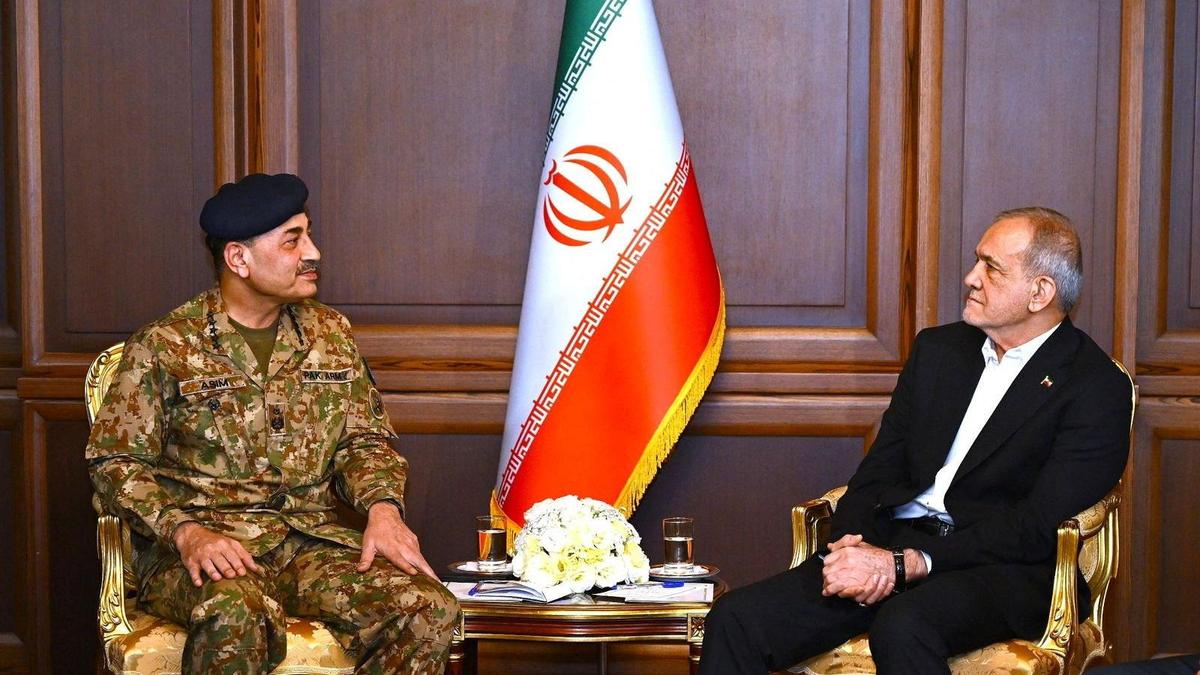
Syed Asim Munir Becomes First Foreign Military Leader to Visit Iran After Iran-U.S. Ceasefire Agreement
On April 15, 2026, Pakistan Army Chief General Syed Asim Munir arrived in Tehran leading a high-level military delegation, marking the first visit by a foreign military leader to Iran since a U.S.-Iran ceasefire took effect on April 8. This three-day visit signals a strategic recalibration in South Asian geopolitics as Islamabad seeks to deepen defense and economic ties with Tehran amid shifting regional alliances, ongoing U.S. Pressure on Iran’s nuclear program, and Pakistan’s own internal security challenges along its volatile western border. The timing is critical: with the ceasefire creating a temporary window for diplomatic engagement, Munir’s visit aims to solidify cooperation on border security, counter-terrorism intelligence sharing, and potential joint infrastructure projects—particularly in the energy-starved provinces of Balochistan and Sistan-Baluchestan—where cross-border militancy has long undermined development.
The visit comes at a juncture where Pakistan’s military leadership is navigating a complex trifecta: managing internal political instability following recent elections, confronting a resurgence of Tehrik-e-Taliban Pakistan (TTP) activity in Khyber Pakhtunkhwa and Balochistan, and balancing its long-standing alliance with Saudi Arabia against growing economic dependence on China through the China-Pakistan Economic Corridor (CPEC). Iran, meanwhile, is leveraging the post-ceasefire environment to break its isolation, courting regional partners to bolster its economy amid ongoing U.S. Sanctions. For both nations, the western border region represents not just a security challenge but an economic opportunity—if stabilized, it could unlock trade routes connecting Gwadar Port to Iranian Chabahar Port, bypassing traditional chokepoints like the Strait of Hormuz.
Historically, Pakistan-Iran relations have oscillated between cooperation and tension. While both countries share a 909-kilometer border and common concerns about Sunni extremist groups, their relationship has been strained by Iran’s accusations that Pakistan allows anti-regime militant groups like Jaish al-Adl to operate from its territory, and Pakistan’s complaints about Iranian support for Shia militias operating inside Pakistan. The last high-level Pakistani military visit to Iran occurred in 2019 under former Army Chief Qamar Javed Bajwa, focused largely on counter-narcotics and border coordination. Munir’s 2026 visit, however, occurs under markedly different conditions: a U.S.-Iran ceasefire that, while fragile, has reduced immediate military tensions and opened space for confidence-building measures.
To understand the potential impact, consider the Balochistan province—a region where Pakistan’s federal government has struggled for decades to establish effective governance. Decades of underinvestment, coupled with a low-intensity insurgency fueled by grievances over resource distribution and human rights abuses, have left much of the province without reliable electricity, clean water, or paved roads. In Iranian Sistan-Baluchestan, the situation is similarly dire: the province suffers from Iran’s highest poverty rates, frequent water shortages due to drought and mismanagement, and limited state presence outside major towns like Zahedan and Zabol. A stabilized border could enable joint development initiatives—such as cross-border solar microgrids, coordinated water management from the Helmand River basin, or standardized customs procedures at key checkpoints like Taftan-Mirjaveh.
“The real test isn’t just shaking hands in Tehran—it’s whether this dialogue translates into tangible security coordination on the ground. Without verifiable mechanisms to prevent cross-border militant movement, any diplomatic outreach remains symbolic.”
— Dr. Fatima Zahra, Senior Research Fellow at the Institute of Strategic Studies Islamabad (ISSI), speaking on condition of anonymity due to the sensitivity of her advisory role to Pakistan’s National Security Council.
Another layer of complexity lies in the economic dimension. Pakistan’s foreign exchange reserves remain precarious, hovering just above the $7 billion mark as of early 2026, limiting its ability to finance large-scale infrastructure without external support. Iran, despite its oil wealth, faces similar constraints due to sanctions that restrict access to global financial systems. Yet both countries possess untapped potential in renewable energy—particularly solar and wind—given their arid climates and high solar irradiance. A joint feasibility study, potentially facilitated through multilateral platforms like the Economic Cooperation Organization (ECO), could explore linking Pakistani wind farms in Sindh with Iranian solar arrays in the south to create a complementary regional grid.
“Sanctions may limit Iran’s access to dollars, but they don’t eliminate the possibility of barter arrangements or local-currency trade. Pakistan and Iran have precedents for such mechanisms—what’s needed now is political will and technical clarity on enforcement.”
— Omar Hassan, Director of Trade Policy at the Karachi-based Policy Research Institute of Market Economy (PRIME), cited in a recent briefing to the Sindh Chamber of Commerce.
For businesses and civic organizations operating in the affected regions, this evolving dynamic presents both risks and opportunities. Logistics firms reliant on overland transport through the Taftan-Mirjaveh border crossing face uncertainty due to intermittent closures tied to security alerts or diplomatic tensions. Construction companies involved in CPEC-related projects in Balochistan may find their timelines affected by shifts in militant activity that could respond to changes in Iran-Pakistan coordination. Meanwhile, local NGOs working on water sanitation or maternal health in border districts often operate in information gaps, lacking real-time security updates that could improve staff safety and aid delivery.
What we have is where verified, locally grounded expertise becomes essential. Companies seeking to assess operational risk in Balochistan or Iranian Sistan-Baluchestan need access to geopolitical risk analysts who understand the nuances of tribal dynamics, smuggling networks, and informal governance structures that formal state institutions often overlook. Similarly, developers exploring cross-border energy or water infrastructure projects should consult specialists in transboundary water law to navigate treaties like the 1973 Helmand River Agreement and anticipate how shifting political alliances might affect enforcement. Finally, community-based organizations aiming to deliver aid or implement small-scale enterprise programs in these regions benefit from partnering with vetted grassroots coordination hubs that maintain real-time communication with municipal authorities and community elders on both sides of the border.
The Munir visit, should not be viewed as a standalone diplomatic gesture but as a potential catalyst for a broader recalibration of regional cooperation—one that could either reduce friction along one of Asia’s most volatile borders or, if mismanaged, exacerbate mistrust if expectations outpace delivery. What happens next depends less on the symbolism of a handshake in Tehran and more on the quiet, technical work of intelligence liaison officers, customs officials, and engineers who will determine whether this opening leads to sustained engagement or another missed opportunity.
As the ceasefire holds—however tentatively—the real measure of success will be whether this dialogue produces measurable reductions in cross-border militant incidents, increased trade volume at official border crossings, and tangible improvements in the lives of residents who have long borne the brunt of neglect. For now, the visit opens a door. Whether it leads to a hallway or a dead end depends on what comes next—and who is equipped to walk through it.