
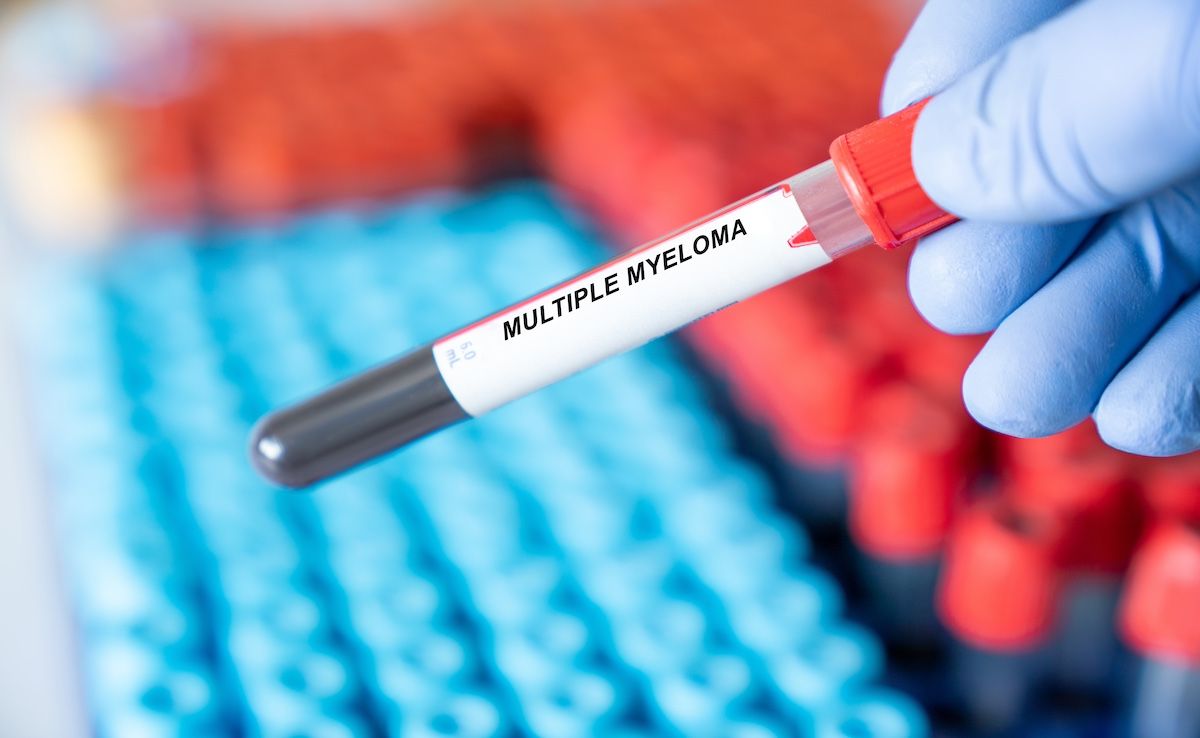
New Blood Test Shows Promise for Monitoring Multiple Myeloma
A new technique called SWIFT-seq offers a potentially less invasive way to monitor patients with multiple myeloma (MM) and its precursor conditions, according to research published August 8, 2025, in Nature Cancer. Currently, monitoring ofen relies on bone marrow (BM) biopsies, a more invasive procedure.SWIFT-seq analyzes circulating tumor cells (CTCs) found in a simple blood test.
Researchers at Dana-Farber Cancer Institute developed SWIFT-seq, which not only quantifies CTCs but also provides a more detailed analysis than customary methods like FISH (fluorescence in situ hybridization). According to researchers, SWIFT-seq can measure CTC numbers, characterize genomic alterations within the tumor, estimate the tumor’s proliferative capacity, and identify prognostically relevant gene signatures – all from a single blood sample.
“SWIFT-seq is a powerful option as it can measure the number of CTCs, characterize the genomic alterations of the tumor, estimate the tumor’s proliferative capacity, and measure prognostically useful gene signatures in a single test and from a blood sample,” said Dr. Ghobrial in a press release.2
The study involved 101 patients and healthy donors. The researchers successfully captured CTCs in 90% of individuals with monoclonal gammopathy of undetermined significance (MGUS), smoldering multiple myeloma (SMM), and MM. Specifically, CTCs were identified in 95% of SMM patients and 94% of those with newly diagnosed MM.1 the team believes these patient groups are most likely to benefit from improved risk assessment and ongoing genomic monitoring.
“We identified a gene signature that we believe captures the tumor’s circulatory capacity and may partly explain some of the unexplained mysteries of myeloma biology,” explained Dr. Elizabeth D. Lightbody, co-first author of the study.2 “This can have a tremendous impact in how we think about curtailing tumor spread in patients with myeloma and could lead to the development of new drugs for patients.”
Currently, obtaining the same level of characterization as SWIFT-seq requires four separate assays, three of which necessitate a BM biopsy, the investigators noted.1 They suggest SWIFT-seq could be a “pivotal” advancement in blood-based tumor profiling for MM patients.
“It would be amazing if we had a blood-based test that can outperform FISH and that works in the majority of patients-we think SWIFT-seq may just be that test,” stated Dr. Romanos Sklavenitis-Pistofidis, co-first author.2
References
- Lightbody ED, Sklavenitis-Pistofidis R, Wu T, et al. SWIFT-seq enables complete single-cell transcriptomic profiling of circulating tumor cells in multiple myeloma and its precursors. Nat Cancer. Published online August 8, 2025. doi:10.1038/s43018-025-01006-0
- Dana-Farber Cancer Institute unveils groundbreaking blood test for multiple myeloma. News release. Dana-Farber Cancer Institute. August 8, 2025. Accessed August 22, 2025.
- Bertamini L, Oliva S, Rota-Scalabrini D, et al. High Levels of Circulating Tumor Plasma Cells as a Key Hallmark of aggressive Disease in Transplant-Eligible Patients With Newly Diagnosed Multiple Myeloma.J Clin Oncol. 2022;40(27):3120-3131. doi:10.1200/JCO.21.01393
