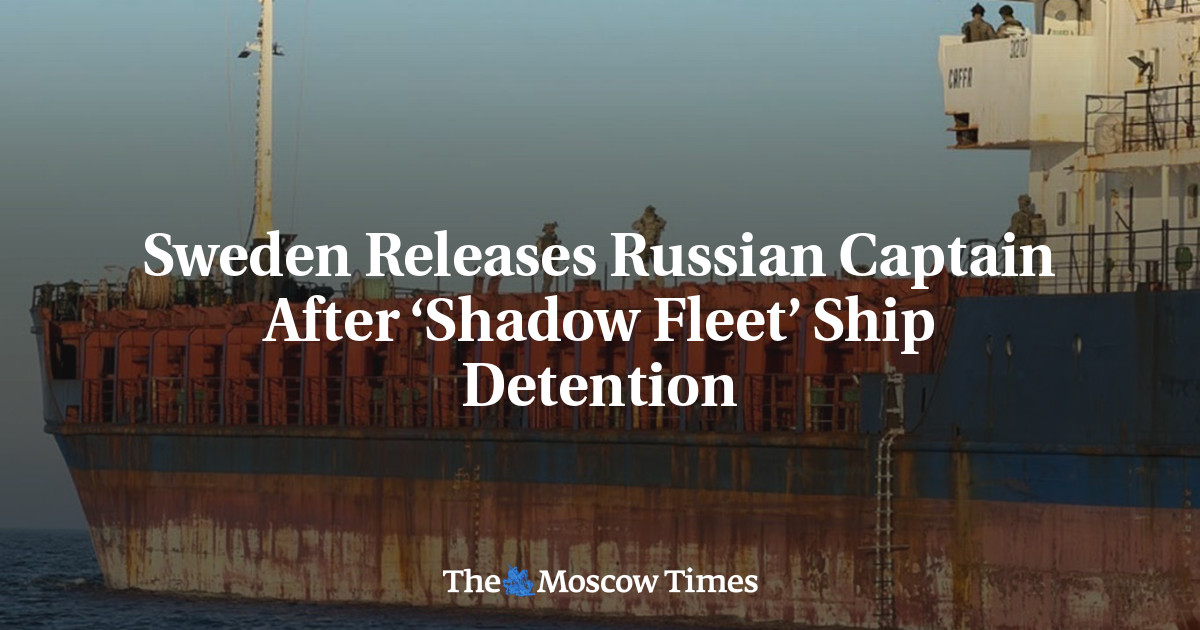
Swedish Prosecutors Say They Could Not Disprove Captain’s Claim of Unawareness of Fraudulent Ship Registration Papers
Swedish prosecutors released a Russian ship captain on April 22, 2026, after detaining his vessel under suspicion of violating sanctions via a ‘shadow fleet’ operation, concluding they could not prove he knowingly used fraudulent registration documents, a decision highlighting the growing challenges Western nations face in enforcing maritime sanctions against Russia as clandestine shipping networks adapt to evade detection through complex ownership structures and flags of convenience.
The Legal Threshold That Freed the Captain
The release of the captain, identified only as a 54-year-old Russian national, followed a three-day detention of the MV Arctic Seal in the port of Gothenburg after Swedish Coast Guard officers boarded the vessel on April 19 based on intelligence suggesting it was part of Russia’s shadow fleet transporting oil above the G7 price cap. Prosecutors stated they lacked sufficient evidence to contradict the captain’s sworn testimony that he believed the ship’s Panamanian registration documents were legitimate, having been provided by his employer, a Singapore-based shipping company later linked to a network of shell companies. This evidentiary gap underscores a critical vulnerability in sanction enforcement: proving mens rea, or criminal intent, when operators exploit layers of corporate opacity to distance decision-makers from illicit acts. Legal experts note that although Sweden’s Act on Criminal Responsibility for Genocide, Crimes Against Humanity and War Offenses allows for corporate liability, prosecuting individuals requires demonstrating direct knowledge—a high bar when beneficial ownership is concealed through jurisdictions like the Marshall Islands or Panama.

How Shadow Fleets Exploit Maritime Jurisdictions
Russia’s shadow fleet, estimated by the International Energy Agency to comprise over 400 tankers as of early 2026, relies on frequent re-flagging, vessel renaming, and complex ownership chains to obscure ties to sanctioned entities. The MV Arctic Seal, originally built in 2015 and previously registered under the Marshall Islands, had its documentation altered in January 2026 to demonstrate Panamanian registry—a change not reflected in real-time databases used by port state control officers in the Baltic Sea. This delay in data synchronization creates windows where vessels can load cargo in Russian ports like Ust-Luga and transit through European waters before sanctions filters update. Gothenburg, Sweden’s largest port by volume, processed over 120 million tons of cargo in 2025, making it a strategic chokepoint where even minor enforcement lags allow significant volumes of sanctioned goods to enter global markets. The incident has prompted local customs officials to advocate for real-time integration of maritime registries with the EU’s Central Sanctions Database, a proposal currently under review by the Swedish Ministry of Justice.
“Prosecuting shadow fleet operators isn’t about catching red-handed smugglers; it’s about dismantling the financial and legal infrastructure that makes deniability profitable. Until we hold the beneficiaries accountable, not just the low-level crews, these operations will persist.”
— Elin Andersson, Senior Lecturer in Maritime Law, Gothenburg University
Economic Ripple Effects in Western Sweden
The detention and release of the MV Arctic Seal had tangible local consequences. Gothenburg’s port authority reported a 12-hour delay in berthing schedules for three container ships awaiting the vacant dock, disrupting just-in-time supply chains for Volvo Group’s truck assembly plant in nearby Tuve, which relies on timely steel imports. Meanwhile, regional energy traders noted increased volatility in Baltic crude oil differentials following the incident, as market participants reassessed the reliability of sanction enforcement chokepoints. Small businesses dependent on port logistics, such as cold storage facilities in the Frihamnen district and customs brokerage firms in Älvsborg, faced indirect costs from scheduling uncertainty. These effects illustrate how maritime security incidents, even when resolved without penalties, generate friction costs that ripple through regional economies reliant on predictable trade flows—a dynamic particularly acute in export-dependent regions like Västra Götaland, where port-related activities support over 85,000 jobs.
The Directory Bridge: Who Solves This Problem?
Enforcing maritime sanctions effectively requires specialized expertise that crosses legal, technical, and regulatory domains. Companies seeking to vet shipping partners for sanctions risk increasingly consult international trade sanctions attorneys who specialize in interpreting complex ownership structures and flag state obligations. Port operators and logistics providers aiming to strengthen due diligence without delaying legitimate trade turn to maritime compliance technology firms offering real-time vessel tracking and registry verification tools integrated with global sanctions lists. Municipalities and port authorities looking to advocate for systemic upgrades in enforcement infrastructure often engage government relations consultants with expertise in EU transport policy and sanctions coordination to bridge gaps between local operational realities and supranational regulatory frameworks.
As long as economic incentives exist to move Russian oil beyond price caps, shadow fleet operators will continue exploiting jurisdictional seams and information asymmetries. The true test of sanction efficacy lies not in detaining individual captains acting on incomplete information, but in whether states can develop the legal mechanisms and technological reach to sanction the shadowy beneficiaries who profit from the opacity. For professionals tasked with navigating this evolving landscape—whether ensuring compliance, advising policymakers, or securing supply chains—the World Today News Directory remains the essential resource for identifying verified experts equipped to address the intersection of maritime law, sanctions enforcement, and global trade security.