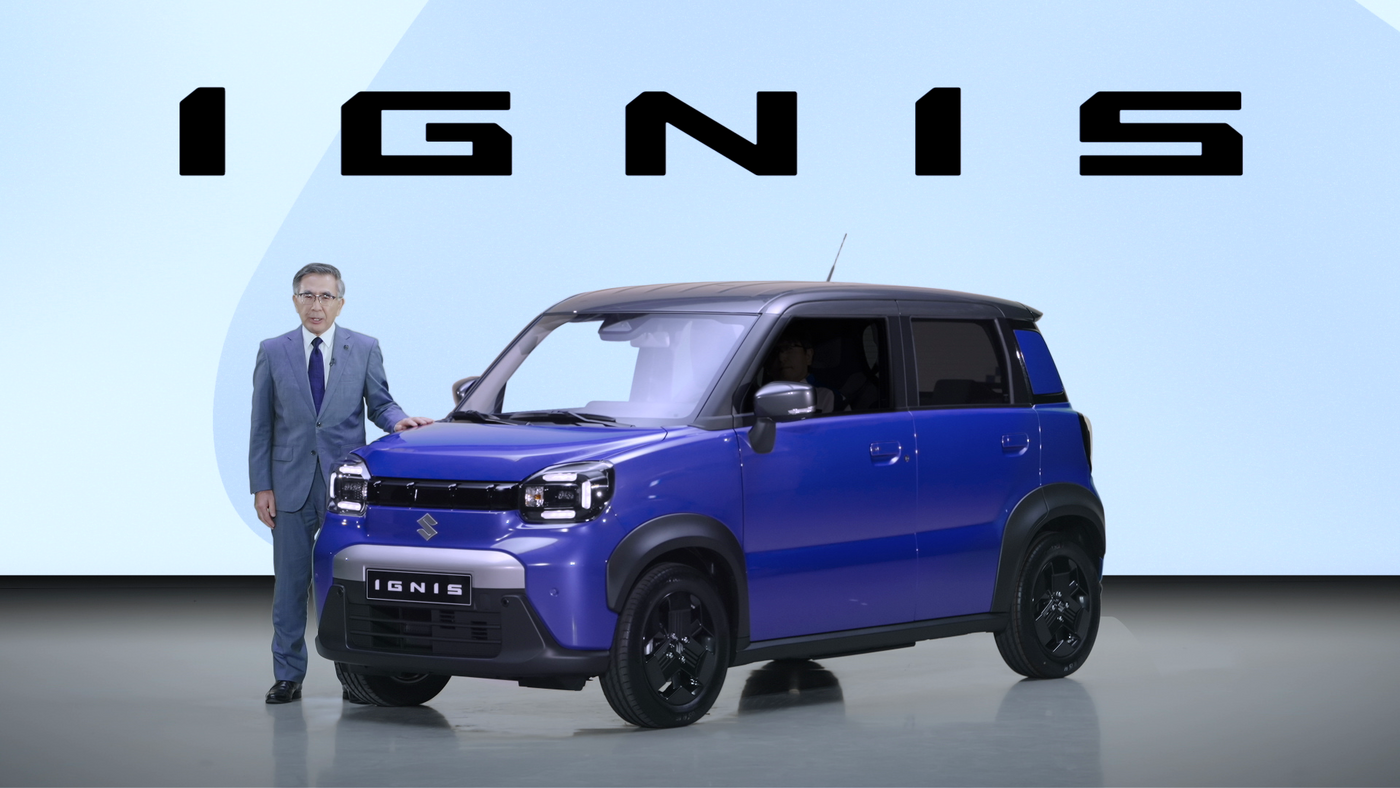
Suzuki Revives Ignis Name for Compact EV Targeting Europe by Summer 2027
Suzuki has revived the Ignis name for a new compact electric vehicle targeting European markets, with sales scheduled to begin by summer 2027.
The Ignis EV is a version of the Japanese e-Sky model, adapted for global markets and featuring a strong bumper and wheel arch flares.
The Ignis EV is built on the HEARTECT-e electric vehicle platform and is designed for city environments. It measures 3.57 meters in length, 1.56 meters in width, and 1.63 meters in height, with a wheelbase of 2.46 meters. This configuration provides a tight turning radius of 4.5 meters. Inside, the four-seater cabin includes practical details like bottle and cup holders, and a 10.1-inch information and entertainment system screen combined with a digital driver’s display.
Safety features include seven airbags and a Level 2 ADAS driver assistance package with adaptive cruise control, lane assist, and automatic emergency braking. The vehicle is equipped with a 26 kWh LFP (lithium iron phosphate) battery and a single electric motor on the front axle, developing 90 horsepower and approximately 133 Nm of torque, according to Rigatv.
“The battery was developed with a focus on safety and longevity”, according to the company. The e-Sky model achieves a 309-kilometer range under the WLTC cycle in Japan, but the range will be lower under the stricter European WLTP cycle.
“modelim pēc WLTC cikla solītais nobraukums ir 309 kilometri, taču stingrākajā Eiropas WLTP ciklā šis rādītājs, visticamāk, būs manāmi zemāks” Suzuki said, according to Kursors
The Ignis EV supports both AC and DC fast charging. Using a 7.3 kW AC charger, the battery can be fully charged in about four hours, while a 3.7 kW charger takes approximately eight hours. At a 50 kW DC fast-charging station, the battery can be charged from 0 to 80 percent in under 30 minutes. The car also features a one-pedal driving function and regenerative braking.
The manufacturer utilized its long-standing experience in developing Japanese Kei class microcars to optimize the vehicle’s interior space. This design approach aims to create a practical city vehicle that is easy to transition to from larger cars or internal combustion engine models.
The electric motor, inverter, and reducer are integrated into a single eAxle drive unit. To improve stability and body rigidity, the 26 kWh battery is positioned beneath the floor of the HEARTECT-e platform.
The front-wheel-drive system is powered by a 67 kW motor that produces 133 Nm of torque. Suzuki has specifically adjusted the chassis settings and motor power delivery following extensive testing on European city streets and winding roads in other regions.
Official pricing has not yet been disclosed and will be announced closer to the start of sales.