
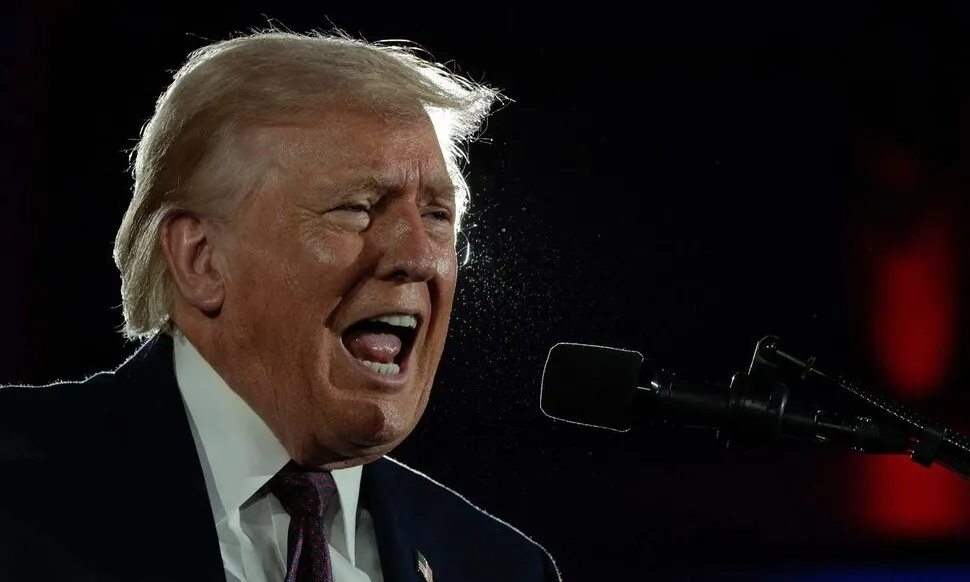
Suspicious Trades Before Trump Announcements Spark Insider Trading Concerns
Market anomalies preceding major geopolitical announcements under the Trump administration have triggered insider trading investigations. With billions in unexplained profits generated from oil and equity futures prior to policy shifts, institutional investors face heightened compliance risks requiring immediate forensic auditing and robust legal counsel to navigate potential regulatory fallout.
The scent of alpha is distinct in the markets, but so is the stench of impropriety. As of March 27, 2026, the financial landscape is grappling with a disturbing pattern: massive, timed capital deployments occurring mere minutes before the White House announces seismic geopolitical shifts. This isn’t just volatility. it is a structural breach of market integrity that threatens to erode institutional trust.
We are witnessing a recurrence of the “Trump Trade” phenomenon, but with a darker, more clandestine edge. During the first term, similar patterns emerged around G20 summits and trade negotiations with China. Now, in the second term, the stakes have escalated from tariff exemptions to active conflict zones. The market is pricing in information that theoretically belongs in a classified briefing room, not on the Chicago Mercantile Exchange.
The Mechanics of the Anomaly
The data points are too precise to be dismissed as coincidence. On March 23, just fifteen minutes before President Trump announced a five-day delay in planned strikes on Iranian facilities, the derivatives market lit up. Approximately 6,200 contracts of Brent Crude and WTI futures changed hands in a single minute, representing a notional value of roughly $580 million. Immediately following the announcement, oil prices collapsed, locking in substantial short-position profits for the unidentified counterparties.
Simultaneously, S&P 500 futures saw a volume spike inconsistent with standard algorithmic rebalancing. Estimated positions in index futures and options during this window ranged between $1 billion and $1.5 billion. This liquidity surge occurred during a timeframe devoid of public catalysts. In the world of high-frequency trading, fifteen minutes is an eternity; in the world of national security, it is a lifetime.
Paul Krugman, Nobel laureate and Distinguished Professor at the City University of New York, did not mince words regarding the implications. In a recent analysis of the transaction logs, he highlighted the absence of public information driving the move.
“There was no public information at the time to justify such a drastic shift in positioning. Someone with access to the President’s decision regarding a military strike monetized that national security secret. This represents not just market manipulation; it is the commodification of state secrets.”
The precedent for this behavior is well-documented. In 2019, prior to the G20 summit where trade talks with China were reset, massive S&P 500 long positions were established, netting approximately $1.8 billion in profit as the index rallied 84 points. Similarly, in September of that year, 82,000 E-mini S&P contracts were purchased ten minutes before the close, anticipating a tariff reprieve that yielded nearly $200 million in gains.
The Compliance Vacuum
For corporate treasurers and institutional asset managers, these anomalies represent a catastrophic compliance risk. If a fund is found to be on the wrong side of these trades, or worse, implicated in the flow of information, the reputational damage is irreversible. The regulatory environment in 2026 is unforgiving, yet the mechanisms to detect these “ghost trades” remain reactive rather than proactive.
This creates an urgent demand for specialized forensic accounting and compliance firms capable of dissecting transaction logs in real-time. Standard audit trails are no longer sufficient when dealing with actors who may have direct lines to the Executive Branch. Firms must now integrate advanced surveillance tools that flag pre-event liquidity spikes as potential red flags for internal investigation.
the rise of prediction markets like Polymarket adds another layer of complexity. Data indicates a specific actor achieved a 93% hit rate on military-related events over a two-year period, generating over $1 million in profit. While these platforms operate in a regulatory gray area, the correlation between betting market odds and actual CME futures pricing suggests information leakage is permeating multiple asset classes.
Strategic Imperatives for Q2 2026
As we move into the second quarter, the “Trump Volatility Index” is becoming a tangible metric for risk management. Corporations cannot afford to be passive observers. The intersection of geopolitics and finance requires a tripartite defense strategy to protect shareholder value and ensure regulatory adherence.
- Enhanced Due Diligence: Institutional investors must scrutinize counterparty exposure. Engaging with specialized corporate legal counsel to review trading mandates and information barriers is no longer optional; it is a fiduciary necessity.
- Liquidity Stress Testing: Treasury departments need to model scenarios where market closures or sudden geopolitical shocks freeze liquidity. The sudden 7% rally in the S&P following the April 2025 tariff delay proves that policy tweets can override fundamental valuation models instantly.
- Whistleblower Protocols: With Krugman suggesting that current administration investigations are unlikely to yield results, internal governance structures must be fortified. Companies should consult with enterprise risk management consultants to establish anonymous reporting channels for suspicious trading activity within their own supply chains.
The market hates uncertainty, but it despises unfairness even more. When alpha is generated not through superior analysis but through privileged access to the Oval Office, the playing field tilts dangerously. For the prudent CFO, the lesson is clear: in an era where national security decisions drive basis point movements, your compliance infrastructure must be as agile as the markets themselves.
The trajectory for the remainder of 2026 suggests continued friction between policy announcements and market reactions. Investors who fail to secure their information perimeters risk becoming collateral damage in a broader political struggle. The World Today News Directory remains the primary resource for identifying the vetted B2B partners necessary to navigate this treacherous fiscal landscape.