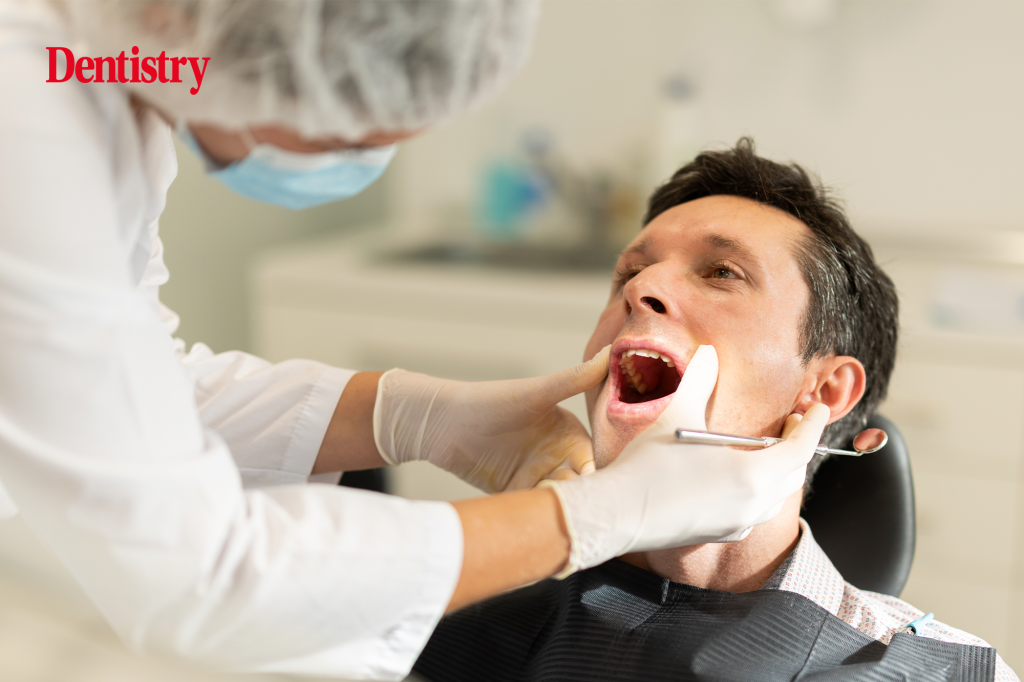
Survey: Fewer Than Half of UK Adults Know Dentists Screen for Mouth Cancer
Fewer than half of UK adults know that dentists routinely screen for mouth cancer during standard appointments, according to a report from the Oral Health Foundation.
The survey also found that 71% of adults have never personally examined their own mouths for signs of the disease, Dentistry.co.uk reported.
Neil Sikka, director of dentistry at Bupa Dental Care, said most patients do not realize an oral cancer screen is a standard part of a check-up.
“Most people don’t even realise that we do an oral cancer screen as part of our normal check-ups,” Sikka said. “You go into your dentist, they ask you to stick your tongue out, they have a look underneath it and ask you to go ‘ah’ because we’re looking at your throat. We’re having a look around your whole mouth and feeling the glands underneath your jaw.”
The examination typically lasts between three and five minutes, though Sikka noted the duration depends on patient attendance. Financial barriers may be impacting these visits; the Bupa Wellbeing Index 2026 found that 20% of UK adults surveyed had reduced, delayed or cancelled dental care to save money in the previous 12 months.
Making the examination visible
Sikka suggested dental teams should be explicit, telling patients when the cancer examination is occurring and explaining its necessity. The process generally covers the face, neck, lips, oral soft tissues, throat, and the area beneath the tongue, often informed by a patient’s history of alcohol and tobacco use.
“We’re one of the very few professions where people voluntarily come once or twice a year to check that their oral health is okay,” Sikka said. “How often do people go to the doctor and say, ‘I just want you to check that my health is okay’? We’re in an incredibly privileged position to promote prevention.”
By explaining why the neck is palpated or why the tongue is moved, clinicians can help patients understand the value of the appointment. It also provides a window to discuss symptoms patients should monitor between visits.
The stakes of early diagnosis
Early detection is critical for survival. The Oral Health Foundation report cited historical figures for oral-cavity cancer in England indicating a five-year survival rate above 85% following a stage-one diagnosis. That figure drops to 35% at stage four.
When a suspicious change is identified, Sikka recommended taking a clinical photograph where appropriate and recording the finding clearly. Patients can be referred through the NHS urgent suspected cancer pathway regardless of whether they attend an NHS or private practice. While Bupa provides a private referral route to Cromwell Hospital, Sikka said most referrals enter the NHS pathway.
He added that patients should be informed of why they are being referred, what the next steps are, and whom to contact if an appointment does not arrive. The clinical record should document the finding, the advice given, the referral, and any subsequent follow-up.
Emerging diagnostic tools
While technology is expected to support clinical assessments, Sikka said that adjunctive tools cannot independently diagnose mouth cancer. In July, Dentistry.co.uk reported on a brush biopsy currently in development that aims to detect mouth cancer in under one hour. While it offers a non-invasive way to triage and monitor suspicious lesions, it has not entered routine clinical use.
Sikka also expects artificial intelligence to improve the assessment of clinical images and the identification of lesions requiring investigation. He also identified saliva as a potential biomarker for both oral and systemic health.
“I do believe that saliva is the biomarker of the future,” Sikka said. “It’s already starting to tell us so much about disease as a whole, and I think it’s going to give us indications of much more, including potentially the changes in your mouth when you’re developing oral cancer.”
Bupa currently provides saliva-based genomic services to assess inherited risk and medicine response for selected conditions, though these are not mouth cancer tests. Any future diagnostic use would require evidence that it identifies clinically meaningful changes without causing unnecessary referrals or false reassurance.
A year-round approach
Sikka argued that communication regarding mouth cancer should extend beyond the annual Mouth Cancer Action Month campaign.
“It’s not something you just do for a month. It’s something you should be doing every day,” Sikka said. “I would love for us to continue throughout the year, not by shoving it down people’s throats, but with gentle reminders of what people can do in a simple way to stay healthy.”
He called for a collaborative effort between dental professionals, charities, and both public and private healthcare organisations to maintain year-round communication.
“Nobody can do it on their own,” Sikka said. “If the profession works together with healthcare bodies and the Oral Health Foundation, we’re going to save some lives.”
- WhiteLab Genomics, Institut du Cerveau Engineer AI Vectors Reaching Brain 50x Better
- Advance Care Planning for Children with Life-Limiting Conditions: A Systematic Review Findings
- Median Net Worth Peaks at 75+ in the Fed's Survey, but the Lead Is Thin (daybreakwire.com)
- Phoebe Bridgers’ Phone-Free 3Arena Concerts Create Immersive Screen-Free Experience (archyde.com)