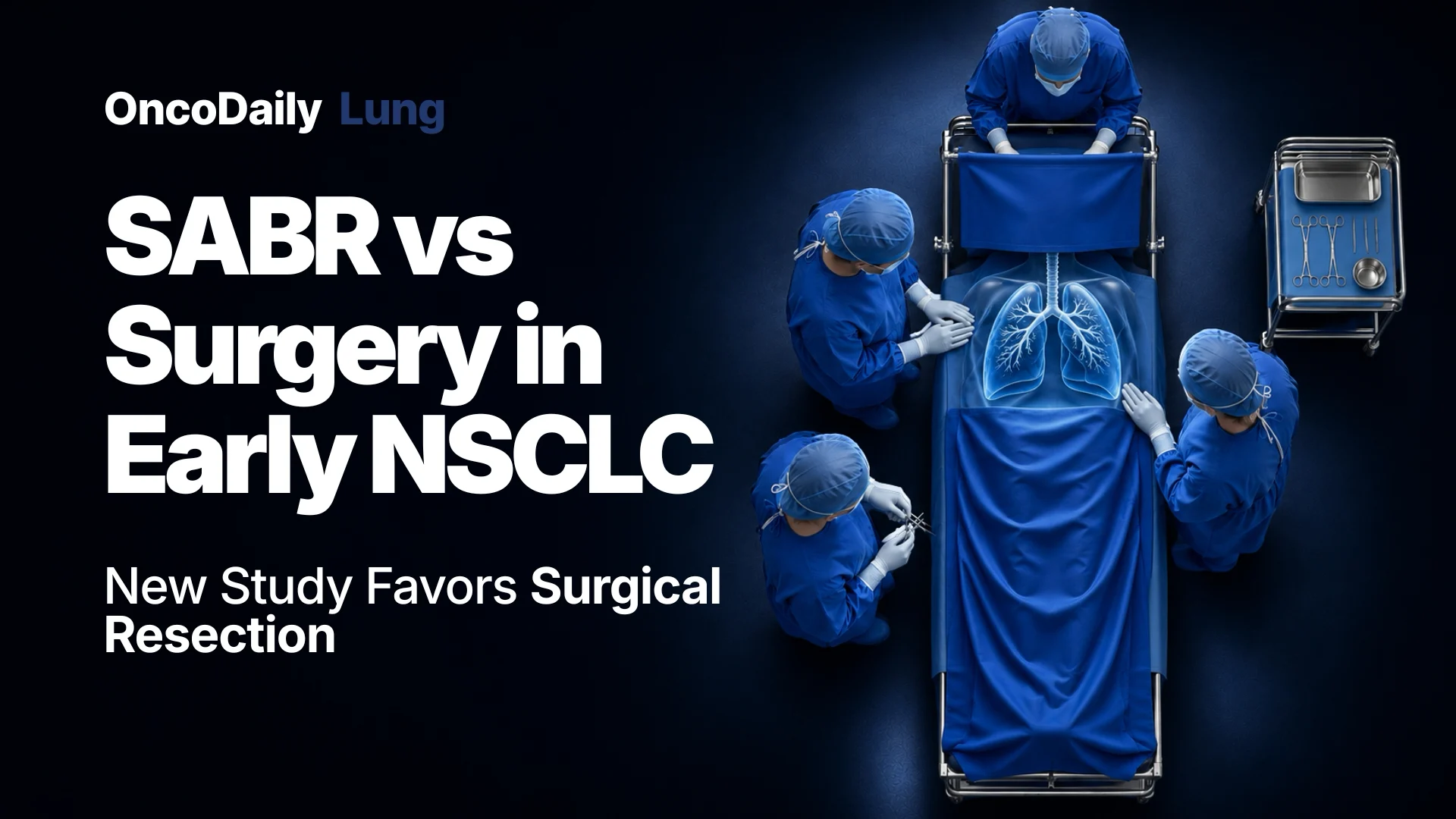
Surgery Remains Preferred Over SABR for Early-Stage NSCLC: Large UK Study Finds Higher Mortality with Radiotherapy
Surgical resection remains associated with significantly lower three-year all-cause mortality than stereotactic ablative radiotherapy for medically suitable patients with early-stage non-small cell lung cancer, according to a large population-based study published in the Journal of Clinical Oncology on November 2, 2026.
- Investigators analyzed 12,546 patients across England diagnosed with early-stage non-small cell lung cancer between 2015 and 2020.
- Adjusted three-year all-cause mortality reached 30.3% following stereotactic ablative radiotherapy compared with 21.6% after surgical resection.
- Among patients aged 80 years or older, the mortality difference narrowed to 4.3 percentage points and was not statistically significant.
Radiotherapy Emerges as Alternative to Surgical Resection
For patients diagnosed with early-stage non-small cell lung cancer without lymph node involvement, curative-intent local treatment offers an opportunity for long-term survival. Surgical resection has traditionally represented the principal treatment strategy for medically operable patients. While a standard approach involves lobectomy paired with thorough nodal assessment, anatomical sublobar resection can be suitable when managing specific small, peripheral tumors. However, improvements in radiotherapy planning and delivery have made stereotactic ablative radiotherapy an increasingly important alternative. The central controversy concerns whether stereotactic ablative radiotherapy can produce outcomes comparable with surgery in patients who are medically eligible for either treatment. Recruitment challenges plagued several randomized trials—such as ROSEL, STARS, SABRTooth, and ACOSOG Z4099/RTOG 1021—leading to their early termination or a determination of infeasibility. Earlier observational comparisons have also produced conflicting findings, often because patients selected for radiotherapy were older and had substantially greater comorbidity burdens than those undergoing surgery. A study led by Eva Kagenaar and colleagues from the London School of Hygiene & Tropical Medicine and collaborating UK institutions addresses this using routinely collected patient data.

Instrumental Variable Analysis Accounts for Baseline Differences
The research team gathered records from England’s National Cancer Registry, Hospital Episode Statistics, the National Radiotherapy Data Set, and national mortality registries. The study included adults with T1–2N0M0 non-small cell lung cancer diagnosed between January 2015 and December 2020 who underwent surgery or stereotactic ablative radiotherapy within six months of diagnosis. Patients aged 18–79 years were eligible with a Zubrod performance status of 0–2, while patients aged 80 years or older were required to have a performance status of 0–1.
A total of 12,546 patients met the eligibility criteria. Of these, 10,247 patients, or 81.7%, underwent surgical resection, while 2,299 patients, or 18.3%, received stereotactic ablative radiotherapy. Lobectomy accounted for approximately 76% of surgical procedures. The most frequently used radiotherapy regimen was 55 Gy in five fractions. The cohort treated with radiotherapy featured an older demographic, registering a median age of 74.9 years as opposed to 71.8 years for individuals who underwent surgery. Chronic obstructive pulmonary disease was present in 45.8% of the radiotherapy group versus 26.0% of the surgical group, while ischemic heart disease affected 26.5% and 16.5% of the respective populations.
To account for these baseline differences, the researchers employed an instrumental variable analysis based on the proportion of eligible patients receiving radiotherapy instead of surgery within each clinical referral network during the preceding six months. Following this adjustment, estimated three-year all-cause mortality was 30.3% following stereotactic ablative radiotherapy compared with 21.6% after surgical resection, representing an absolute risk difference of 8.8 percentage points.
Mortality and Recurrence Findings in Older Subgroups
The analysis also examined lung-cancer-specific mortality and recurrence. At three years, adjusted lung-cancer-specific mortality was 20.6% following stereotactic ablative radiotherapy compared with 14.5% after surgery, an absolute difference of 6.1 percentage points that did not reach statistical significance. Adjusted three-year recurrence was 34.3% following radiotherapy compared with 27.9% after surgery, which was also statistically inconclusive.
An evaluation focusing on individuals aged 80 years and older yielded some of the most clinically meaningful insights in the study. This subgroup included 1,752 patients with performance status 0–1. Among these individuals, the adjusted absolute difference in three-year all-cause mortality between stereotactic ablative radiotherapy and surgery was 4.3 percentage points and lacked statistical significance. By contrast, patients aged 18–69 years demonstrated an adjusted difference of 10.9 percentage points, and those aged 70–79 years showed an estimated difference of 8.4 percentage points.
Disclaimer: The information provided in this article is for educational and scientific communication purposes only and does not constitute medical advice. Always consult with a qualified healthcare provider regarding any medical condition, diagnosis, or treatment plan.
Related reading
- Panax Ginseng Shows Effects Against Depression and Alzheimer’s
- Epic Games CEO Tim Sweeney outlines AI integration in Unreal Engine 6
- Peña Offered to Resign but Remains President; 30 of 45 Senators Decide (daybreakwire.com)
- The findings were detailed in JAMA Otolaryngology–Head & Neck Surgery, as reported by Asharq (archyde.com)