
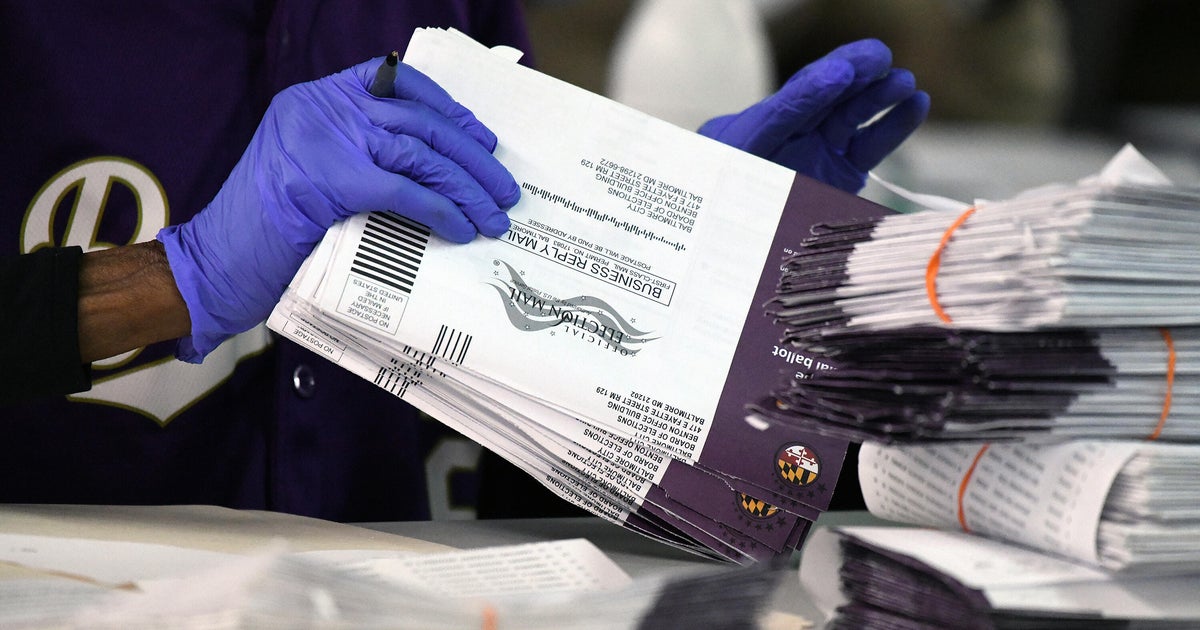
Supreme Court to Rule on Mail Ballot Deadlines, Potentially Impacting 2024 Election
WASHINGTON — The Supreme Court heard arguments Monday in a case that could reshape mail-in voting rules across the country, weighing whether states can count ballots received after Election Day, even if postmarked on time. The dispute, Watson v. Republican National Committee, centers on Mississippi’s law allowing ballots received up to five days after Election Day to be counted, and whether it conflicts with federal statutes establishing a uniform Election Day.
At issue is the interpretation of federal election laws enacted in the 19th century, which set a national Election Day as the Tuesday after the first Monday in November. Mississippi argues its law reflects a policy choice within the bounds of federalism, while the Republican National Committee and other plaintiffs contend the federal statutes require ballots to be received by Election Day, preempting state grace periods. The case has implications for at least 13 other states with similar laws, and for the roughly 4 million U.S. Citizens abroad and military personnel who rely on mail-in ballots, according to SCOTUSblog.
During oral arguments, justices questioned whether a strict interpretation of federal law requiring ballots to be received by Election Day would create practical difficulties for voters, particularly those serving overseas or in the military. “If the Supreme Court decides to read into the Constitution a requirement that election officials have ballots in their hands by Election Day, I don’t know how they carve out an exception for military and overseas voters,” said David Becker, an election law contributor and executive director of the Center for Election Innovation and Research, prior to the hearing. “There’s nothing in the Constitution that says that.”
Mississippi Secretary of State Michael Watson, defending the state’s law, argued that the “election” is complete when a voter marks their ballot, not when election officials receive it. He maintained that states have the constitutional authority to manage the mechanics of federal elections, as outlined in the Elections Clause. “It does not matter…that election officials in Mississippi may receive some ballots after election day,” Watson wrote in court filings. “Only ballot casting is essential to an election.”
Lawyers for the RNC countered that the election process encompasses both the casting and receipt of ballots, and that a patchwork of state deadlines undermines the uniformity Congress sought to establish in the 19th century. They argued that allowing ballots to arrive after Election Day creates uncertainty and the potential for fraud, though instances of widespread mail-voting fraud remain rare. Jason Snead, executive director of the Honest Elections Project, stated that the case is about Congress exercising its power and bringing states “back into check” that are violating federal law.
The case originated in 2024 when the RNC, the Mississippi GOP, and the state’s Libertarian Party filed suit challenging Mississippi’s ballot-receipt deadline. A U.S. District Court initially upheld the state law, but the U.S. Court of Appeals for the Fifth Circuit reversed that decision, finding that federal law preempted the state’s grace period. The Fifth Circuit found that “election day is the day by which ballots must be cast by voters and received by state election officials.” According to the Supreme Court docket, the Fifth Circuit denied a rehearing en banc in March 2025.
A decision in Watson v. RNC is expected by the end of June or early July, and could force states with grace periods to revise their election procedures ahead of the November midterm elections. Election officials, like Kristin Connelly, the clerk-recorder and registrar of voters for Contra Costa County, California, have expressed concern about the potential for disruption and voter confusion. “I question what problem they’re trying to solve,” Connelly said. “This is not making things more secure. This is making things more chaotic.”