
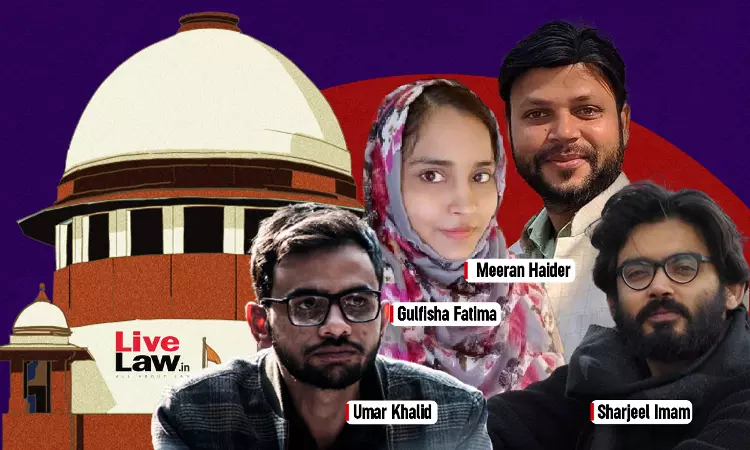
Supreme Court Delays Ruling on Bail for Umar Khalid, Others in Delhi Riots Case
New Delhi: The Supreme Court today adjourned hearings regarding the bail petitions of Umar Khalid, Gulfisha Fatima, Sharjeel Imam, Meeran Haider, and Shifa-Ur-Rehman – all accused in the 2020 Delhi riots ”larger conspiracy” case – until September 22. The court was hearing appeals challenging a September 2, 2023, Delhi High Court decision that denied bail to these individuals, who have been in custody for over five years.
The case centers around allegations that these activists and students conspired to incite the violence that erupted in northeast Delhi in February 2020. The ongoing legal battle highlights the complexities of balancing national security concerns with fundamental rights to freedom and due process, and the prolonged detention of the accused raises questions about the pace of justice in sensitive cases involving accusations of sedition and terrorism under the Unlawful Activities (Prevention) Act (UAPA).
The individuals involved in the case, alongside others previously arrested, include Tahir Hussain, Khalid Saifi, Isharat Jahan, Asif Iqbal Tanha (granted bail in 2021), Shadab Ahmed, Tasleem Ahmed, Saleem Malik, Mohd. Saleem Khan, Athar Khan, Safoora Zargar (granted bail on humanitarian grounds), and Faizan Khan. Devangana Kalita and Natasha Narwal were also granted bail previously.
The specific cases before the Supreme Court are:
- UMAR KHALID v. STATE OF NCT OF DELHI | SLP(Crl) No. 14165/2025
- GULFISHA FATIMA v STATE (GOVT. OF NCT OF DELHI ) | SLP(Crl) No. 13988/2025
- SHARJEEL IMAM v THE STATE NCT OF DELHI | SLP(Crl) No. 14030/2025
- MEERAN HAIDER v. THE STATE NCT OF DELHI | SLP(Crl) No. 14132/2025
- SHIFA UR REHMAN v STATE OF NATIONAL CAPITAL TERRITORY | SLP(Crl) No.14859/2025
The September 22 hearing will determine whether the accused will remain in custody pending trial or be granted provisional release.
