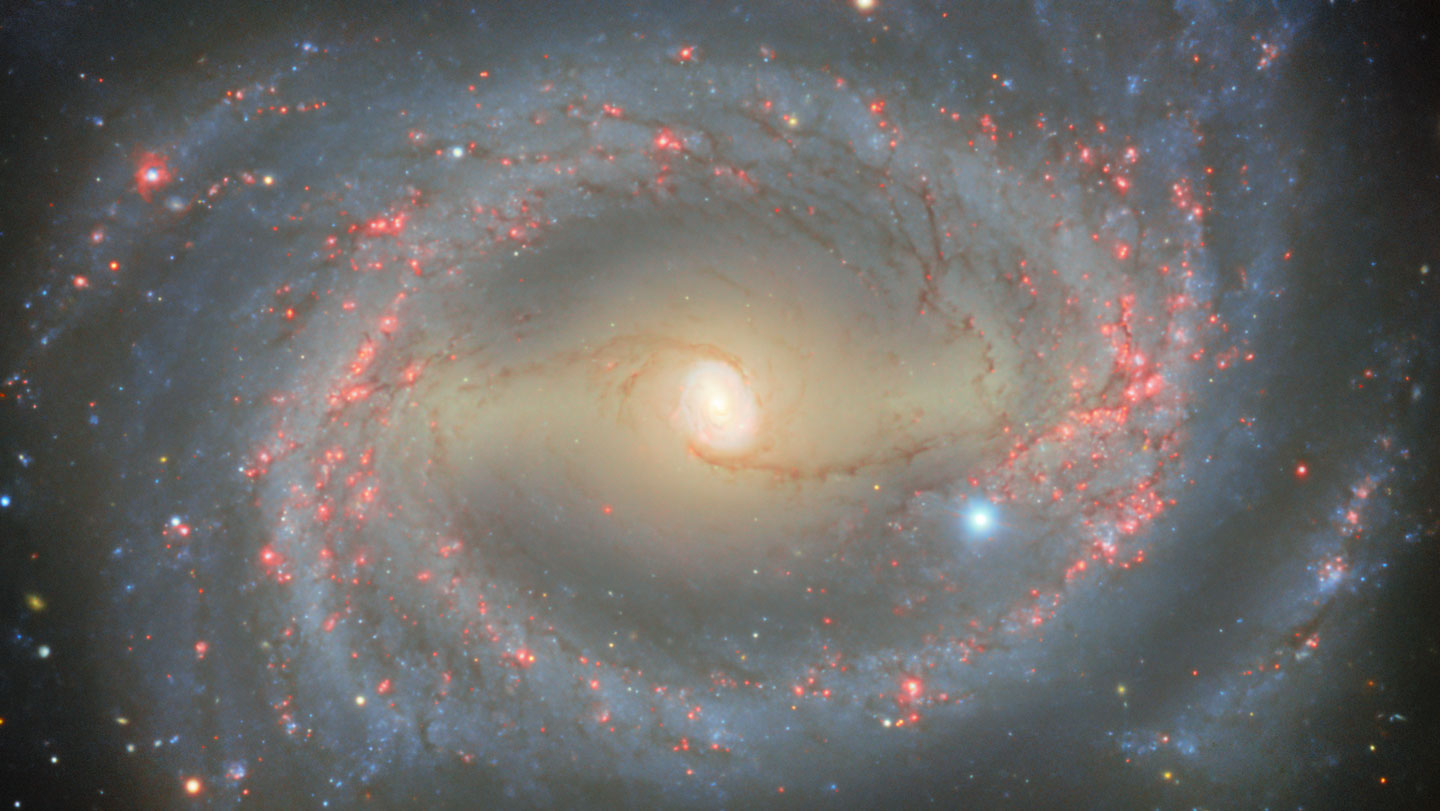
Supernova SN 2026ahvu Offers Rare Clues to Type Ia Explosion Mystery
“I think almost everyone in the world is trying to trigger a telescope and look at this,” said Sumit Sarbadhicary, an astrophysicist at Johns Hopkins University.
Astronomers spotted the supernova now designated SN 2026ahvu on Nov. 2 and classified it as a type Ia within a day, before it peaked in brightness. The explosion lies perhaps 50 million light-years or less from Earth, close enough to reveal details usually lost at greater distances, Science News reported.
Type Ia supernovas serve as “standard candles” for measuring cosmic expansion because they follow a predictable brightness pattern. They occur when a white dwarf — the remnant of a sun-like star — gains enough mass, roughly 1.44 times the sun’s, to reignite and destroy itself. What pushes the dwarf over that threshold remains unsettled: a second white dwarf or a still-burning companion star are the leading candidates.
“These explosions have been enduring mysteries for us for decades, and whenever something happens this close, it’s just really exciting,” Sarbadhicary said.
Preliminary findings posted Nov. 6 on arXiv.org suggest the progenitor white dwarf was less than 100 million years old — remarkably young for this class of explosion. That age estimate may help refine models of how these systems evolve and detonate, the researchers wrote.
Yvette Cendes, an astronomer at the University of Oregon in Eugene, has arranged for radio telescopes to observe the outburst. “They happen so rarely at this distance that it could hopefully help us figure out why this white dwarf exploded in the first place,” Cendes said.
Radio and multi-wavelength campaigns are ongoing.
That estimate is remarkably young for a type Ia event, where the exploding stars are typically much older. The researchers wrote that this age constraint may help finetune understanding of how these binary systems evolve toward detonation.
Sarbadhicary said the youth of the progenitor could help discriminate between competing explosion scenarios. If the white dwarf reached the critical mass threshold in under 100 million years, the companion star transferring material would need specific properties, potentially favoring one theoretical channel over another.
She said events this close occur so rarely that the data could help determine why this particular white dwarf exploded. Radio observations can reveal the density and structure of material surrounding the star before it detonated.