
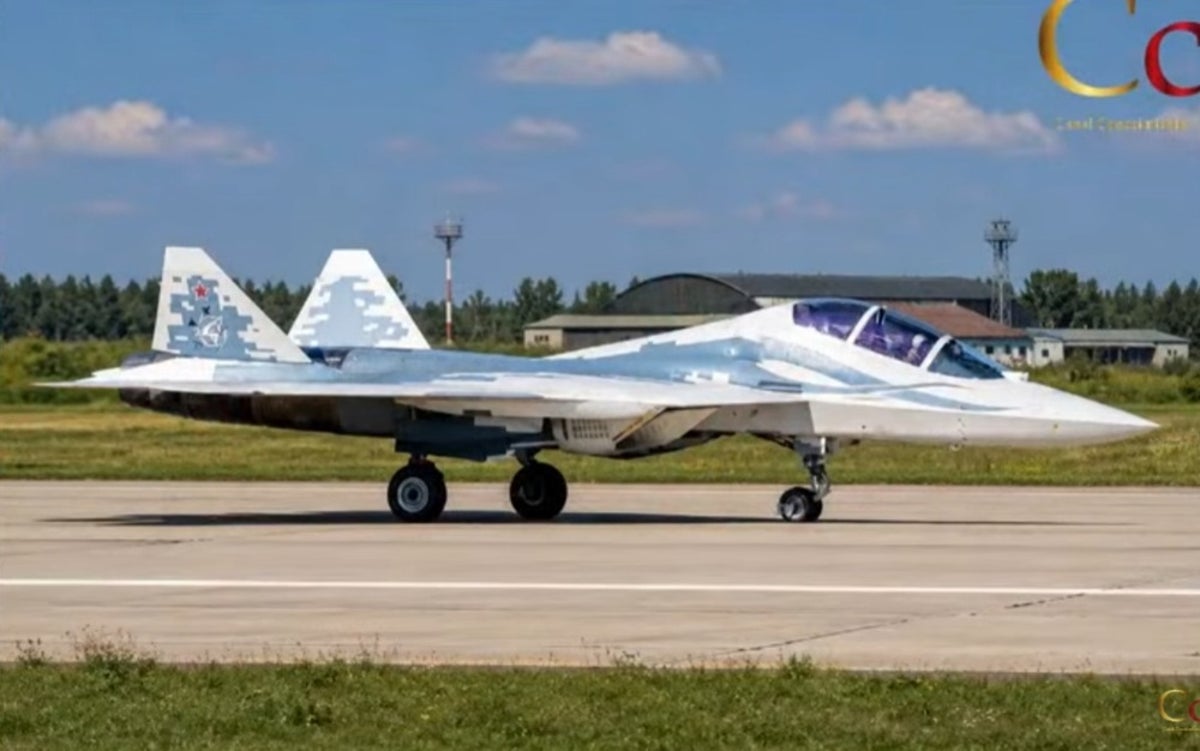
Sukhoi’s Dual-Seat Cockpit Drives Drone Missions, Advanced Training & India Market Push
On May 20, 2026, Russia unveiled the two-seat variant of its Su-57 Felon fifth-generation stealth fighter—marking a pivotal shift in military aviation and commercial aerospace strategy. The tandem-cockpit design signals Sukhoi’s push to dominate drone warfare, pilot training, and high-value export markets, particularly targeting India’s $100 billion+ defense modernization plan. The move also deepens Russia’s geopolitical leverage over NATO air superiority programs, while forcing aerospace suppliers to adapt to a new era of dual-role combat systems.
This isn’t just about one aircraft. It’s about rewriting the rules of air combat—where stealth meets automation, and where a single platform could become the backbone of future air forces. For cities like Moscow, Komsomolsk-on-Amur, and Novosibirsk—home to Sukhoi’s production hubs—the economic ripple effects will be immediate. But the real story lies in how this development forces aerospace contractors, legal advisors, and defense analysts to recalibrate their strategies in real time.
A New Era for Stealth: Why the Two-Seat Su-57 Matters
The Su-57 Felon has long been Russia’s answer to the F-35 and F-22—a fifth-generation fighter designed for low observability, supercruise speeds, and advanced avionics. But the two-seat variant introduces a game-changer: a dedicated instructor/pilot tandem cockpit. This isn’t merely an upgrade. It’s a strategic pivot.
- Drone Integration: The second seat enables real-time control of unmanned aerial systems (UAS), turning the Su-57 into a command-and-control node for swarm tactics—a capability no Western fighter currently matches.
- Pilot Training: With fifth-gen fighters requiring radically different piloting skills, the two-seat model allows for accelerated training, reducing the time and cost of certifying new pilots.
- Commercial Offense: Sukhoi is positioning the Su-57 as a “turnkey” solution for air forces, bundling the fighter with training programs and drone support—a hard sell for competitors like Lockheed Martin or Dassault.
Geopolitical Chess: India as the Battleground
India’s $100 billion defense modernization push makes it the prime target for Sukhoi’s offensive. The two-seat Su-57 could be the linchpin in Russia’s bid to replace India’s aging MiG-21 and MiG-29 fleets. But the stakes are higher than hardware sales.
“This isn’t just about selling planes. It’s about embedding Russia’s technological ecosystem into India’s defense infrastructure. The two-seat Su-57 gives Moscow leverage—not just in aircraft, but in training, maintenance, and even data-sharing agreements.”
For India, the decision isn’t just military—it’s economic. The Su-57’s integration would require:
- Upgrades to India’s airbases to support fifth-gen operations.
- New training academies for pilots and technicians.
- Cybersecurity measures to protect the fighter’s classified systems.
Each of these creates opportunities for specialized aerospace engineering firms and defense logistics providers already positioned in Bangalore, Hyderabad, and Pune.
The Domino Effect: How This Shifts Global Aerospace
The Su-57’s two-seat variant forces aerospace manufacturers to adapt. Here’s how:
| Challenge | Industry Response | Directory Solution |
|---|---|---|
| Accelerated pilot training demands | Simulator manufacturers and flight schools must pivot to fifth-gen training protocols. | Advanced flight simulation providers are already updating their software to include Su-57-specific scenarios. |
| Drone swarm integration requirements | Defense contractors must develop compatible UAS control systems. | UAV integration specialists are in high demand as air forces scramble to match Russian capabilities. |
| Legal and export restrictions | Companies navigating sanctions and technology transfer laws. | International trade and defense export attorneys are seeing a surge in inquiries about compliance with ITAR/EAR regulations. |
Moscow’s Production Hubs: Economic Windfall or Overcapacity Risk?
The Su-57’s rollout will strain—and stimulate—Russia’s aerospace infrastructure. Key cities:
- Moscow: Home to Sukhoi’s headquarters, the city’s defense contractors will see a surge in orders for avionics and radar systems. However, local officials are already warning of labor shortages.
- Komsomolsk-on-Amur: The KnAAPO plant, where Su-57s are assembled, will ramp up production. But the region’s aging workforce raises questions about long-term sustainability.
- Novosibirsk: The Novosibirsk Aircraft Plant (NAPO) is likely to handle maintenance and upgrades. Municipal leaders are lobbying for tax incentives to attract skilled workers.
“The Su-57 program is a double-edged sword for Novosibirsk. On one hand, it brings much-needed investment. On the other, it risks overloading our local workforce unless we act fast to retrain engineers for fifth-gen systems.”
For businesses in these regions, the question isn’t if they’ll benefit—but how. Local economic development agencies are already working with aerospace firms to create workforce training programs tailored to the Su-57’s unique requirements.
The Long Game: What’s Next for Sukhoi and the Su-57?
Sukhoi isn’t just selling an aircraft. It’s selling a system. The two-seat Su-57 is the first move in a broader strategy:

- Export Dominance: Russia will leverage the Su-57’s dual capabilities to undercut Western competitors in markets like India, Egypt, and Algeria.
- Drone Supremacy: The fighter’s UAS integration will position Russia as the leader in hybrid air combat—where manned and unmanned systems operate in tandem.
- Training Monopoly: By controlling the training infrastructure, Sukhoi ensures long-term customer lock-in, making it harder for buyers to switch to alternative platforms.
The real test will come in the next 12–18 months, as Sukhoi moves from prototypes to full-scale production. For now, the message is clear: the future of air combat is here—and it’s coming with two seats.
The Kicker: Who Wins When the Skies Change?
The Su-57’s debut isn’t just a military milestone. It’s a wake-up call for aerospace industries, defense analysts, and even municipal governments. The question isn’t whether the world will adapt—it’s who will lead the charge.
For those already positioned to capitalize:
- Defense strategy firms are advising air forces on how to integrate fifth-gen systems into existing fleets.
- Precision machining and composites suppliers are seeing record demand for stealth-compatible materials.
- Specialized cybersecurity firms are being hired to protect the Su-57’s classified networks from espionage.
The Su-57 isn’t just changing the way wars are fought. It’s changing the way industries prepare for them. And in this new era, the winners won’t be those with the best planes—but those with the best partners.