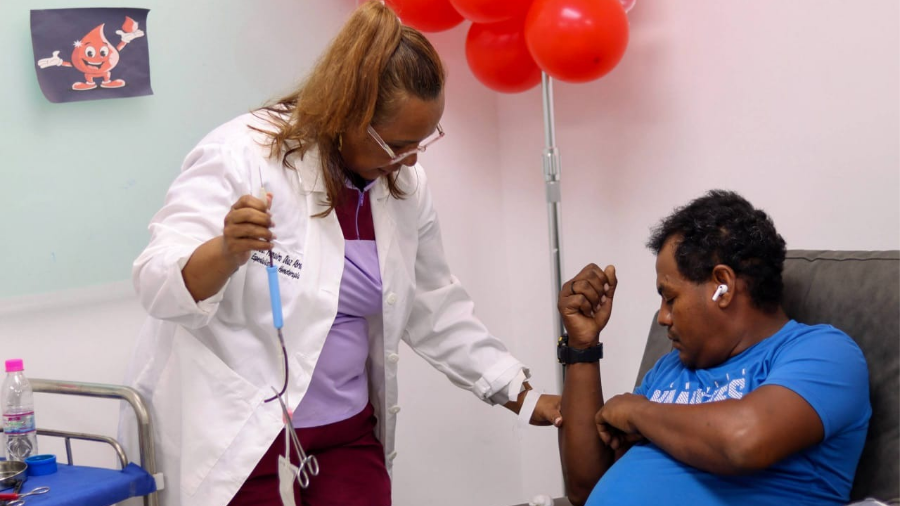
Successful Voluntary Blood Donation Drive Held at Gran Cacique Higoroto University Hospital
Volunteers at the Hospital Universitario General de Higuerote “Gran Cacique Higoroto” successfully completed a coordinated blood donation drive this week, addressing critical regional shortages in the national blood supply. This mobilization underscores the ongoing necessity for consistent hematological reserves to support elective surgeries, trauma care, and the management of chronic blood dyscrasias within the public health infrastructure.
Key Clinical Takeaways:
- Blood donation remains the primary source for life-saving transfusion therapy, as no synthetic alternative currently replicates the full physiological function of human blood.
- Maintaining a stable blood supply is a critical component of institutional preparedness, directly impacting mortality rates in emergency trauma and surgical settings.
- Prospective donors must undergo rigorous screening for blood-borne pathogens to ensure the safety of the clinical supply chain and prevent transfusion-transmitted infections.
The Physiological Necessity of Hematological Reserves
The clinical utility of donated blood is predicated on the constant demand for its individual components: erythrocytes (red blood cells), leukocytes (white blood cells), platelets, and plasma. According to the World Health Organization (WHO), safe blood transfusion is a standard of care for patients suffering from life-threatening conditions, including severe anemia, obstetric hemorrhages, and complex oncological interventions. The pathogenesis of hypovolemic shock following trauma necessitates rapid intervention with packed red blood cells to restore oxygen-carrying capacity. Without a steady influx of voluntary donations, healthcare facilities face significant bottlenecks in providing timely, evidence-based care.

Epidemiological Impact and Supply Chain Integrity
The reliance on voluntary, non-remunerated donors is the gold standard for maintaining a low-risk blood supply. Per the National Institutes of Health (NIH), the prevalence of transfusion-transmitted infections (TTIs) is significantly lower in blood collected from voluntary donors compared to those who donate for financial compensation. The drive at the “Gran Cacique Higoroto” facility adheres to these international safety benchmarks, ensuring that each unit undergoes comprehensive serological testing for infectious markers, including HIV, Hepatitis B and C, and Syphilis.
“The sustainability of the blood supply chain is not merely a matter of logistics; it is an issue of clinical survival. A robust donor base acts as a buffer against the morbidity associated with surgical delays and acute medical crises,” notes Dr. Elena Vance, a specialist in transfusion medicine.
Clinical Triage and Patient Access
For patients requiring elective procedures, the availability of compatible blood products is a primary determinant of scheduling and safety. When local supply chains face disruption, the risk of surgical cancellation increases, potentially exacerbating patient outcomes. Patients or families currently navigating the complexities of blood-dependent treatment plans should engage with board-certified hematologists to understand their specific transfusion requirements and local resource availability. Furthermore, hospital administrators struggling with inventory management protocols often require external expertise; consulting with healthcare operations specialists can mitigate risks associated with supply-demand imbalances.
Standardizing Donor Screening and Safety
The safety of the blood supply is maintained through strict adherence to the FDA guidance on blood donor eligibility, which emphasizes the evaluation of behavioral risk factors and medical history. This screening process acts as a secondary defense mechanism, complementing laboratory assays. The successful execution of donation drives in regional centers, such as the one in Higuerote, relies on the systematic application of these protocols to ensure that every unit collected meets the standard of care required for clinical use.

Future Trajectory of Transfusion Medicine
The future of hematology lies in the optimization of blood product utilization and the expansion of voluntary donor recruitment strategies. As research into blood substitutes continues, the current clinical reality dictates a continued reliance on human donations. For healthcare providers seeking to optimize their blood management programs or ensure compliance with international safety standards, connecting with healthcare compliance attorneys can provide the necessary framework for maintaining high-quality, audit-ready clinical operations. The initiative in Higuerote serves as a template for community-based health engagement, bridging the gap between public participation and the maintenance of essential medical services.
Disclaimer: The information provided in this article is for educational and scientific communication purposes only and does not constitute medical advice. Always consult with a qualified healthcare provider regarding any medical condition, diagnosis, or treatment plan.