
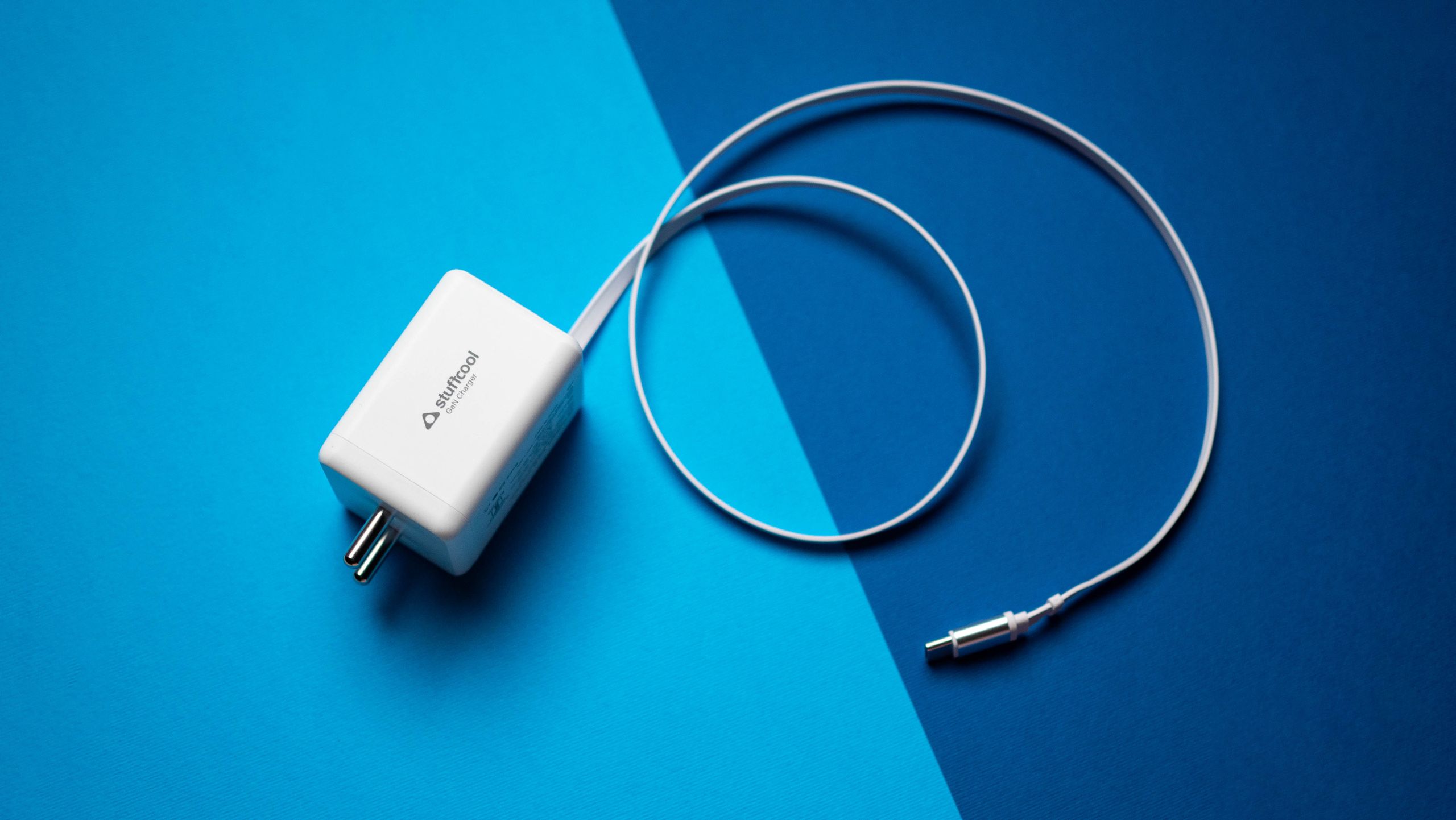
Stuffcool Zeno 65W Review: Retractable GaN Travel Charger
Most “travel chargers” are just overpriced plastic bricks with cables that fray the moment they hit a backpack. Stuffcool’s Zeno 65W attempts to solve the cable-management nightmare with a retractable mechanism and GaN internals. After three months of field testing, the reality is less about “magic” and more about the physics of Gallium Nitride and spring-tension fatigue.
The Tech TL;DR:
- Power Density: 65W GaN (Gallium Nitride) output allows for a significantly smaller footprint than traditional silicon-based transformers.
- UX Friction: Retractable cable eliminates “cable spaghetti” but introduces a potential single point of mechanical failure.
- Deployment: Ideal for mobile workstations and “digital nomad” setups requiring Power Delivery (PD) 3.0 compliance.
The fundamental problem with portable power isn’t the wattage—it’s the entropy. We are seeing a massive shift toward USB-C ubiquity, yet the physical layer remains a mess of tangled wires. From a systems architecture perspective, the Zeno 65W is an attempt to integrate the cable into the chassis, treating the power delivery system as a single, cohesive unit rather than a modular set of components. However, for those managing enterprise hardware fleets, this integration creates a “brick-and-cable” dependency; if the retractable cable fails, the entire 65W power supply becomes a paperweight unless there is a secondary input port.
The GaN Efficiency Curve and Thermal Dissipation
To understand why the Zeno isn’t overheating despite its compact size, we have to glance at the semiconductor material. Traditional silicon (Si) chargers suffer from high switching losses, which manifest as heat. Gallium Nitride (GaN) has a wider bandgap, allowing the transistors to switch faster and operate at higher voltages with significantly lower resistance. According to IEEE whitepapers on wide-bandgap semiconductors, GaN devices can reduce the size of passive components like inductors and capacitors, which is exactly how Stuffcool shrunk the Zeno’s footprint.

In a production environment, thermal throttling is the enemy of consistent power delivery. When a charger hits its thermal ceiling, it drops the wattage to prevent catastrophic failure. The Zeno 65W manages this via an optimized internal heat spreader, though the retractable mechanism creates a slight air-gap challenge compared to fully sealed bricks. For firms auditing their hardware lifecycles, this is where certified hardware maintenance providers develop into critical to ensure that mechanical wear doesn’t compromise electrical safety.
Hardware Specification Breakdown: Zeno 65W vs. The Field
| Metric | Stuffcool Zeno 65W | Standard Si 65W Brick | Premium GaN (Fixed Cable) |
|---|---|---|---|
| Material | GaN (Gallium Nitride) | Silicon | GaN |
| Form Factor | Integrated Retractable | Modular | Modular |
| Thermal Profile | Low-Medium | High | Low |
| Failure Point | Spring Mechanism | Cable Fraying | Port Wear |
The “Mechanical Debt” of Retractable Cables
From a developer’s perspective, a retractable cable is essentially a piece of “technical debt” in hardware form. You trade long-term reliability for immediate convenience. The tension spring is the weakest link in the architecture. If the internal coil loses elasticity or the cable becomes jammed, the user is left with a non-functional device. This is a stark contrast to the modular approach favored by most CTOs, where a failed cable is a $10 replacement, not a $60 brick replacement.
“The industry is obsessed with miniaturization, but we’re reaching a point of diminishing returns where mechanical complexity outweighs electrical efficiency. A retractable cable is a consumer convenience, but in a high-uptime enterprise environment, it’s a liability.” — Marcus Thorne, Lead Hardware Architect at NexaCore Systems
Despite the skepticism, the Zeno 65W performs admirably under load. It supports Power Delivery (PD), meaning it can negotiate voltage with the connected device to provide the fastest possible charge without frying the circuitry. For those deploying a fleet of MacBook Airs or Dell XPS laptops, the ability to consolidate chargers is a win for logistics, provided you have a robust IT asset management strategy to track the lifespan of these integrated units.
Implementation: Testing Power Delivery Negotiation
If you’re a hardware enthusiast or a QA engineer wanting to verify if a charger is actually delivering the advertised 65W via PD 3.0, you don’t just trust the sticker. You employ a USB-C power meter or a logic analyzer. While you can’t “code” a charger, you can monitor the handshake process. If you are using a Linux-based system with upower, you can check the current power source and voltage levels to see if the Zeno is negotiating the correct profile.
# Check current power source and charging status on Linux upower -i /org/freedesktop/UPower/devices/battery_BAT0 # To monitor real-time voltage changes during a load spike watch -n 1 "cat /sys/class/power_supply/BAT0/voltage_now"For deeper analysis, developers often refer to the USB-IF (USB Implementers Forum) specifications to ensure that third-party GaN chargers aren’t bypassing safety protocols, which could lead to “bricking” a device’s Power Management Integrated Circuit (PMIC).
The Ecosystem Verdict: Convenience vs. Resilience
The Stuffcool Zeno 65W is a polished piece of engineering that solves a specific friction point: the chaos of the travel bag. It leverages GaN technology to maintain a high power-to-size ratio, effectively eliminating the need for multiple bricks. However, the “geek-chic” appeal of a retractable cable doesn’t erase the reality of mechanical wear. It’s a high-utility tool for the individual power user, but I wouldn’t recommend it as a standard-issue deployment for an entire engineering org without a clear replacement cycle.
As we move toward 2026, the trend is clear: the “brick” is disappearing, and power is becoming an integrated feature of the workspace. Whether it’s through GaN or the eventual shift toward more efficient wireless power standards, the goal is zero friction. If you’re struggling with outdated power infrastructure or need to audit your hardware for safety and efficiency, it’s time to engage vetted enterprise IT consultants to optimize your hardware stack.
Disclaimer: The technical analyses and security protocols detailed in this article are for informational purposes only. Always consult with certified IT and cybersecurity professionals before altering enterprise networks or handling sensitive data.