
Lunar impact Crater Reveals Secrets of Moon‘s Early History
Table of Contents
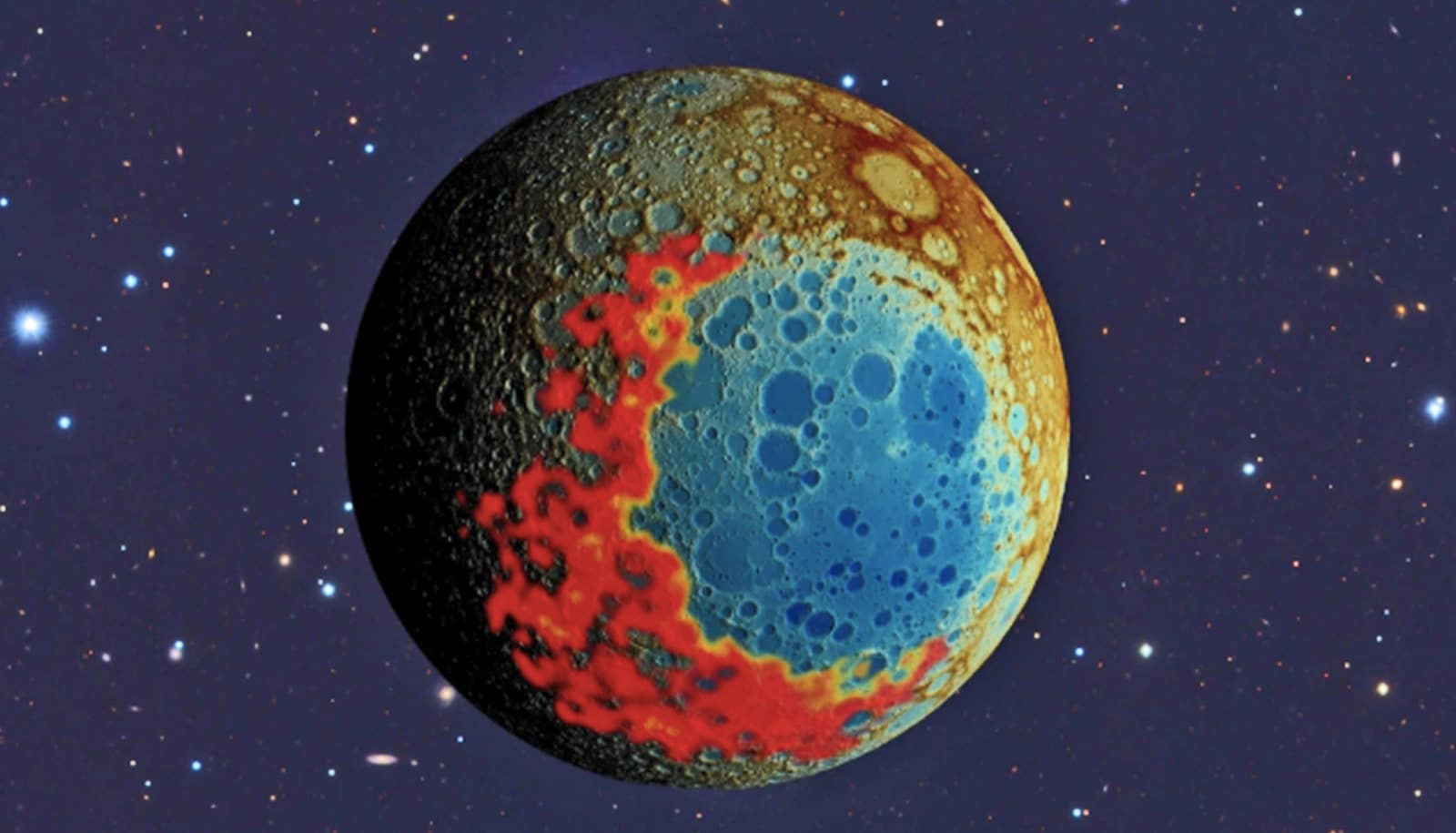
A groundbreaking study of the Moon’s largest impact crater, the South Pole-Aitken (SPA) basin, is providing new insights into the lunar interior and the mysterious concentration of heat-producing elements on the near side. Researchers at the University of Arizona have uncovered evidence supporting a long-held theory about how the Moon’s early magma ocean solidified, ultimately shaping the familiar “face” of the Moon visible from earth.
The findings, published recently, address a decades-old puzzle: why the Moon’s near side is volcanically active and rich in radioactive elements like thorium, while the far side is comparatively quite and lacks such concentrations. Understanding this asymmetry is crucial too unraveling the Moon’s formation and evolution,and the new data from the SPA basin offers a compelling piece of the puzzle.the research has implications for future lunar missions, especially NASA’s Artemis program, which aims to return astronauts to the Moon and collect samples for detailed analysis.
The KREEP Connection and Magma Ocean Evolution
The key to understanding the Moon’s asymmetry lies in a component called KREEP - potassium (K), rare earth elements (REE), and phosphorus (P). This material is thought to have been among the last to solidify from the Moon’s primordial magma ocean.According to University of Arizona researcher Alex Andrews-Hanna,If you’ve ever left a can of soda in the freezer,you may have noticed that as the water becomes solid,the high fructose corn syrup resists freezing until the very end and instead becomes concentrated in the last bits of liquid.We think something similar happened on the moon with KREEP.
As the magma ocean cooled over millions of years, the KREEP-rich material became concentrated in a layer between the solidifying mantle and crust. Andrews-Hanna explains that All of the KREEP-rich material and heat-producing elements somehow became concentrated on the moon’s near side, causing it to heat up and leading to intense volcanism that formed the dark volcanic plains that make for the familiar sight of the “face” of the Moon from Earth.
‘Toothpaste’ Analogy and the SPA Basin Finding
Scientists theorize that as the lunar crust thickened on the far side, the remaining magma ocean was squeezed towards the near side, much like toothpaste being squeezed from a tube. The new study provides supporting evidence from the SPA basin, a massive impact crater on the far side. Analysis of the ejecta blanket – material thrown out by the impact – revealed a striking asymmetry. The western side of the ejecta is rich in radioactive thorium, while the eastern side is not.
This suggests the impact excavated material from the boundary between the crust underlain by KREEP-enriched magma and the “regular” crust. Our study shows that the distribution and composition of these materials match the predictions that we get by modeling the latest stages of the evolution of the magma ocean,
Andrews-Hanna stated. The last dregs of the lunar magma ocean ended up on the near side, where we see the highest concentrations of radioactive elements. But at some earlier time, a thin and patchy layer of magma ocean would have existed below parts of the far side, explaining the radioactive ejecta on one side of the SPA impact basin.
Key Findings at a Glance
| Feature | Observation |
|---|---|
| KREEP Concentration | Higher on the near side |
| Magma Ocean Solidification | Last remnants concentrated on near side |
| SPA Basin Ejecta | Thorium-rich on western side |
| Crustal Thickness | Thicker on the far side |
Did You Know?
The Moon’s far side is often called the “dark side,” but this is a misnomer. Both sides of the Moon experience equal amounts of sunlight; the “dark side” simply refers to the side that always faces away from Earth.
Pro Tip:
To learn more about the Artemis program and NASA’s lunar exploration plans,visit NASA’s Artemis website.
While this study provides critically important advancements, many questions about the Moon’s early history remain unanswered. Future analysis of samples returned by the Artemis missions, utilizing advanced facilities at institutions like the University of Arizona, promises to reveal even more details about the Moon’s formation and evolution. Andrews-hanna emphasizes, With Artemis, we’ll have samples to study here on Earth, and we will know exactly what thay are. our study shows that these samples may reveal even more about the early evolution of the moon than had been thought.
What aspects of the moon’s formation do you find most intriguing? And how do you think future lunar missions will change our understanding of the solar system?
Lunar Evolution: A Broader Context
The Moon is believed to have formed approximately 4.51 billion years ago, relatively soon after earth’s formation. The prevailing theory suggests it originated from debris ejected after a Mars-sized object collided with the early earth. This impact created a molten Moon, which gradually cooled and solidified, forming the crust and mantle.The distribution of elements within the Moon, particularly the concentration of KREEP, provides crucial clues about the processes that occurred during this early period. The SPA basin, at roughly 2,500 kilometers (1,550 miles) in diameter and over 8 kilometers (5 miles) deep, is the largest known impact crater in the solar system and offers a unique window into the lunar interior. Lunar and Planetary institute provides further details on the South pole-Aitken basin.
Frequently Asked Questions about the Moon’s impact Crater
What is KREEP and why is it critically important?
KREEP (potassium, rare earth elements, and phosphorus) is a geochemical component found in lunar rocks. Its concentration provides insights into the Moon’s magma ocean and its subsequent solidification,helping scientists understand the Moon’s thermal and chemical evolution.
What is the South Pole-Aitken basin?
the South Pole-Aitken basin is the largest and deepest impact crater on the Moon, and one of the largest in the solar system. Its size and depth make it a valuable location for studying the lunar interior.
how does the SPA basin help explain the Moon’s asymmetry?
The SPA basin’s ejecta blanket shows an asymmetry in thorium concentration, supporting the theory that the last remnants of the lunar magma ocean were concentrated on the near side.
What is the Artemis program’s role in lunar research?
The Artemis program aims to return astronauts to the Moon and collect samples for detailed analysis, which will provide crucial data for understanding the Moon’s formation and evolution.
Why is the far side of the Moon different from the near side?
The far side of the Moon has a thicker crust and lacks the large volcanic plains found on the near side. This asymmetry is thought to be due to the concentration of KREEP and heat-producing elements on the near side during the Moon’s early history.
Enjoyed this article? Share it with your friends and colleagues! We’d also love to hear your thoughts in the comments below – what questions does this research spark for you?
