Study Links Handball Shoulder Pain to Muscle Cramping and Height
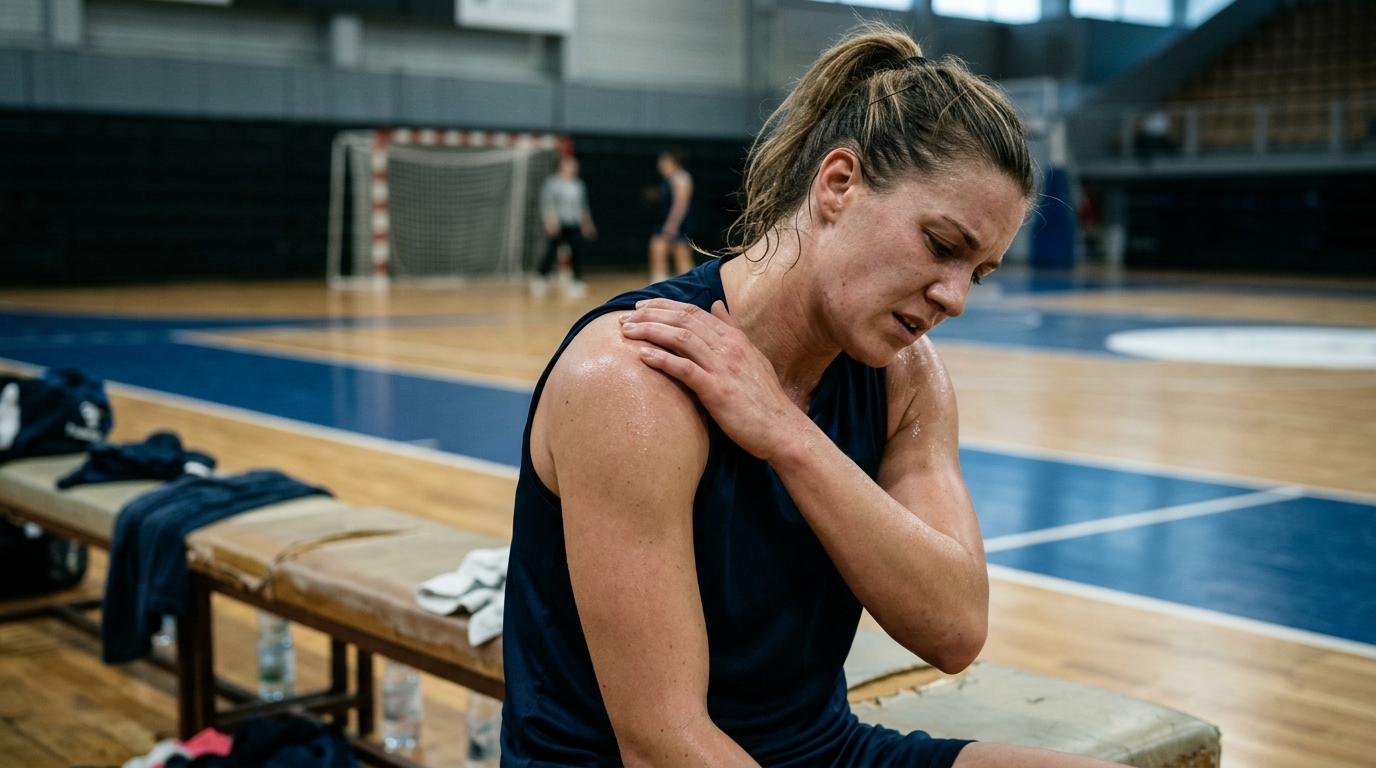
Shoulder pain affects 64.1 percent of competitive team handball players, according to a cross-sectional investigation published on Nov. 27, 2026, in BMC Sports Science, Medicine and Rehabilitation.
Across six competitive tiers, 78 competitive handball players were assessed in this observational study to determine the frequency, clinical features, and multivariable elements independently connected to shoulder pain.
The group was made up of 18 female athletes and 60 male athletes, sharing a mean age of 24.2 ± 6.8 years overall. Out of the studied group, 50 individual athletes experienced shoulder pain. The symptoms predominantly targeted the dominant right arm, accounting for 72.0 percent, or 36 of all reported cases. The condition showed a high degree of chronicity, with 42.0 percent of symptomatic participants reporting persistent shoulder pain lasting more than 12 months.
Group comparisons between symptomatic athletes and uninjured peers revealed significant discrepancies in training schedules and preparatory routines. Athletes suffering from shoulder pain engaged in notably greater weekly training loads, averaging 4.5 ± 1.0 sessions each week relative to the 3.7 ± 1.1 sessions recorded by their pain-free counterparts. Symptomatic players also participated in significantly more monthly matches at 3.3 ± 0.9 versus 2.8 ± 1.1, while exhibiting lower adherence to full warm-up routines and regular strength training.

In order to pinpoint independent risk markers, the researchers used univariable evaluations paired with a forced-entry multivariable binary logistic regression model. An odds ratio of 5.184 was produced by the multivariable regression, which demonstrated that a past occurrence of muscle cramping had a robust, independent connection to increased chances of shoulder pain.
Greater athlete height independently increased pain odds by 8.6 percent per centimeter, alongside an independent link with the absence of self-reported observable shoulder asymmetry.
The research was authored by Yaghoub Panahi Ghaffarkandi, Mahdiyeh Foroughi, AmirAli Jafarnezhadgero, and Ebrahim Piri. Since the study was conducted as an observational cross-sectional investigation devoid of prospective therapeutic treatments, registration in a clinical trial registry was unnecessary. The authors concluded that the findings reflect statistical associations rather than direct causal pathways, providing baseline evidence regarding training workloads, muscle cramping, and physical stature in overhead athletic populations.