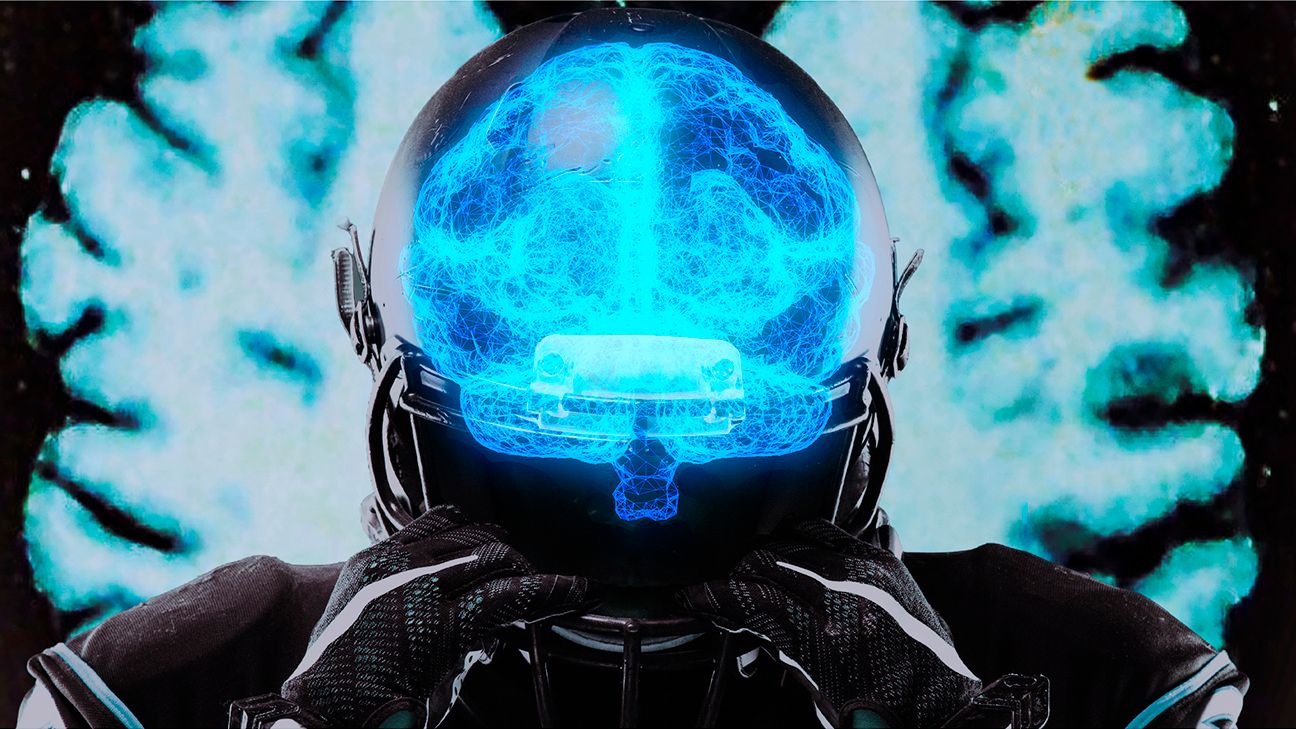
Studies Say Blood Test May Detect Advanced CTE in Living Patients
CTE may soon be diagnosable in living people through a simple blood draw, according to two studies published this week in JAMA that identified a tau protein marker in former football players whose brains were later confirmed at autopsy to carry the degenerative disease.
Until now, chronic traumatic encephalopathy could be detected only after death.
- Researchers at Boston University and Banner Health identified elevated blood levels of the protein eMTBR-tau in former football players later confirmed by autopsy to have advanced-stage CTE.
- A separate Washington University School of Medicine team, working from 11 autopsy-confirmed cases, independently found the same biomarker — but neither test reliably detects early-stage CTE.
- No CTE test or treatment has been approved by the U.S. Food and Drug Administration; researchers estimate validation could take roughly five years.
Why the finding changes the field
Scientists have long described diagnosing CTE in the living as the holy grail of research into football and brain damage.
A confirmed diagnosis before death would let researchers recruit living patients into clinical trials — the step Michael Alosco, co-director of clinical research at Boston University’s CTE Center and co-senior author of the new study, says is missing. “This is what we ultimately need to really kind of launch clinical trials,” Alosco said, according to WBUR.
“I’m cautiously optimistic that we can really understand this finding and move it forward in the next five years or so,” Alosco told ESPN, which first reported the studies.
The marker at the center of both papers is a tau fragment called eMTBR-tau243. Tau normally supports neurons but becomes abnormal in Alzheimer’s disease, tangling inside nerve cells; the same toxic buildup defines CTE’s pathogenesis. The Boston University and Banner Health study found concentrations significantly higher in players with advanced CTE than in those with low-stage disease or none.
Five players who had both CTE and Alzheimer’s showed the highest levels of all, WBUR reported, while a second biomarker used to detect Alzheimer’s was absent in patients with CTE alone — a combination Alosco said could one day let doctors differentiate between the two diseases from a blood sample.
What the studies actually tested
The Boston University and Banner Health study, published Thursday in JAMA, examined 21 deceased football players who had donated blood while alive and their brains afterward. Autopsies confirmed CTE in 18 of the 21. Early-stage CTE fell below the test’s detection threshold.

Days earlier, a Washington University School of Medicine in St. Louis team led by co-senior authors Kanta Horie and Chihiro Sato published its own JAMA paper identifying the same biomarker in 11 autopsy-confirmed CTE cases.
Sato, who studies tauopathies, urged caution about how the marker can be used. “This is not going to be a standalone biomarker,” she said. “But if someone has a history of repeated head injury, tests negative for Alzheimer’s and this biomarker comes up, it might be CTE.”
That workflow has a known gap. In a JAMA Neurology study published online June 29, researchers tested 272 Vietnam War veterans without dementia, researchers presented spinal fluid data from 112 patients across seven brain diseases.
At a 2025 Leon Thal Summit, experts agreed that any accepted tau biomarker for CTE would need to be specific to the disease — a bar the new marker falls short of by itself, since Alzheimer’s drives its levels up even more dramatically.
Independent specialists echoed the caution. “It is a watershed moment for the field, demonstrating that fluid biomarkers can work in assisting diagnosis of CTE in the living,” said Michael Buckland, a clinical associate professor of pathology at the University of Sydney who was not involved in either study, per Scientific American.
Dr. Rudolph Castellani, a neuropathologist at Northwestern University who wasn’t involved with the research, called the finding interesting but very preliminary and said far larger studies are needed, according to the Associated Press report.

From 2017 brain scans to blood draws
The path to a living diagnosis is long. Back in 2017, a research team reported spotting CTE through brain imaging in a living ex-NFL player, and efforts to refine scanning techniques for diagnosis continue. The new work shifts the search to fluid biomarkers. Washington University licensed its blood-measurement technology to C2N.
“Having blood tests that accurately determine the underlying pathology, which are now approved for use, has been revolutionary in the way we diagnose patients and design therapeutic trials that aim to combat Alzheimer’s disease,” said study co-author Nicholas Ashton, per CBS News. “With this new study, we are optimistic that the same will be true for CTE.”
The stakes in football are substantial. B.U. research published this autumn showed that close to three-quarters of former NFL players who passed away between 2008 and 2023 carried a CTE diagnosis, as CBS News noted, and a recent analysis of almost 400 deceased NFL players who donated their brains found signs of CTE in 93.5% of them.
Postmortem CTE diagnoses now exceed 350 among NFL players, spanning figures such as hall of fame center Mike Webster; Junior Seau, who spent 20 seasons in the league and reached two Super Bowls; and Frank Gifford, a former MVP who went on to a high-profile broadcasting career.
Players weigh whether they want to know
A validated test would force decisions no current standard of care requires.
“I think because, at the end of the day, it gives insight to the rest of the NFL, to college kids, to high school kids of what we’re getting ourselves into. Then yeah, absolutely.” Marcus Mariota
Said Minnesota Vikings safety Joshua Metellus: “I probably wouldn’t want [the test] while I’m in the league, because I think it’ll change the way I play. But I know there’s a lot of guys who are very curious and would like to know.”
What stands between the marker and the clinic
The test is not approved by the U.S. Food and Drug Administration, and Alosco cautioned that the sample was small and the work remains in the discovery phase. “We are still in the discovery phase and it’s a small sample size, but if future studies validate these findings, this blood test will allow us to detect CTE with a high level of accuracy and open the doors to clinical trials and treatment.”
Next steps include larger studies to determine how the biomarker relates to symptoms and brain changes, and researchers are investigating whether pairing eMTBR-tau measurements with another biomarker, p-tau217, would sharpen diagnostic accuracy.
For former contact-sport athletes now experiencing memory or mood symptoms, no CTE test exists yet — and several treatable conditions produce similar symptoms. Harvard’s Rachel Grashow has suggested that patients ask their clinicians to screen for manageable conditions that mimic these symptoms, such as sleep apnea, elevated blood pressure and reduced testosterone; meanwhile, as the science moves forward, a neurologist or neuropsychologist can assess thinking and mood issues.

WashU licensed the blood-measurement technology to C2N, maker of PrecivityAD2. Another coauthor is an Eisai-sponsored research associate professor who has received salary from Eisai.
Whether the marker can ever catch the disease before symptoms appear remains untested — the question both research teams and the field’s consensus standards have left open.
The CTE Center sits within Boston University, a private research university that traces its origins to 1839, when a group of Boston Methodists founded a theological school in Newbury, Vermont. The institution moved to Massachusetts and was chartered as Boston University in 1869.
Its founders wrote into the charter a provision unusual for its time: no student could be refused admission on account of religious opinions, and the university was open to all on an equal footing regardless of sex or race.
Today it enrolls nearly 38,000 students across 17 schools and colleges and is classified among “R1: Doctoral Universities – Very high research activity,” a category that reflects the scale of work like the biomarker studies published this week.
Disclaimer: The information provided in this article is for educational and scientific communication purposes only and does not constitute medical advice. Always consult with a qualified healthcare provider regarding any medical condition, diagnosis, or treatment plan.