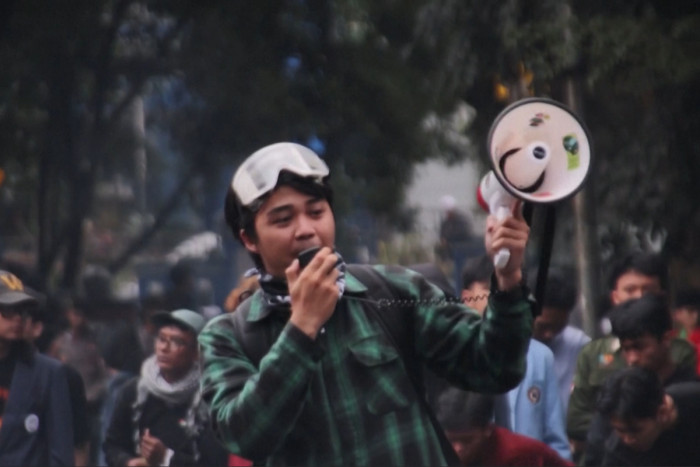
Students Protest President Prabowo Subianto’s Policies Across Indonesia
Student demonstrators across at least eight Indonesian cities mobilized on Monday, June 15, 2026, to protest fuel price hikes and economic policies enacted by President Prabowo Subianto. The widespread civil unrest follows similar rallies held on June 12, signaling growing public dissatisfaction with the administration’s current fiscal trajectory and subsidy reforms.
The Economic Friction Behind the Protests
The protests stem from a fundamental misalignment between the government’s fiscal consolidation strategy and the daily economic realities of Indonesian households. President Prabowo’s administration has faced mounting pressure to reduce the state budget deficit, leading to the reduction of long-standing fuel subsidies. According to data from the Indonesian Ministry of Finance, managing energy subsidies remains the largest variable in the national budget, often dictating the government’s ability to fund social safety nets.
For the average citizen, the removal of these subsidies translates into immediate, sharp increases in transportation and logistics costs. When the cost of fuel rises, the price of essential goods follows in a direct inflationary spiral. Students, acting as a traditional bellwether for political sentiment in Indonesia, have characterized these policies as a burden on the working class rather than a necessary fiscal correction.
“The policy ignores the velocity of money in local markets. When you pull the subsidy rug out from under the logistics sector, you aren’t just taxing the fuel; you are taxing the survival of the informal economy,” says Dr. Aris Wahyudi, a Senior Fellow at the Jakarta Institute for Economic Policy.
Regional Impact and Urban Infrastructure
The unrest has been concentrated in major urban centers, including Jakarta, Bandung, and Yogyakarta. These cities serve as the primary nodes for national logistics. Disruptions caused by mass gatherings have led to temporary gridlock in central business districts, complicating the operations of local enterprises. Business owners, particularly those in the retail and supply chain sectors, are currently navigating a period of high volatility.
For companies operating in these zones, the risk of supply chain interruption is high. Businesses are increasingly seeking guidance from commercial risk mitigation firms and logistics optimization experts to ensure that their assets remain protected during periods of heightened civil activity. Ensuring contractual compliance and force majeure planning has become a priority for firms with headquarters in these protest-prone corridors.
Policy Precedents and Government Response
The current administration’s approach to dissent is being compared to the strategies used during the post-pandemic recovery period. While the government maintains that the subsidy cuts are essential for long-term macroeconomic stability, the lack of a robust, targeted compensation program for low-income households has exacerbated the friction. The Statistics Indonesia (BPS) has reported a steady increase in the cost-of-living index, which demonstrators cite as evidence that the current economic policies are failing the populace.
| Metric | 2025 Average | 2026 Year-to-Date |
|---|---|---|
| Fuel Subsidy Allocation | High (Baseline) | Reduced (Targeted) |
| Inflation Rate | Moderate | Rising |
| Protest Frequency | Sporadic | Escalating |
The government’s response thus far has focused on maintaining order while attempting to communicate the necessity of the reforms. However, the disconnect between the presidential palace and the street remains wide. Legal experts suggest that the administration may soon need to engage in more transparent legislative reviews to quell the unrest.
“We are witnessing a classic standoff between fiscal necessity and social contract. Without a pivot toward more inclusive economic messaging, the protests will likely move from the streets into the corridors of judicial oversight,” notes Elena Sutedjo, a constitutional law observer.
Navigating the Evolving Regulatory Environment
As the political situation remains fluid, the potential for sudden regulatory shifts—such as emergency price controls or new labor mandates—is non-zero. Organizations operating within Indonesia must maintain a high level of agility. Engaging with government relations consultants is no longer an optional luxury for multinational corporations; it is a defensive requirement for those looking to anticipate legislative changes before they are signed into law.

Furthermore, the increased scrutiny on corporate social responsibility means that firms are now expected to take a clearer stance on local economic issues. Companies that fail to account for the impact of their operations on the local economy are finding themselves the target of public ire alongside the government. Maintaining a dialogue with community advocacy organizations can provide firms with the necessary intelligence to navigate these turbulent times.
The situation on the ground remains volatile as of the early hours of June 16. With no signs of the student organizations backing down, the pressure on President Prabowo to either soften the subsidy cuts or provide significant tax relief for the middle class is mounting. History suggests that in the Indonesian context, the longer these protests persist, the more likely the administration will be to offer a substantive, if temporary, economic concession to restore stability. Until then, businesses and residents are advised to monitor official channels and maintain contingency plans for further disruptions.