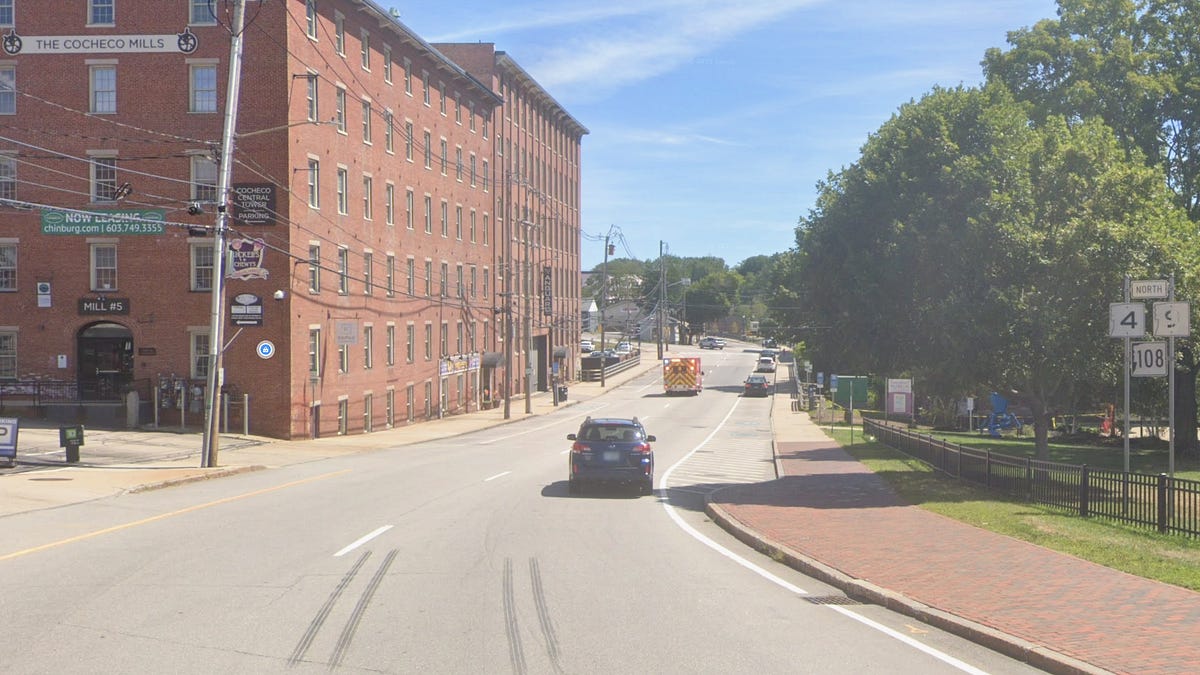
Strong Towns Seacoast says through-traffic harms Seacoast downtowns
Downtown Dover experiences roughly 11,000 automobile trips per day, with the vast majority of motorists driving through the city rather than stopping as a destination, according to Strong Towns Seacoast. That heavy through-traffic creates a direct conflict between regional transportation needs and pedestrian-friendly community spaces, as narrow downtown streets attempt to function as both high-volume state highway arterials and local pedestrian districts.
State routes 4, 9, and 108 merge together to form a two-lane, one-way road running directly through Dover’s downtown center. That layout separates local retail shops and a candy store from the Dover Children’s Museum and a nearby playground. Pedestrians face constant noise, exhaust, and traffic congestion that run parallel to the city’s riverside views and commercial storefronts.
How State Highways Bisect Regional Downtowns Across New Hampshire
The structural conflict between high-speed vehicle movement and human-scale community living repeats itself throughout the Seacoast region. Similar two-lane state route configurations cut directly through the downtown districts of Newmarket, Rochester, Somersworth, Durham, Portsmouth, and Exeter. In Exeter, traffic data compiled by the New Hampshire Department of Transportation shows that nearly the entire downtown sector absorbs upwards of 7,000 vehicle trips daily, with specific counts spiking near 13,000 trips.
These transportation corridors act as physical barriers for local neighborhoods. Residents walking through town confront increased stress at crosswalks and elevated friction when attempting to cross busy streets. The constant flow of heavy trucks and commuters creates a division between residential zones and commercial areas, effectively turning infrastructure meant to connect communities into walls that separate them.
Why Mixing High-Speed Arterials With Local Destinations Fails Both Drivers and Pedestrians
Attempting to serve two mutually exclusive purposes compromises both the transportation network and the local economy. Drivers trying to move through town experience frustrating delays caused by traffic lights, stop signs, parking maneuvers, and pedestrian crossings. At the same time, pedestrians experience a loud, turbulent environment that discourages spending leisure time in local parks or patronizing downtown businesses.
State Route 16 demonstrates how a roadway designed exclusively for automobiles functions without local interruptions. Route 16 features on- and off-ramps with no direct driveway connections to houses or businesses, allowing traffic to move swiftly and efficiently. Attempting to install traffic lights, crosswalks, and public parks directly onto a high-speed highway like Route 16 would be recognized as unsafe and impractical. Yet municipal downtowns routinely combine high-speed state highway traffic with dense pedestrian populations, children playing, and storefront retail.
What Community Discussions and Public Events Address Next in Dover
Local advocates are organizing a series of public meetings and community events to evaluate municipal infrastructure and discuss transportation alternatives. Strong Towns Seacoast scheduled an in-person meeting for Monday, October 12, at 6:30 PM at Juniper Kitchen on 442 Central Ave in Dover to discuss the city’s recently proposed Capital Improvements Plan. An immediate follow-up discussion is set for 8:00 PM that same evening at La Festa Brick & Brew at 300 Central Ave.
A family-friendly bike ride hosted by Strong Towns Seacoast and the Seacoast Area Bike Riders is scheduled for Saturday, October 17, at 1:30 PM. Participants will gather at the Dover Community Trailhead at the Dover Transportation Center at Woodman Park, utilizing low-stress paths before returning to the park for cider and apple-cider donuts. A subsequent regional meeting will take place on Wednesday, November 4, at 6:30 PM at the Exeter Library located at 4 Chestnut St in Exeter.