
Strait of Hormuz Crisis: Global Power Struggles and Maritime Security Challenges
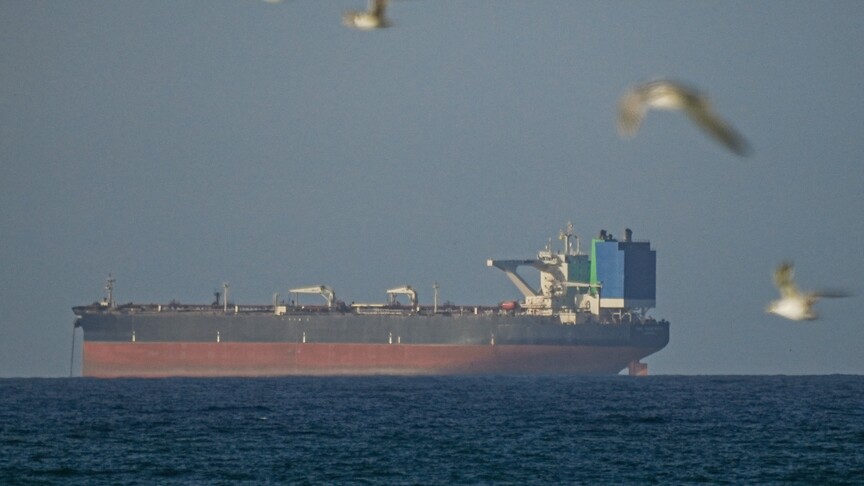
Iran and the United States are locked in a high-stakes maritime standoff in the Strait of Hormuz as of April 15, 2026. The crisis centers on U.S.-led blockades and Iranian defiance, threatening 20% of global oil consumption and challenging the legal foundations of “transit passage” under international maritime law.
The Strait of Hormuz is not merely a waterway; It’s the world’s most volatile geopolitical choke point. When the U.S. Attempts to enforce a blockade and Iran responds by pushing tankers through, we aren’t just seeing a military skirmish. We are witnessing the systematic erosion of the United Nations Convention on the Law of the Sea (UNCLOS). For the global economy, What we have is a nightmare scenario where the “right of innocent passage” is replaced by the “right of the strongest.”
The macro problem is clear: energy insecurity. If the flow of crude is disrupted, the shockwaves will hit every industrial hub from Rotterdam to Shanghai. This isn’t just about oil prices; it’s about the reliability of the global supply chain. When the primary artery of the Middle East is constricted, the risk premium on every single shipment in the region spikes. Global firms are no longer just managing logistics; they are managing survival.
To mitigate these systemic shocks, multinational corporations are aggressively pivoting toward global risk consultants to map out alternative energy corridors and hedge against sudden maritime closures.
The Collision of Sovereign Rights and Naval Hegemony
The current tension exposes a fundamental legal rift. The U.S. Views its presence in the Gulf as a guarantor of stability, while Tehran views the American blockade as an illegal infringement on its territorial waters. This is the “Westphalian trap” in real-time: the clash between national sovereignty and the demands of global trade.

France, meanwhile, is attempting a precarious diplomatic pivot. Paris has signaled a desire to sideline Washington in favor of a European-led security mission, emphasizing direct coordination with Tehran. This reflects a broader European trend: the realization that U.S. “maximum pressure” campaigns often leave European capitals holding the economic bag while the strategic goals remain elusive.

“The Strait of Hormuz is the ultimate test of whether international law can survive the transition to a multipolar world. If the law is only applied when it suits the hegemon, the law ceases to exist.” — Dr. Fiona Hill, Senior Fellow in Geopolitical Strategy
China finds itself in the most awkward position of all. As Iran’s primary trading partner, Beijing needs the oil to flow. However, it cannot afford a total rupture with the Trump administration’s volatile foreign policy. China is playing a double game: providing the economic lifeline to Tehran via “dark fleet” tankers while maintaining a facade of neutrality to avoid triggering secondary U.S. Sanctions.
This volatility creates a vacuum that only specialized legal expertise can fill. Companies operating in the Gulf are currently flooding international trade lawyers to navigate the contradictory demands of U.S. Sanctions and Iranian maritime claims.
The Macro-Economic Fallout: A Comparative Analysis
The impact of a prolonged blockade isn’t distributed evenly. While the U.S. Has increased its domestic shale production to reduce dependency, the Asia-Pacific region remains critically exposed. The following data illustrates the systemic vulnerability of the current energy architecture:
| Region | Dependency on Hormuz Transit | Primary Economic Risk | Strategic Pivot Strategy |
|---|---|---|---|
| East Asia (China/Japan) | Critical (High) | Industrial Stagnation | Diversification to African/Latin American crude |
| European Union | Moderate | Energy Price Inflation | Accelerated LNG transition & pipeline diversification |
| North America | Low (Decreasing) | Global Market Volatility | Strategic Petroleum Reserve (SPR) releases |
The “dark fleet” phenomenon—where tankers disable transponders to evade sanctions—has become a standardized business model. This shadow economy undermines the World Trade Organization’s efforts to maintain transparent trade flows. It creates a world of “ghost ships” and unregulated corridors, increasing the likelihood of accidental military escalation.
As these “shadow” routes become the norm, the demand for specialized maritime logistics firms capable of operating in high-risk zones has surged. These firms are the only entities capable of maintaining the flow of goods when traditional insurance providers refuse to cover the Gulf.
The European Gambit and the New Security Architecture
The EU’s plan to form a separate security alliance for the Strait is a bold, if naive, attempt to project “strategic autonomy.” By attempting to coordinate with Tehran, Brussels is essentially admitting that the U.S. Security umbrella is no longer a fit for purpose in the Middle East. This is not just about ships; it is about the shift from a unipolar security model to a fragmented, regionalized one.

But can Europe actually secure the Strait without the U.S. Fifth Fleet? Unlikely. What they are doing is creating a diplomatic “off-ramp.” By offering a European alternative, they provide Iran with a way to save face while avoiding a direct kinetic clash with the U.S. Navy.
“We are seeing the birth of ‘minilateralism.’ The era of grand global treaties is over; we are now in the era of tactical alliances designed to solve specific, immediate logistical crises.” — Ian Bremmer, President of Eurasia Group
This fragmentation of security is a signal to the private sector. The old certainty of “Pax Americana” is gone. Businesses can no longer assume that the U.S. Navy will indefinitely police the world’s commons. This necessitates a fundamental shift in corporate treasury and supply chain management.
The standoff in the Strait of Hormuz is the canary in the coal mine for the 2026 global order. It proves that geography still dictates power, but that the rules governing that power are being rewritten in real-time. When the law of the sea is ignored, the only remaining currency is leverage.
For the global executive, the lesson is clear: the “stable” world of the last thirty years was an anomaly. We have entered an era of permanent volatility. Navigating this landscape requires more than just a map; it requires a network of the most sophisticated legal, financial and security partners on the planet. Whether you are restructuring a supply chain or hedging against sovereign risk, the World Today News Directory remains the definitive gateway to the global consultants and firms equipped to handle the chaos of a multipolar world.