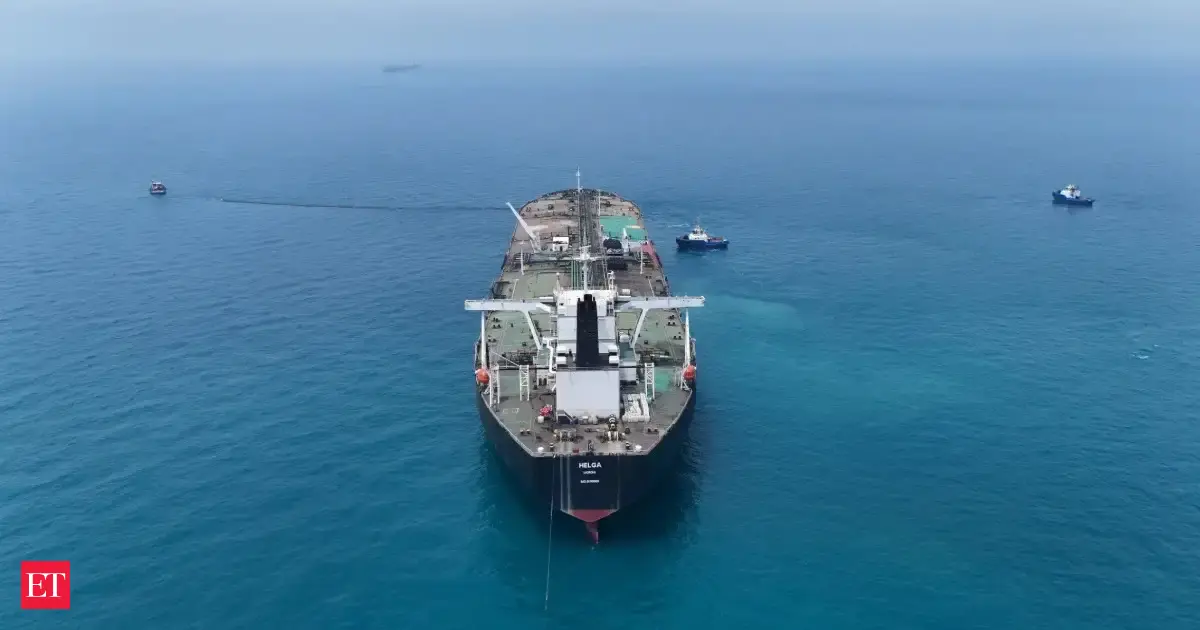
Strait of Hormuz Closure Threatens Global Oil Supply, Sparks Price Surge and Consumer Pullback
The Strait of Hormuz closure has triggered a billion-barrel oil shock, threatening to crash global demand as stockpiles dwindle and consumers curb spending amid rising prices, with the disruption rippling through energy-dependent industries and consumer markets worldwide, necessitating immediate strategic pivots from corporations exposed to volatile supply chains.
How the Hormuz Shock Is Rewriting Q3 Energy Economics
The blockage has already cut approximately 21 million barrels per day of crude and condensate flows—about 20% of global seaborne oil shipments—according to tanker tracking data from Vortexa Ltd. As of April 2026. This isn’t merely a price spike; it’s a structural demand destruction event. Refineries in Asia, which process 70% of Hormuz-dependent crude, are reporting utilization rates dropping to 68% in early Q2, down from 85% pre-shock, per Wood Mackenzie’s April 24 refinery operations dashboard. Meanwhile, U.S. Strategic Petroleum Reserve releases—authorized at 1 million barrels per day since April 10—have only offset 15% of the lost volume, leaving a widening gap that is forcing downstream buyers into spot markets where Brent crude has averaged $98.50/bbl over the past two weeks, up 40% from March lows. The real fiscal problem isn’t just higher input costs; it’s the velocity of demand erosion. Manufacturing PMI data from S&P Global shows modern export orders in Germany and South Korea falling below 45.0 in April, signaling that factories are preemptively cutting production not just due to cost, but due to anticipated demand collapse as consumers divert spending from discretionary goods to essentials like food and fuel.
“We’re seeing demand destruction accelerate faster than in 2008 because this shock hits both supply and sentiment simultaneously—corporates aren’t just paying more for oil, they’re bracing for a consumer pullback that could linger quarters after the strait reopens.”
This dual pressure—input cost inflation coupled with forward-looking demand anxiety—is creating a working capital crunch for energy-intensive manufacturers. Companies with high operating leverage, such as integrated chemical producers and aluminum smelters, are seeing EBITDA margins compress by 300–500 basis points in real-time, according to preliminary Q1 2026 results from BASF and Rio Tinto Aluminum. The solution set isn’t hedging alone; it’s operational reconfiguration. Firms are now urgently consulting with supply chain resilience advisors to map alternative routing options through the Cape of Good Hope and Suez Canal, while simultaneously engaging energy procurement specialists to renegotiate long-term contracts with non-OPEC suppliers in Guyana and Brazil. Legal exposure is as well mounting: force majeure claims are rising, prompting in-house counsel to coordinate with global trade law firms specializing in energy sanctions and maritime arbitration to assess liability under CIF and FOB terms as charterparty disputes escalate in London and Singapore courts.
Where the B2B Fixes Are Being Built Right Now

- Liquidity bridging: Corporates facing cash conversion cycle elongation are turning to working capital financiers offering invoice discounting and supply chain finance programs tied to ESG-compliant logistics providers, a shift evident in the 22% YoY growth in SCF platform usage reported by Taulia’s Q1 2026 client metrics.
- Demand sensing: Retailers and automakers are deploying AI-driven demand forecasting tools that integrate real-time gasoline price elasticity models with credit card transaction data to adjust production schedules weekly— a capability highlighted in Walmart’s April 18 investor call where CFO John David Rainey noted “near-term demand volatility requires sub-monthly forecasting granularity we didn’t need two years ago.”
- Contractual armor: With charterparty rates for VLCCs surging to $85,000/day (up from $22,000/day pre-shock, per Baltic Exchange data), legal teams are prioritizing maritime law specialists to draft new time charter agreements incorporating war risk clauses and demurrage caps, a trend confirmed in Clifford Chance’s April 23 energy sector briefing noting a 40% increase in shipping contract reviews versus Q1 2025.
The Hormuz shock is not a transient blip—it is a stress test exposing the fragility of just-in-time energy dependencies in a multipolar world. As corporations shift from reactive spot buying to structured, multi-sourced energy strategies, the winners will be those who treat supply chain volatility not as a cost center but as a strategic variable to be modeled, insured, and optimized. For vetted partners in risk mitigation, energy transition advisory, and trade-compliant logistics, the World Today News Directory remains the essential conduit to pre-vetted, enterprise-grade providers capable of turning this crisis into a competitive advantage.