
Sweden Lacks Funding for Crucial Midge Surveillance Amidst Rising Disease Threats
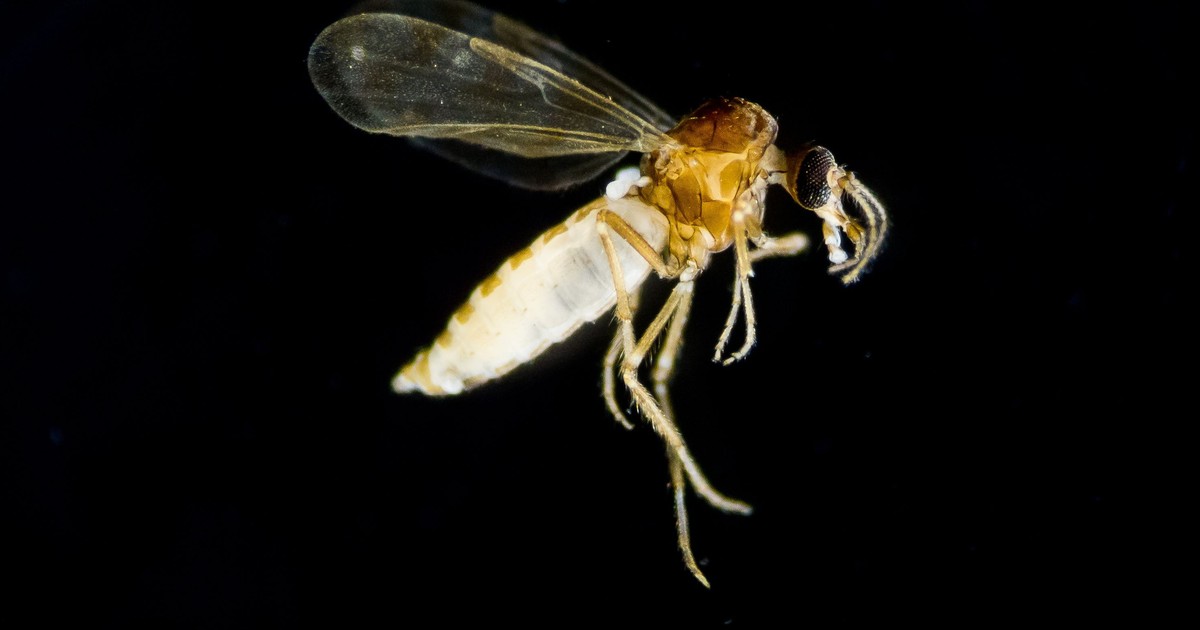
Sweden is facing a critical gap in its ability to monitor and combat the spread of vector-borne diseases due to a lack of state funding for the surveillance of biting midges, known as svidknott. These tiny insects, often just a few millimeters in size, play a significant role in transmitting viruses like the Blue Tongue virus and Schmallenberg virus, which are increasingly posing a threat to livestock and perhaps human health.
Tobias Lilja, a researcher at the Swedish National Veterinary Institute (SVA), explains the mechanism by which these midges transmit diseases.”Svidknott does not have a distinct suction like mosquitoes but bites and eats out of the wound. They use their saliva to prevent the blood from coagulating and thus spreading the virus thru the saliva to the animals.Viruses like blue tongue are not hardy enough to survive in the environment but need to get directly into the blood on a new host animal,” Lilja stated.
While several EU countries actively monitor biting midges, Sweden’s surveillance efforts have been sporadic. The most recent comprehensive data on svidknott in Sweden dates back to 2008-2010,during which researchers identified a vector-free period between mid-November and the end of March. This data is still being used in EU-level compilations, highlighting the outdated nature of Sweden’s monitoring capabilities.
“We have no state funding today to pay for surveillance,” confirmed Erika chenis, a state veterinarian at SVA.She expressed the SVA’s desire to continue monitoring the biting midge population, noting that the active period of the svidknott may have shifted due to climate change. “It may start a week earlier and maybe lasts another week. But we do not know that,” chenis added.
The increasing prevalence of climate-change-driven infections moving northward, such as epizootic hemorrhagic disease (similar to Blue Tongue) and the Schmallenberg virus, underscores the urgency of robust surveillance. Epizootic hemorrhagic disease is currently found in Italy, Spain, Portugal, and France. The Schmallenberg virus, also spread by svidknott, was detected in both lambs and calves in Sweden by early 2023.
“It would have been engaging to monitor the presence of sting knots to be able to make modeling at the detailed level when,where and how the burning knot is affected by the environment,climate and weather factors,” Chenis emphasized.
Currently, research into svidknott in Sweden is only possible through research funding. A collaborative project between SVA and the Swedish University of Agricultural Sciences (SLU) is underway to investigate the extent to which biting midges thrive in animal stables during winter. this project involves placing specialized traps, utilizing UV light to attract the midges and a fan to direct them into a collection container with ethanol, which kills them.
The two-year project aims to provide crucial insights that could inform future disease prevention strategies. However, without sustained state funding, comprehensive and proactive surveillance of svidknott remains a significant challenge for Sweden, leaving the nation vulnerable to the escalating threat of vector-borne diseases.
