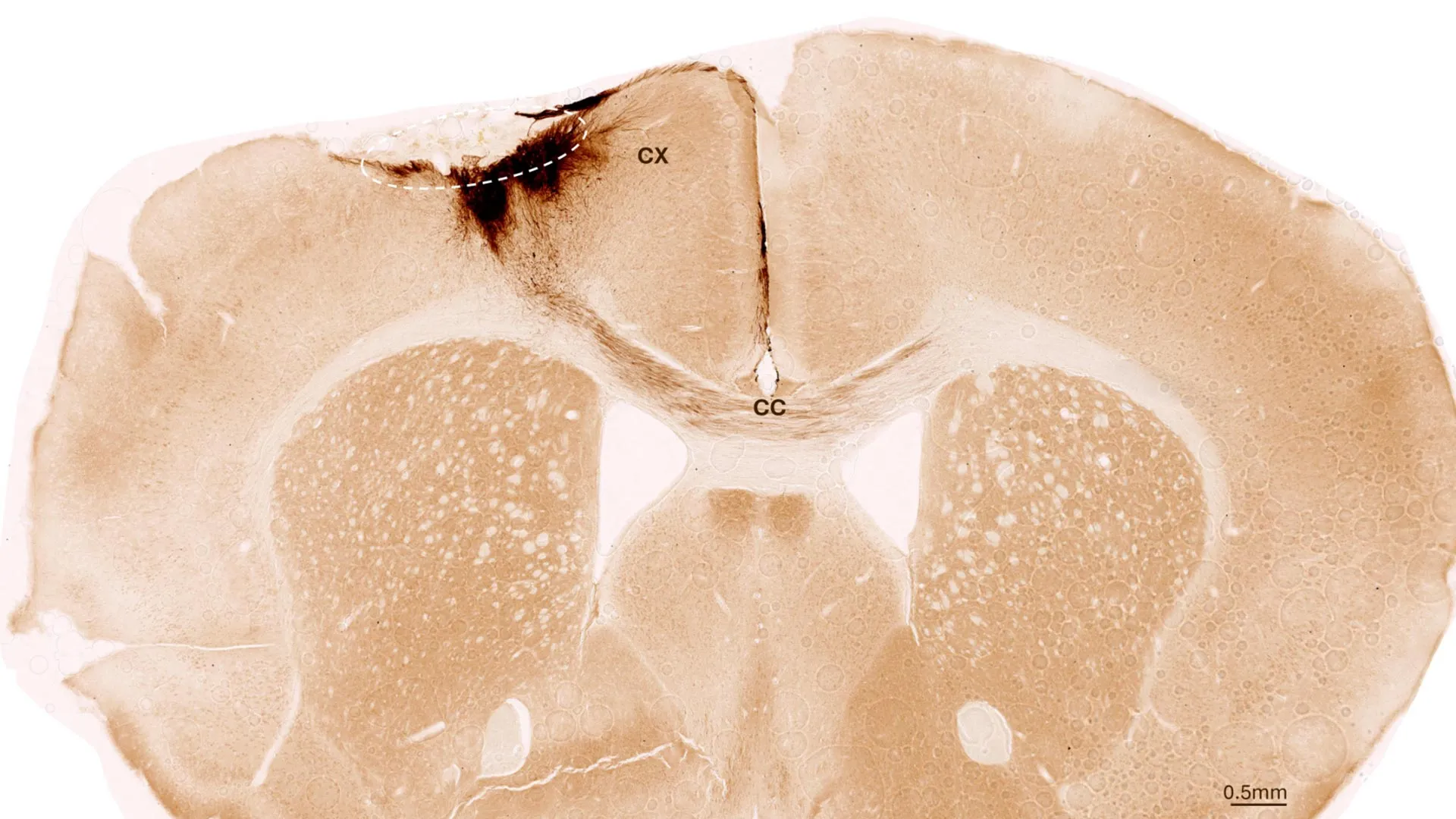
Stem Cell Transplants Restore Motor Function and Repair Brain Tissue in Mice
Transplants of human-derived neural stem cells successfully regenerate stroke-damaged brain tissue and restore lost motor function in animal models, according to a collaborative study published by researchers at the University of Zurich Institute for Regenerative Medicine alongside the University of Southern California. The experimental procedure, evaluated over a five-week post-stroke observation period, demonstrates that cellular therapies can drive structural biological repair long after the initial ischemic event.
- Human neural stem cells derived from induced pluripotent stem cells successfully integrated into damaged mouse brain architecture and formed functional synapses with existing neurons.
- Beyond replacing dead cells, the transplantation triggered multi-system healing responses, including accelerated angiogenesis, reduced chronic inflammation, and restored blood-brain barrier integrity.
- Using AI-assisted gait analysis, researchers documented measurable improvements in motor coordination and movement patterns in the treated subjects.
The Clinical Gap in Post-Stroke Recovery
Stroke remains a dominant global driver of long-term neurological disability. According to data tracked by the World Health Organization and cited by researchers at the University of Zurich, approximately 15 million individuals suffer a stroke annually. Out of that total, five million people die, and another five million sustain permanent functional deficits. In developed nations, adults over the age of 25 face a lifetime stroke risk of roughly one in four.
Traditional acute interventions—such as mechanical thrombectomies and administration of clot-busting medications—focus entirely on preserving patient survival and minimizing initial infarct expansion. Once this acute therapeutic window closes, modern medicine offers limited options for reversing the resulting neurological damage, which frequently manifests as hemiplegia, aphasia, or severe cognitive impairment.
Mechanisms of Cellular Regeneration
To address this clinical limitation, the research team—led by Christian Tackenberg, Scientific Head of the Neurodegeneration Group at the University of Zurich Institute for Regenerative Medicine, and postdoctoral researcher Rebecca Weber, in partnership with Ruslan Rust from the University of Southern California—investigated regenerative cell transplantation. The team utilized induced pluripotent stem cells generated by reprogramming mature somatic cells, such as human skin cells, back into an embryonic-like, versatile state.
Researchers induced permanent ischemic strokes in murine models to simulate human tissue oxygen deprivation and cellular necrosis. Exactly one week following the strokes, the team transplanted the human neural stem cells directly into the peri-infarct tissue surrounding the primary injury site. Because the grafts originated from human tissue, the host mice were genetically modified to prevent immune rejection.
Advanced longitudinal imaging and biochemical analysis over a five-week timeline revealed that the transplanted cells survived and differentiated. “Our findings show that neural stem cells not only form new neurons, but also induce other regeneration processes,” Christian Tackenberg stated. The newly formed neurons successfully established communication channels with endogenous brain cells, integrating into existing neural networks rather than remaining isolated.
Systemic Tissue Healing and Vascular Stabilization
The therapeutic impact observed in the study extended well beyond simple cell replacement. The intervention stimulated a broad cascade of neuro-restorative physiological changes within the damaged central nervous system environment.

The biological responses documented in the study include:
- Angiogenesis: The rapid proliferation of new blood vessels inside the injured tissue zone, improving local oxygen and nutrient delivery.
- Inflammatory Modulation: A significant dampening of the chronic, neurotoxic inflammatory cascade that typically exacerbates secondary neuronal loss following an ischemic event.
- Blood-Brain Barrier Restoration: Repairing the vascular boundary that restricts circulating blood components from entering brain parenchyma, thereby reducing dangerous cerebral edema.
These combined regenerative pathways culminated in noticeable functional recovery. Utilizing automated, AI-assisted gait analysis, researchers confirmed that the treated animals recovered significant motor coordination and normal walking patterns compared to untreated controls.
Future Trajectory of Regenerative Neurology
While the experimental reversal of stroke damage in mice marks a notable advancement in regenerative medicine, researchers emphasize that scaling these protocols for human clinical application demands careful validation. Future investigations must address long-term graft safety, tumorigenesis risks associated with pluripotent stem cells, and optimal therapeutic timing for human patients.
*Disclaimer: The information provided in this article is for educational and scientific communication purposes only and does not constitute medical advice. Always consult with a qualified healthcare provider regarding any medical condition, diagnosis, or treatment plan.*