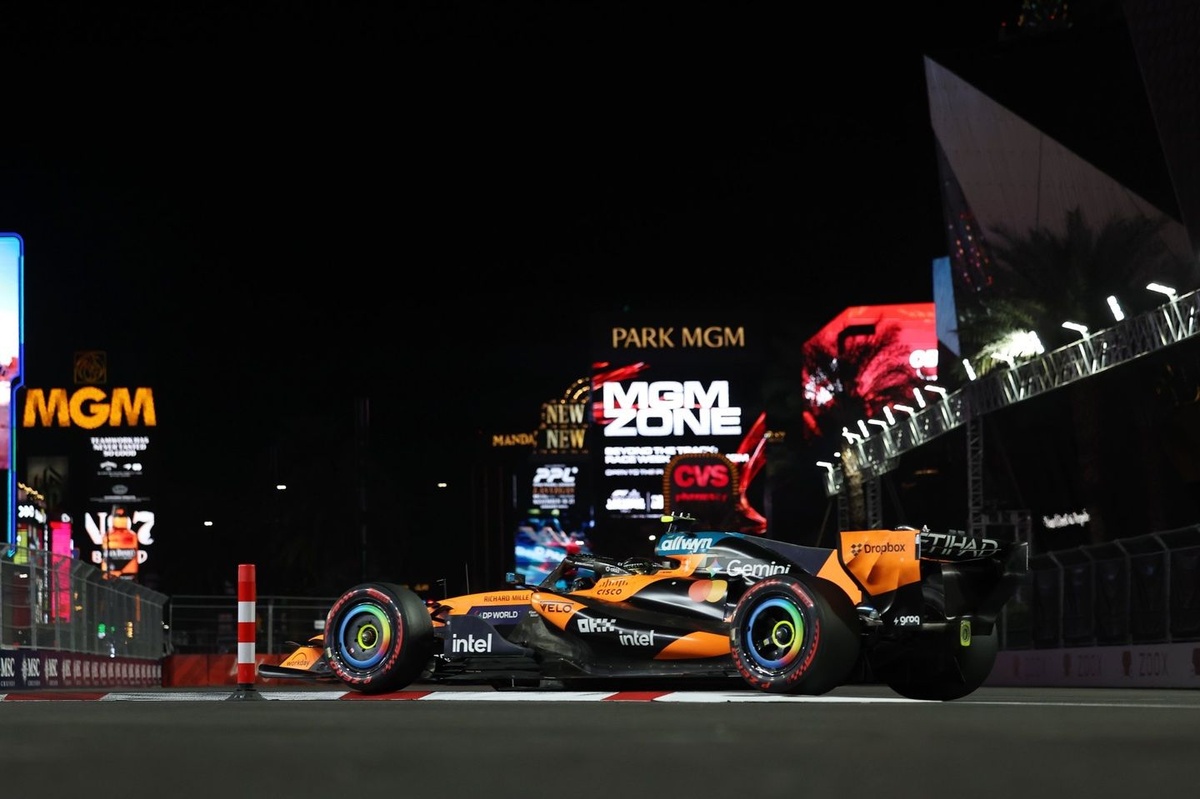
Stella Urges Nuance on Las Vegas GP Assessment as Drivers Cite Extreme Slipstream
“How long have we got? We should have stopped this media session one question earlier!” Andrea Stella laughed on Saturday evening, Nov. 28, 2026, as Autosport reported.
The McLaren team principal faced questions about the entertainment value of the Las Vegas Grand Prix and whether the extreme nature of the race should serve as a model for Formula 1. Stella warned against quick judgments and extreme positions, calling instead for nuance and analytical depth when assessing the race.
“My main recommendation is that we remain analytical,” Stella said, according to Autosport. “We live in a world where everything is polarised. We live in a world in which you need to have an opinion in one second, otherwise you are a nobody.”
Drivers and team bosses pointed to heavy slipstreaming and specific power unit behavior as key drivers of the unusual on-track action.
Mercedes team principal Toto Wolff expressed surprise on Friday when Kimi Antonelli started his final qualifying lap just 1.4 seconds behind Arvid Lindblad, discovering that the slipstream effect proved much stronger than dirty air.
Alpine driver Pierre Gasly explained that the tow was exceptionally powerful because drivers clipped on the long straights, leaving them with no MGU-K deployment and relying solely on an internal combustion engine that produces less power than a Formula 2 power unit.
“The tow is so powerful because you clip in the middle of the straight, so you end up on half the power we have available,” Gasly told Autosport, adding that drivers were forced to play an energy management game rather than push limits traditionally.
Max Verstappen ultimately won the race after countering George Russell through the pack, though Gasly said that leading cars lost considerable time punching a hole in the air. Ferrari team principal Fred Vasseur emphasized that the unique layout of the Las Vegas circuit—featuring slow corners that allowed cars to follow closely—created a one-off scenario distinct from tracks like Monza.
While it is Formula 1 and everybody is always complaining, the debate over future regulations continues. Formula 1 is scheduled to return to V8 engines starting in 2030, a regulatory shift that makes a repeat of the Las Vegas spectacle unlikely.