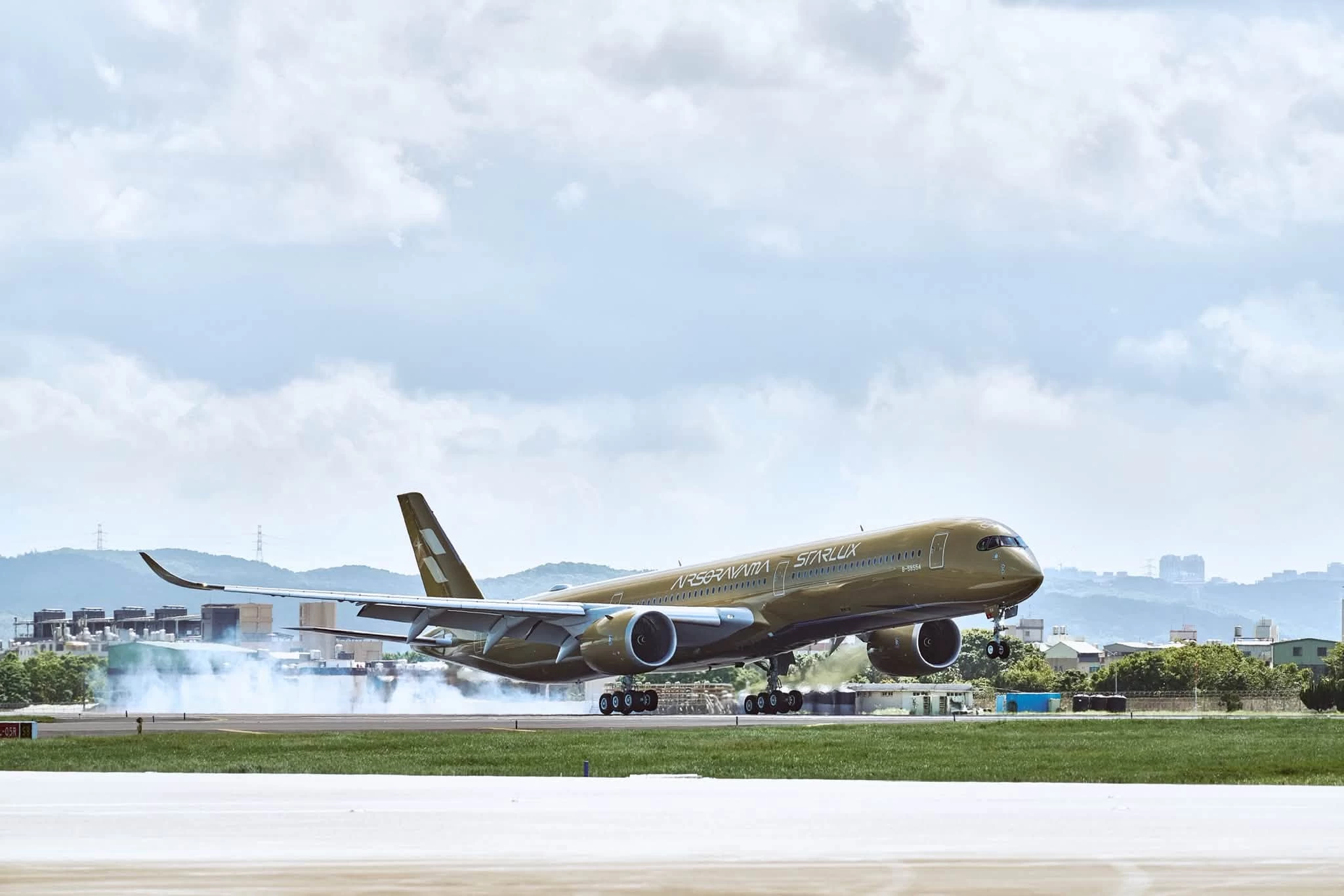
Starlux Airlines to Deploy Unique Gold Airbus A350-1000 to Prague
STARLUX Airlines is set to deploy its custom-designed Airbus A350-1000, known as the “AIRSORAYAMA Gold,” to Prague’s Václav Havel Airport beginning September 1, 2026. This unique aircraft, featuring a specialized metallic finish developed by artist Hajime Sorayama, will integrate into a regular long-haul rotation connecting Taipei with Prague, Tokyo, and Phoenix.
Operational Integration and Fleet Strategy
The arrival of the AIRSORAYAMA Gold (registration B-58554) marks a significant expansion in the operational footprint of the Taiwan-based carrier. According to reporting from nasekladno.cz, the aircraft was delivered by Airbus to STARLUX on August 14, 2026, in Toulouse, France. Following an initial shakedown period on regional routes to Tokyo, the airline has scheduled the A350-1000 for the JX101/JX102 service to Prague starting September 1.
From an asset management perspective, the deployment of high-value, specialized airframes requires rigorous coordination between flight operations and ground handling teams.
Technical Specifications and Maintenance Requirements
The “liquid metal” aesthetic of the A350-1000 is not a standard wrap. It utilizes a multi-layer lacquer system embedded with metallic pigments, engineered to maintain aerodynamic efficiency while protecting the aircraft’s composite structure. This level of customization introduces specific challenges for ground crews and airport facilities.
Maintaining high-end assets requires more than just standard mechanical oversight. The AIRSORAYAMA Gold—and its silver counterpart, B-58553—represent a move toward hyper-personalized aviation experiences, a trend that typically demands higher capital expenditure (CAPEX) for interior and exterior upkeep.
Market Positioning and Competitive Landscape
By designating Prague as one of only three global destinations for its flagship “AIRSORAYAMA” fleet, STARLUX is signaling a focus on premium passenger demographics and high-yield route connectivity. This strategy aligns with broader industry efforts to differentiate service through high-touch design elements. As the airline balances its fleet expansion with the demands of long-haul operations, the success of these routes will depend on sustaining load factors that justify the operational complexity of such specialized hardware.
For B2B service providers, the entry of such assets into a market often creates a ripple effect in support services.
Future Outlook for Transcontinental Routes
The schedule, effective October 2026, places Prague in a strategic position within the STARLUX network. As the airline moves past the initial launch phase, the predictability of these arrivals will provide a steady metric for local tourism and business travel sectors. The ability to maintain such a specialized aircraft in rotation suggests a confidence in the long-term viability of the Taipei-Prague corridor.

Institutional interest in the aviation sector remains tethered to how well carriers can manage the delicate balance between fleet modernization and operational liquidity. As STARLUX continues to scale its international operations, stakeholders will look for sustained margins and efficient deployment of its wide-body fleet.