
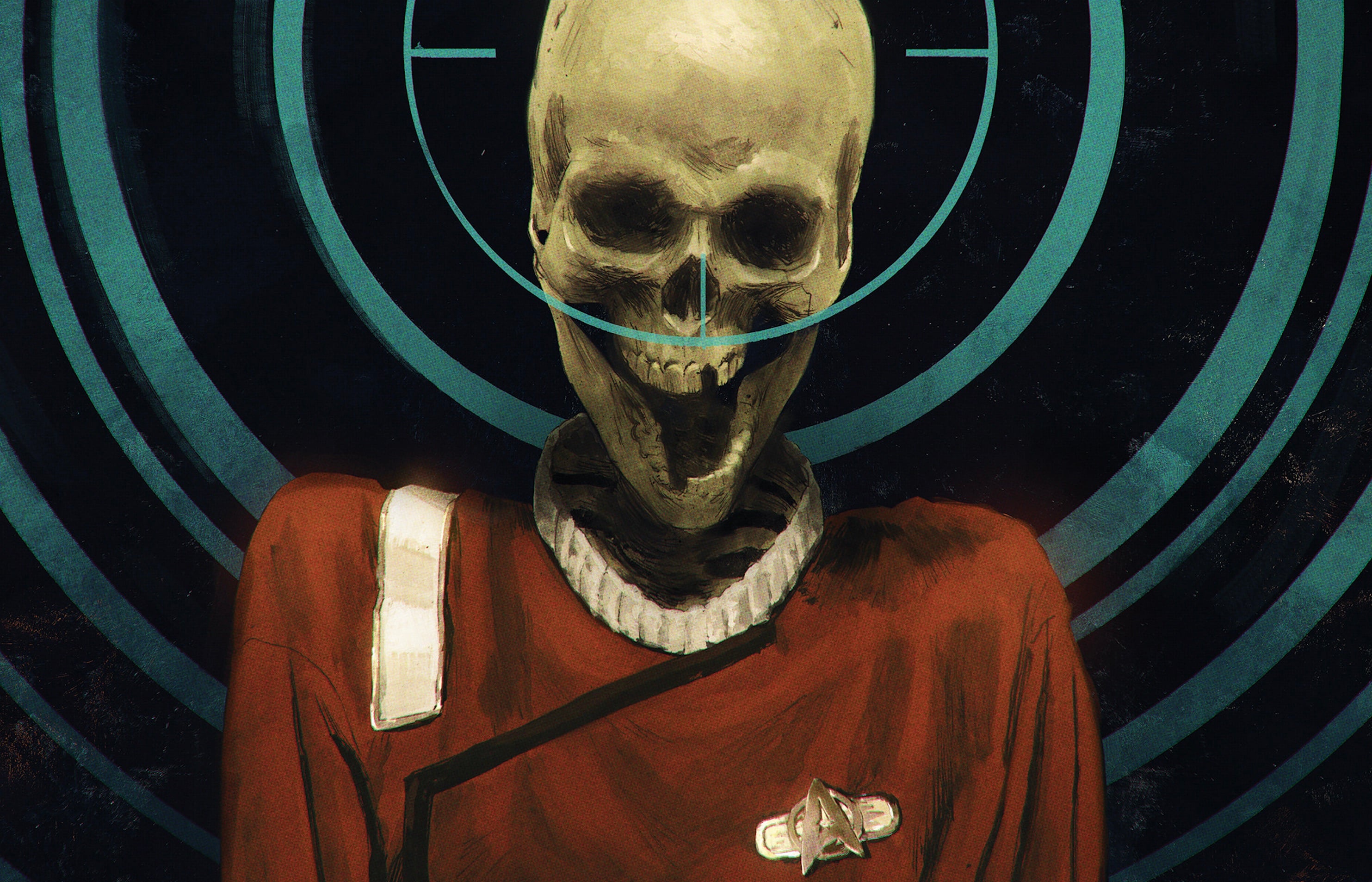
Star Trek: Red Shirts – Ghost of the 21st Century Launches with Bloody Conspiracy
IDW Publishing launches Star Trek: Red Shirts – Ghost of the 21st Century this July 2026. Writer Gerry Duggan reimagines disposable security officers as conspiracy assets. This shift challenges Paramount’s brand equity while targeting mature audiences amid industry leadership reshuffles.
The Canon Conundrum: When Disposable Assets Become Liabilities
Every franchise has its sacred cows, and in the Star Trek universe, the red-shirted security officer is less a character than a statistical inevitability. They exist to die. It is the genre’s most enduring shorthand for stakes. Gerry Duggan, the architect behind the irreverent chaos of Deadpool, is now tasked with dismantling that trope from the inside out. His new limited series, Star Trek: Red Shirts – Ghost of the 21st Century, posits a terrifying reality: these officers aren’t dying by accident. They are being harvested. This narrative pivot transforms background extras into the central protagonists of a criminal conspiracy within Starfleet Security.

From a business perspective, this is a high-wire act. Twisting established lore generates immediate buzz, but it also invites scrutiny from the most vocal segment of the market: the legacy fanbase. When a studio decides to recontextualize its own iconography, they risk diluting the brand equity that sustains syndication deals and SVOD retention. The problem isn’t just creative; it is logistical. A storyline centered on internal corruption within the Federation mirrors real-world corporate governance issues, requiring the publisher to navigate potential IP disputes regarding character usage and tone consistency.
Studios managing this level of narrative risk often deploy elite intellectual property lawyers to ensure that creative experimentation does not violate existing licensing agreements or alienate key stakeholders. The line between edgy reboot and copyright infringement is thinner than a phaser beam, especially when dealing with a property that has survived sixty years of legal and cultural evolution.
Industry Leadership in Flux
The timing of this release coincides with a broader reshuffling of the media elite. As of March 2026, the industry is digesting major leadership changes, including Dana Walden’s unveiling of a new Disney Entertainment leadership team spanning film, TV, streaming, and games. While Star Trek remains under the Paramount umbrella, the ripple effects of consolidation are felt everywhere. When giants like Disney restructure their creative hierarchies, competitors often capture sharper risks to maintain market share. IDW’s decision to greenlight a “bloodbath” within the Federation suggests a strategy aimed at capturing the adult demographic that traditional television broadcasts often miss.
“Revenge is a dish best served on time delay. From Gerry Duggan comes the next Red Shirts bloodbath… On the Federation’s farthest frontier, red shirts don’t just die—they’re used.”
IDW’s description of the book signals a departure from the optimistic futurism typically associated with Gene Roddenberry’s vision. Duggan promises a story where conscripted security grunt Harry Deubert uncovers Section Null, a secret directorate turning disposable personnel into assets. This darker tone aligns with contemporary audience preferences for moral ambiguity, yet it creates a public relations vulnerability. If the execution feels like gratuitous violence rather than narrative necessity, the backlash could be swift.
When a brand deals with this level of potential public fallout, standard statements don’t function. The publisher’s immediate move should be to deploy elite crisis communication firms and reputation managers to monitor sentiment analysis across social platforms. In the 2026 media landscape, a comic book controversy can spiral into a franchise-wide boycott within hours. Proactive reputation management is no longer optional; it is a line item in the production budget.
The Logistics of Launch
Beyond the page, the physical rollout of a major title requires significant infrastructure. Issue #1 hits shops on July 22, 2026, placing it squarely in the heart of the summer convention circuit. A tour of this magnitude isn’t just a cultural moment; it’s a logistical leviathan. The production is already sourcing massive contracts with regional event security and A/V production vendors, while local hospitality sectors brace for a historic windfall. Launch parties for flagship titles often rival film premieres in terms of security requirements and guest management.

Artist Scott Buoncristiano notes the unique pressure of drawing within an established universe. “It’s one thing to watch this universe, but it’s another to be able to draw and create within it,” Buoncristiano said. His collaboration with Duggan aims to leave a “extremely big bruise on Star Trek.” This artistic ambition must be matched by operational precision. Distributors need to ensure supply chains can handle the spike in demand without overprinting, which hurts backend gross margins.
- Brand Equity Protection: Ensuring the darker tone does not violate family-friendly licensing deals.
- Talent Coordination: Managing the schedules of high-profile writers like Duggan across multiple franchises.
- Market Sentiment: Tracking real-time feedback to adjust marketing spend before the second issue prints.
The Future of Federation IP
This series serves as a test case for how much friction a legacy IP can withstand before breaking. If Ghost of the 21st Century succeeds, expect more mature, conspiracy-driven spinoffs across the franchise’s comic and streaming divisions. If it fails, it reinforces the value of status quo storytelling. For the professionals watching from the sidelines, the lesson is clear: innovation requires insulation. Whether through legal counsel, PR shielding, or event logistics, the business of entertainment is about managing the chaos that creativity inevitably produces.
As the summer box office cools and attention shifts to fall programming, the real story isn’t just who dies in the comic. It’s about who survives the business implications of killing them off. For those navigating similar IP expansions, the directory offers vetted partners capable of turning creative risks into sustainable revenue streams.
Disclaimer: The views and cultural analyses presented in this article are for informational and entertainment purposes only. Information regarding legal disputes or financial data is based on available public records.