
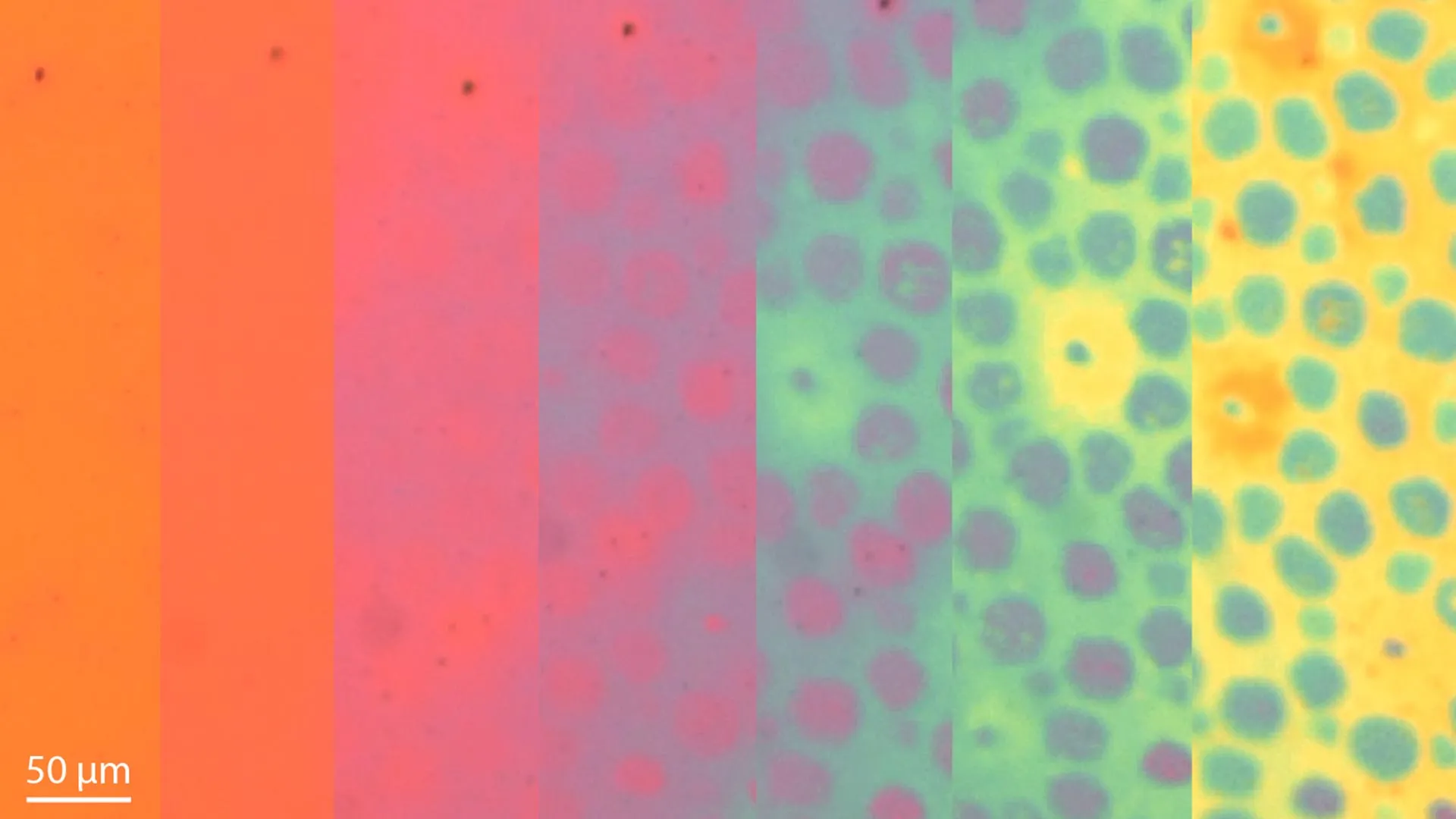
Stanford scientists create shape-shifting material that changes color and texture like an octopus
Stanford’s Shape-Shifting Polymer: Hardware Spec Breakdown vs. Deployment Reality
Stanford University’s materials science lab claims a breakthrough in dynamic topography, publishing findings in Nature regarding a water-responsive polymer film capable of micron-scale texture shifting. While the press release leans heavily on octopus analogies, the underlying engineering reveals a specific set of constraints for enterprise robotics and adaptive camouflage systems. This isn’t a consumer display replacement; it’s a niche actuation layer with significant latency dependencies on solvent diffusion rates.
The Tech TL;DR:
- Actuation Mechanism: Relies on electron-beam lithography patterning combined with water/solvent absorption, not electrical signaling alone.
- Latency Bottleneck: Physical swelling and contraction cycles depend on fluid dynamics, limiting refresh rates compared to e-ink or OLED.
- Security Surface: AI-driven real-time matching introduces novel vectors for spoofing attacks on robotic vision systems.
The core innovation lies in combining electron-beam lithography with a swellable polymer matrix. When exposed to focused electron beams, specific regions of the film alter their absorbency. Introducing water causes these regions to swell, creating topographical features smaller than a human hair. The process is reversible using an alcohol-like solvent. This mechanic bypasses the rigid constraints of traditional mechanical actuators but introduces a fluidic dependency that complicates deployment in dry or extreme environments.
Comparative Analysis: Polymer Swelling vs. Traditional Actuation
To understand where this fits in the current hardware stack, we must compare it against existing adaptive surface technologies. Most current dynamic texture solutions rely on pneumatic systems or shape-memory alloys (SMAs). These require significant power budgets and often suffer from fatigue after repeated cycles. The Stanford approach offers higher resolution—nanoscale patterning—but trades speed for fidelity.
Traditional e-ink displays manage color shifts in milliseconds via electrophoresis. In contrast, this polymer relies on diffusion. While the researchers demonstrated a 3D structure rising from a flat film (a tiny Yosemite El Capitan), the time-to-state change is governed by fluid transport physics. For high-frequency applications like active camouflage on fast-moving drones, the latency may prove prohibitive without significant engineering optimization.
“The intersection of adaptive physical layers and AI control planes introduces a novel attack surface. If an adversary can manipulate the solvent input or spoof the vision system feeding the neural network, the camouflage becomes a liability rather than an asset.” — Analysis from AI Cyber Authority
This security implication is critical. The researchers intend to automate the process using computer vision and neural networks to match backgrounds in real time. This creates a closed-loop system where physical state depends on digital inference. Enterprise deployments involving such adaptive materials will require rigorous cybersecurity auditors and penetration testers to validate the integrity of the sensor-to-actuator pipeline. A compromised vision model could force the material into a high-visibility state, defeating the purpose of stealth robotics.
Implementation Logic: AI Control Loop
For developers looking to integrate similar adaptive logic into robotics stacks, the control layer requires precise calibration of solvent levels based on visual input. Below is a simplified Python representation of the control logic described by the Stanford team, adapted for an enterprise robotics environment. This snippet illustrates the dependency on real-time image analysis to modulate the physical state.

import cv2 import numpy as np from robotics_actuator import SolventController class AdaptiveCamouflageNode: def __init__(self, threshold=0.85): self.controller = SolventController() self.match_threshold = threshold def analyze_environment(self, frame): # Extract dominant color and texture features hsv = cv2.cvtColor(frame, cv2.COLOR_BGR2HSV) texture_metric = self.calculate_laplacian_variance(frame) return hsv, texture_metric def modulate_surface(self, target_hsv, target_texture): # Calculate required swelling ratio based on target state water_ratio = self.map_color_to_swelling(target_hsv) solvent_ratio = self.map_texture_to_contraction(target_texture) if self.verify_safety_limits(water_ratio, solvent_ratio): self.controller.inject_mix(water_ratio, solvent_ratio) else: raise ValueError("Actuation limits exceeded") def run_loop(self): while True: frame = self.capture_background() target_hsv, target_texture = self.analyze_environment(frame) self.modulate_surface(target_hsv, target_texture) Deploying this logic in production requires more than just the algorithm; it demands hardware validation. The physical injection of solvents must be managed by hardware engineering firms specializing in microfluidics to prevent leakage or material fatigue. The code above assumes a trusted environment. In hostile deployments, the analyze_environment function becomes a potential entry point for adversarial patches designed to confuse the camouflage system.
Supply Chain and Funding Transparency
This research was funded by a mix of academic and government sources, including the Department of Energy, the Air Force Office of Sponsored Research, and the National Science Foundation. Additional support came from the Wu Tsai Human Performance Alliance and Meta PhD Fellowships. This funding mix suggests dual-use potential, leaning heavily toward defense and high-performance human-machine interfaces. For commercial entities looking to license this tech, understanding the IP landscape is crucial. The involvement of Meta indicates potential interest in wearable haptics, while DoD funding points toward classification restrictions on certain applications.
Organizations evaluating this technology for supply chain integration should consult cybersecurity risk assessment and management services to evaluate the long-term viability and security posture of the material. The reliance on specific chemical solvents introduces logistics constraints that standard electronic components do not face. Maintenance teams will demand training on handling the fluidic components, akin to managing battery chemistry but with added volatility.
While the published IEEE whitepaper and Nature study highlight the optical versatility—switching between glossy and matte finishes via Fabry-Pérot resonators—the engineering challenge remains in scaling the electron-beam lithography process. Semiconductor manufacturing techniques are not easily translated to roll-to-roll production for large surface areas. Until the fabrication latency drops, this remains a high-value, low-volume solution for specialized robotics rather than a mass-market display technology.
The trajectory here is clear: adaptive materials are moving from static properties to dynamic, software-defined physical states. This convergence of bits and atoms demands a new class of IT triage. Security teams must treat physical camouflage layers as networked endpoints. As the AI Cyber Authority notes, the blast radius of a compromised adaptive skin extends beyond data loss to physical exposure. Enterprises adopting these systems must integrate their physical security operations centers (PSOC) with their traditional SOC workflows.
Disclaimer: The technical analyses and security protocols detailed in this article are for informational purposes only. Always consult with certified IT and cybersecurity professionals before altering enterprise networks or handling sensitive data.