Staffing Shortages at Red Rock Lakes National Wildlife Refuge Mirror National Crisis
Red Rock Lakes National Wildlife Refuge has lost its entire four-person staff since 2024, leaving the 53,000-acre Montana site struggling to maintain operations.
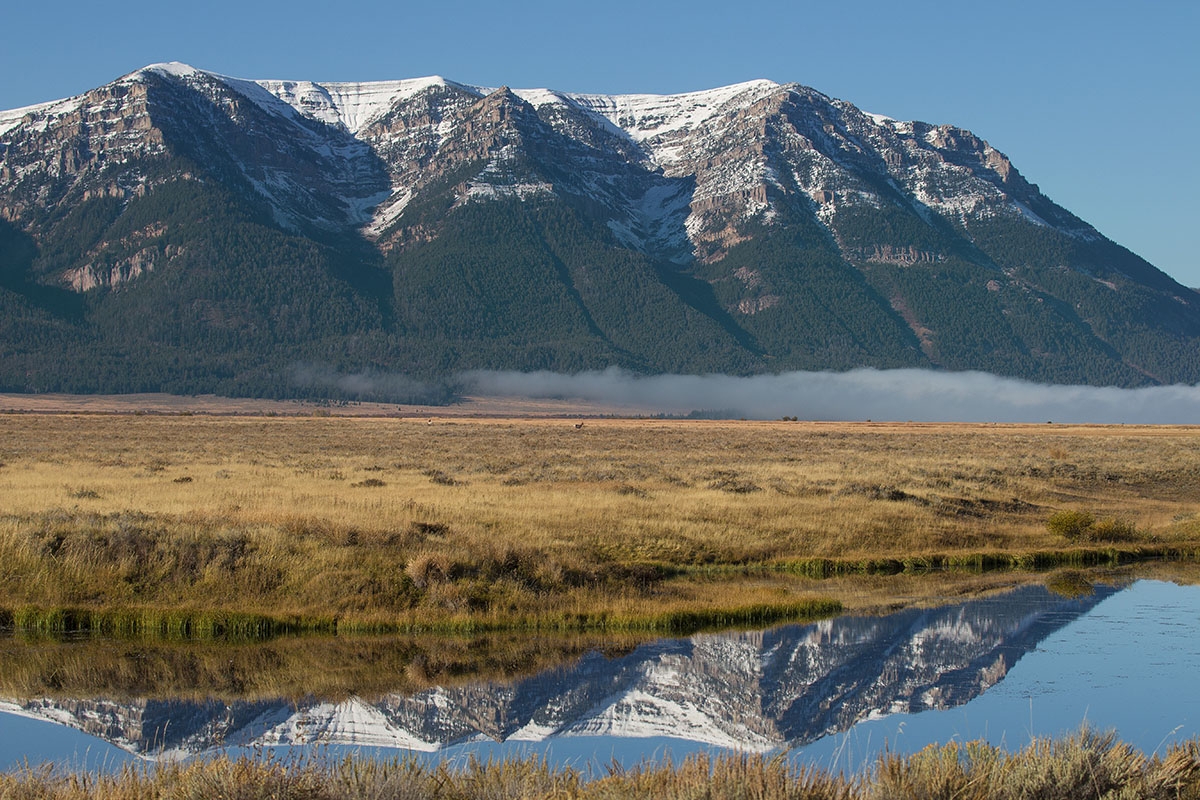
The U.S. Fish and Wildlife Service has hired only one additional employee for the refuge in the years since, according to data obtained by the Center for Biological Diversity. The refuge, situated in the Centennial Valley, serves as a critical habitat for grizzlies, wolves, Arctic grayling, whooping cranes and wolverines. Nearly a century ago, the site was key to preventing the extinction of trumpeter swans.
The vacancies at the refuge, located on the western edge of the Greater Yellowstone Ecosystem, reflect a wider trend across the national wildlife refuge system. Nationally, the system lost approximately 30% of its workforce between 2010 and 2025, according to a Defenders of Wildlife report released earlier this month.
Data from the Center for Biological Diversity suggests the workforce decline at individual refuges may be higher, estimating a 36% drop since the beginning of the second Trump administration.
Staffing shortages impact remote management
The attrition accelerated following a series of firings of probationary federal employees last year, described by National Wildlife Refuge Association CEO Desirée Sorenson-Groves as a “Valentine’s Day massacre.” While some employees returned, others departed due to uncertainty regarding federal job security. Sorenson-Groves estimates that the total system workforce has eroded by an additional 25% since 2025.
“The lack of staff on refuges nationwide is something I have never seen in my career,” said Desirée Sorenson-Groves.

“Refuges have to be managed. They can’t just be left alone; we’ve manipulated our environment too much,” Sorenson-Groves said.
At Red Rock Lakes, the lack of personnel has created major operational challenges. Nathan Marcy, a senior federal lands policy analyst at Defenders of Wildlife, said the refuge’s remote location makes it especially vulnerable to staff losses because remaining employees cannot monitor the entire area.
Marcy noted that interviews with federal employees revealed a “climate of fear” preventing staff from going on the record about conditions ranging from habitat management to law enforcement.
Ecological and operational significance
The refuge acts as a vital link for wildlife movement. “It’s sort of the connective tissue between the Greater Yellowstone and the Northern Continental Divide,” Bill West, a former refuge manager, said.
The Centennial Mountains adjacent to the site function as what West calls the “biggest snow fence in North America,” with moisture from the valley eventually traveling nearly 4,000 miles to reach the Gulf of Mexico. The refuge also maintains a remote wildlife camera that recently captured a marten with a fish; for those interested in the local fauna, a group of martens is called a “richness.”
Federal budget constraints persist
Former refuge manager Bill West described the current situation as “do more with less on steroids,” noting that the federal budget for the refuge system has remained flat since 2010 despite inflation.
“The refuge system is in peril,” said Bill West.
A regional spokesperson for the U.S. Fish and Wildlife Service declined an interview regarding specific staffing levels at Red Rock Lakes. The agency provided a general statement: “While the U.S. Fish and Wildlife Service does not comment on personnel matters, we remain committed to ensuring our refuges and hatcheries meet the Service’s mission of wildlife conservation, healthy fish populations and meaningful public access.”
The ecological significance of Red Rock Lakes National Wildlife Refuge stems from its role as the primary site for saving the trumpeter swan from extinction, a conservation effort that saw the population grow from fewer than 200 specimens in 1932 to an estimated 3,000 wintering birds by 2002. Today, the 65,810.25-acre unit provides a rare high-elevation wetland environment for over 250 bird species and diverse mammals.
Managing this landscape is complicated by the refuge’s remote location in the Centennial Valley, where elevations reach nearly 10,000 feet.
The current staffing crisis is highlighted by the fact that the refuge is the largest wetland complex in the Greater Yellowstone Ecosystem, fed by the highest headwaters of the Missouri River.