
Sperm Whale Headbutting Confirmed: Behavior Linked to Moby Dick Lore
Sperm whales have been documented headbutting each other in the wild for the first time, confirming centuries-old accounts from sailors of the massive marine mammals deliberately ramming ships – a behavior that is believed to have inspired Herman Melville’s novel Moby-Dick.
Researchers from the University of St Andrews captured the interactions using drone footage collected during fieldwork in the Azores and Balearic Islands between 2020, and 2022. The findings, published in Marine Mammal Science, provide the first scientific evidence supporting historical reports of sperm whales using their robust heads to strike objects, including vessels.
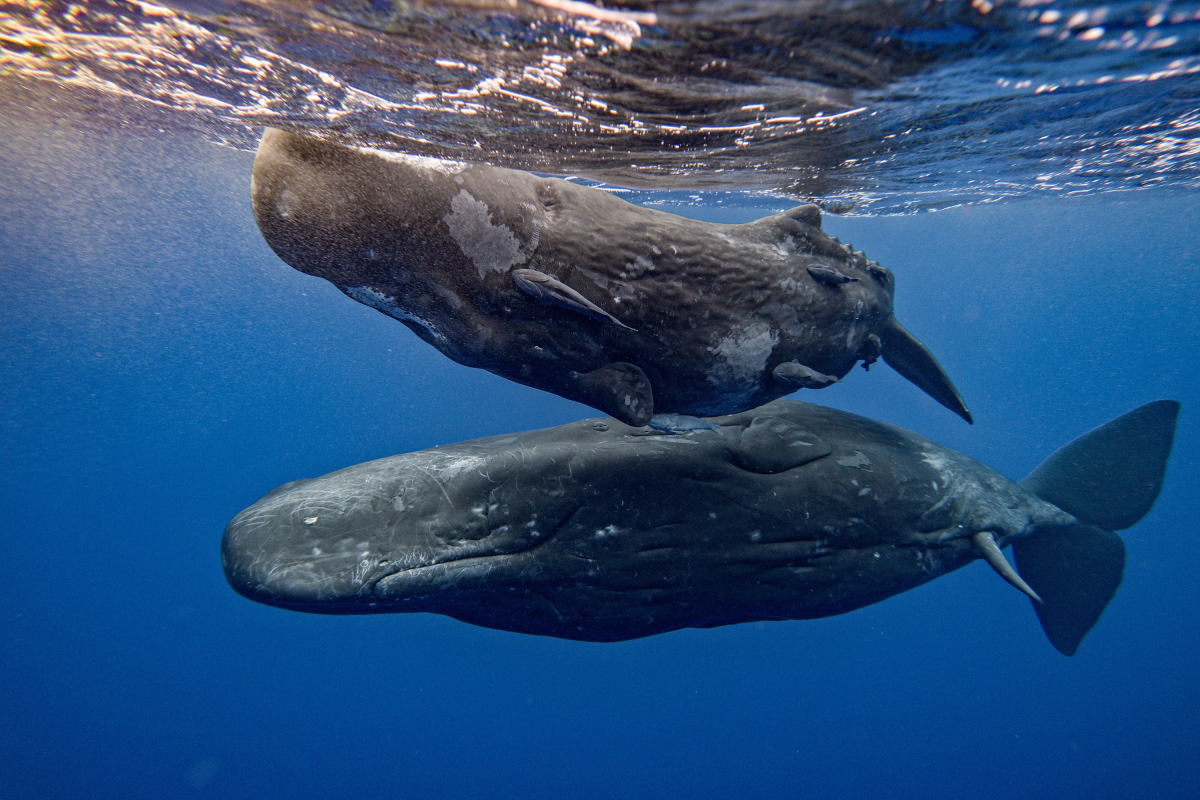
The footage shows whales deliberately pushing and hitting one another with their heads, a behavior previously only known through anecdotal evidence. Surprisingly, the observed headbutting was primarily conducted by sub-adult whales, challenging earlier hypotheses that such interactions were limited to large, mature males competing for dominance.
“It was really exciting to observe this behaviour, which we knew had been hypothesised for such a long time, but not yet documented and described systematically,” said Dr. Alec Burslem, lead author of the study, who is now based at the University of Hawaii.
Historical records detail several instances of sperm whales sinking ships. The whaleship Essex, which sank in 1820 after being struck by a whale, is perhaps the most famous example. First mate Owen Chase described the attack in vivid detail, writing, “His head about half out of the water, and in that way he came upon us, and again struck the ship.” Other vessels, including the Ann Alexander and the Kathleen, were also reportedly lost to similar encounters.
Mocha Dick, a legendary albino sperm whale that roamed the Pacific Ocean in the early 19th century, was notorious for attacking ships. Accounts of Mocha Dick, compiled by American explorer J.N. Reynolds, described the whale as “an old bull whale, of prodigious size and strength… white as wool,” and documented over 100 skirmishes with whalers before the whale was eventually killed in 1838. Reynolds’ account was published in 1839 and is widely considered a key source of inspiration for Melville’s Moby-Dick.
While the purpose of the headbutting behavior remains unclear, researchers speculate it may be linked to social dynamics or even a form of play. Some hypothesize that it could be a manifestation of male-male competition, though the observation that it occurs primarily among younger whales complicates this theory. The potential for damage to the whales’ sensitive head structures, which house organs crucial for echolocation and communication, has led some to suggest that such behavior would not be evolutionarily favored.
Dr. Burslem added, “This unique overhead perspective for observing and documenting near-surface behaviour is just one of the ways drone technology is transforming the study of wildlife biology. It’s exciting to reckon about what as-yet unseen behaviours we may soon uncover, as well how more headbutting observations may help us to shed light on the functions the behaviour may serve.”
Researchers are now seeking additional footage of this behavior to further understand its function and prevalence.