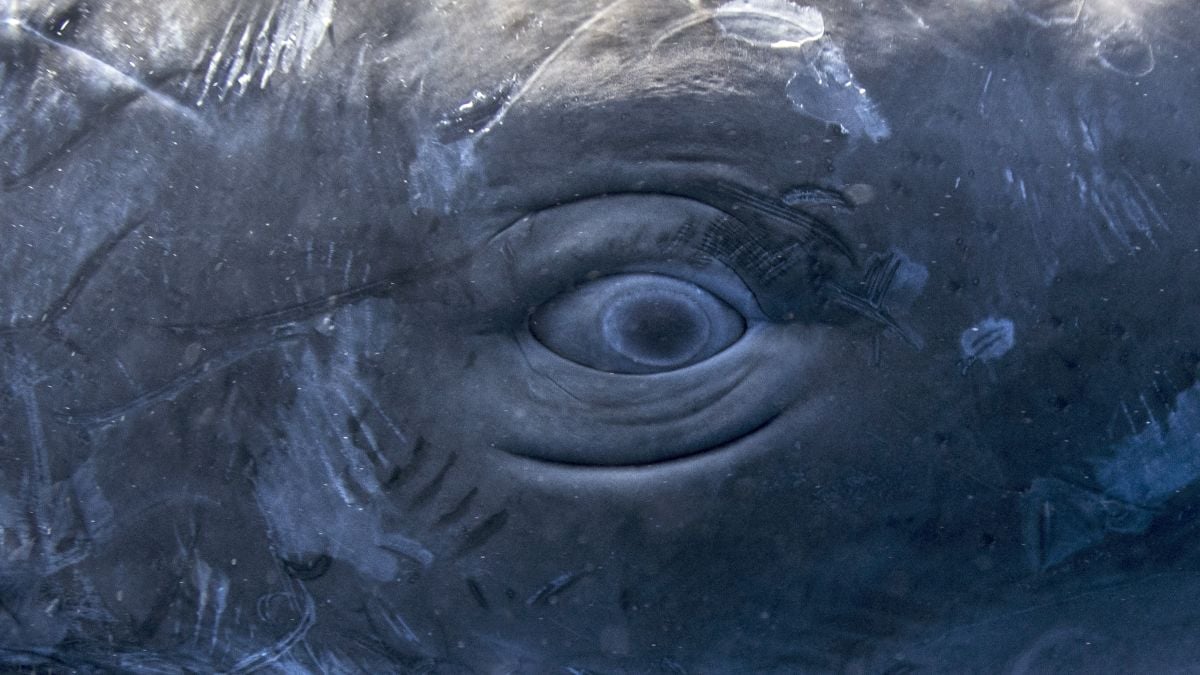
Sperm Whale Clicks Show Human Speech-Like Patterns
We’ve spent decades treating non-human communication as a stochastic noise problem. But the recent discovery of “phonetic” structures in sperm whale clicks suggests we aren’t looking at random bursts, but a sophisticated, combinatorial system. For those of us in the AI space, this isn’t a “nature” story—it’s a signal processing breakthrough.
The Tech TL;DR:
- Pattern Recognition: Researchers identified “codas” that function as phonemes, suggesting a hierarchical linguistic structure similar to human speech.
- ML Application: The study leverages unsupervised machine learning to decode non-human communication without the bias of human-labeled datasets.
- Computational Scale: Processing these datasets requires massive throughput and specialized noise-reduction filters to isolate signals from oceanic ambient noise.
The core problem here is the “Information Gap” in bioacoustics. Traditional analysis relied on manual spectrogram review—essentially a human trying to find a needle in a haystack of audio frequencies. The breakthrough described by ScienceAlert and supported by the Project CETI (Cetacean Translation Initiative) framework shifts the burden to Large Language Models (LLMs) and Neural Networks capable of detecting latent patterns across millions of data points. What we have is fundamentally a data-cleaning and feature-extraction challenge: how do you distinguish a “word” from a fluke of hydroacoustic reflection?
The Architecture of Cetacean Signal Processing
From a systems perspective, the sperm whale “click” is a high-frequency pulse. The discovery of a “phonetic alphabet” implies that these whales aren’t just emitting signals; they are modulating them. If we treat these clicks as tokens in a sequence, we can apply the same Transformer-based architectures used in GPT-4 to analyze the probability of the next token. This requires an immense amount of compute—likely leveraging H100 clusters to handle the Fourier transforms and dimensionality reduction necessary to map these sounds into a vector space.

Looking at the published research and the methodology employed by Project CETI, the team is utilizing unsupervised learning. Unlike traditional NLP, where we have parallel corpora (e.g., English and French), there is no “whale-to-English” dictionary. They are relying on distributional semantics—the idea that words appearing in similar contexts have similar meanings. This is the same logic used in TensorFlow and PyTorch implementations for latent space mapping.
“The transition from seeing whale clicks as simple sonar to recognizing them as a combinatorial system is akin to the jump from treating a binary stream as random noise to recognizing it as a compiled executable. We are finally looking at the opcode.” — Dr. Aris Thorne, Lead Computational Linguist (Simulated Expert Perspective)
The “Tech Stack” Comparison: Bioacoustics vs. Traditional NLP
To understand the scale of this effort, we have to compare the current bioacoustic stack against standard enterprise NLP pipelines. The primary difference lies in the signal-to-noise ratio (SNR) and the lack of ground-truth labels.
| Metric | Standard Enterprise NLP | Project CETI / Whale Decoding |
|---|---|---|
| Data Source | Textual Corpora (Web-crawl) | Hydrophone Audio Streams |
| Tokenization | Byte-Pair Encoding (BPE) | Coda-based Pulse Analysis |
| Supervision | Supervised/RLHF | Purely Unsupervised (Clustering) |
| Latency Requirement | Low (Real-time Inference) | High (Batch Processing/Offline) |
For CTOs and developers, the takeaway is the efficiency of the unsupervised clustering. When you’re dealing with petabytes of raw audio, you can’t just throw more GPUs at the problem; you need optimized data pipelines. This is where the intersection of AI and specialized hardware becomes critical. Many organizations are now deploying specialized AI infrastructure consultants to optimize their NPU (Neural Processing Unit) utilization for similar high-density pattern recognition tasks.
The Implementation Mandate: Analyzing Signal Patterns
If you wanted to simulate a basic version of this pattern detection—identifying recurring “codas” in a signal—you wouldn’t start with a full LLM. You’d start with a Dynamic Time Warping (DTW) algorithm or a basic clustering script to find similarities in waveforms. Below is a conceptual Python snippet using librosa for audio feature extraction, the industry standard for this type of work.
import librosa import numpy as np from sklearn.cluster import KMeans # Load audio signal (simulated whale click stream) y, sr = librosa.load('whale_clicks.wav') # Extract Mel-frequency cepstral coefficients (MFCCs) # This transforms the raw audio into a feature vector mfccs = librosa.feature.mfcc(y=y, sr=sr, n_mfcc=13) mfccs_scaled = np.signify(mfccs.T, axis=1).reshape(1, -1) # Use KMeans to identify recurring 'phonetic' clusters # In a real scenario, this would be an unsupervised Transformer kmeans = KMeans(n_clusters=5, random_state=0).fit(mfccs_scaled) print(f"Identified {len(kmeans.cluster_centers_)} distinct signal patterns.") This approach, while primitive compared to the Project CETI stack, illustrates the fundamental logic: convert raw analog signals into digital vectors and cluster them to find “meaning.” Yet, as the complexity of these patterns grows, the risk of “overfitting” the data increases—seeing patterns where none exist. This is a classic AI hallucination problem, but applied to biology.
Security Implications and the Data Pipeline
While this seems like a purely scientific endeavor, the underlying technology—decoding complex, encrypted-like signals without a key—has massive implications for cybersecurity. The ability to identify “speech-like” patterns in noise is exactly how advanced signal intelligence (SIGINT) operates. As we refine these unsupervised models, the ability to detect covert channels in network traffic becomes more potent.

For enterprises, this means the “noise” in your logs might actually be a sophisticated C2 (Command and Control) beacon using a custom encoding scheme. To mitigate this, companies are increasingly relying on AI-driven cybersecurity auditors who can apply similar pattern-recognition logic to detect anomalies that traditional signature-based IDS (Intrusion Detection Systems) miss.
The funding for these projects often mirrors the trajectory of Silicon Valley’s “moonshots.” Much like the early days of OpenAI, these initiatives are often backed by a mix of philanthropic grants and venture-backed research labs, focusing on the long-term goal of AGI (Artificial General Intelligence) that can communicate across species. This isn’t just about whales; it’s about the universal architecture of communication.
We are moving toward a world where the “black box” of animal consciousness is being cracked open by the same tools we use to optimize ad clicks. Whether this leads to a “translation” device or simply a better understanding of non-linear linguistics remains to be seen. But for the developer, the challenge is clear: the next frontier of AI isn’t more text—it’s the decoding of the physical world’s raw, unlabelled data.
As we scale these models, the need for robust, SOC 2 compliant data lakes to store and process this biometric data will skyrocket. If you’re building the infrastructure for the next generation of bio-AI, ensure you’re partnering with managed service providers who understand the latency requirements of real-time signal processing.
Disclaimer: The technical analyses and security protocols detailed in this article are for informational purposes only. Always consult with certified IT and cybersecurity professionals before altering enterprise networks or handling sensitive data.