
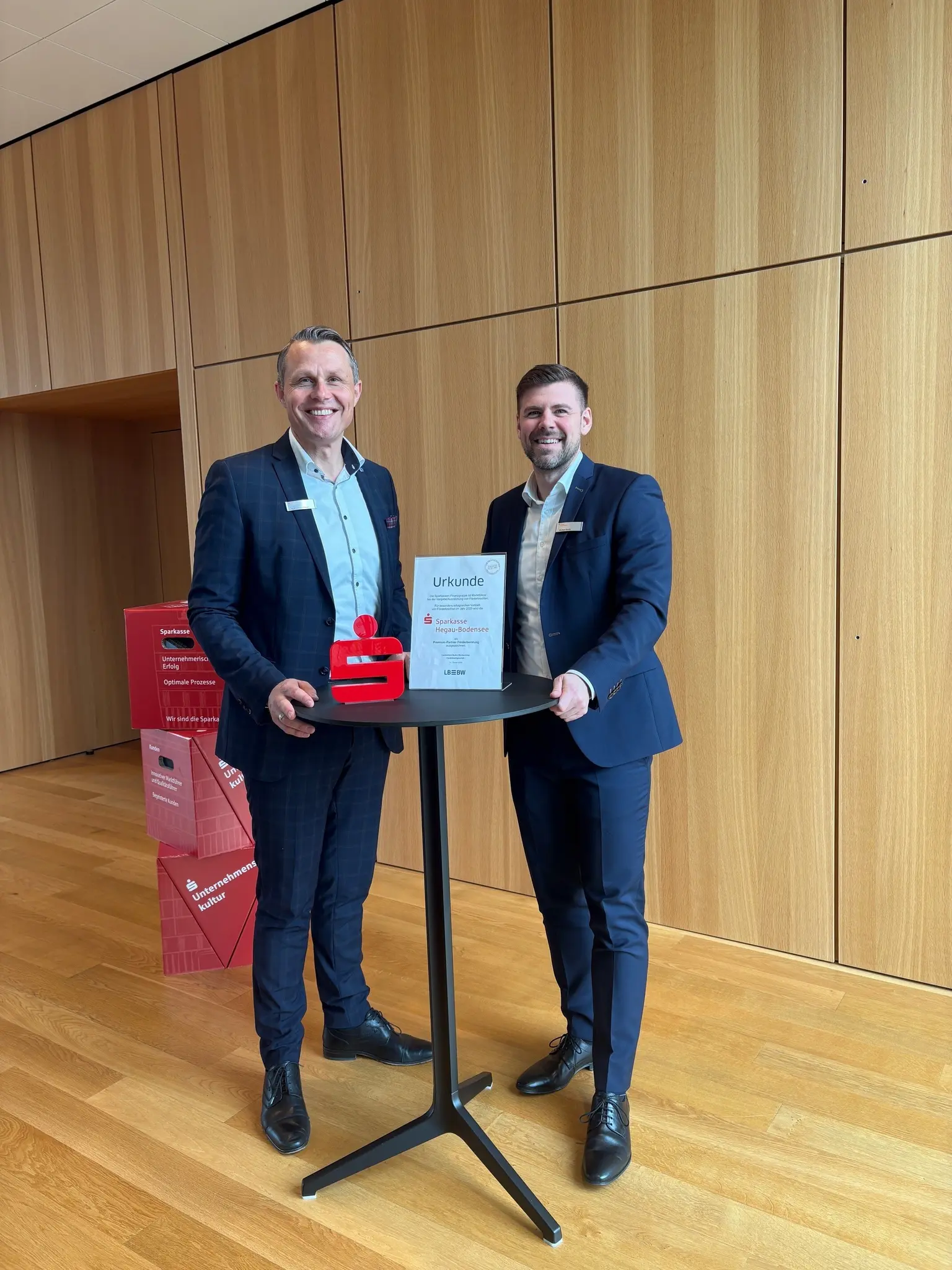
Sparkasse Hegau-Bodensee Confirms Market Leadership In Subsidized Loans 2025
In the Konstanz district, Sparkasse Hegau-Bodensee has solidified its dominance in public financing, deploying €52.6 million in subsidized loans throughout 2025. This volume, heavily weighted toward energy-efficient renovations and commercial digitalization, secures an 82% regional market share for the Sparkassen group. The award from Landesbank Baden-Württemberg (LBBW) underscores a critical shift: liquidity is flowing exclusively toward ESG-compliant assets, leaving traditional capex models obsolete.
The numbers tell a story of aggressive capital allocation. €52.6 million in public financing isn’t just a vanity metric; it represents a significant portion of the region’s deployable liquidity for small and mid-sized enterprises (SMEs). In an environment where commercial lending rates remain sticky, access to KfW and L-Bank subsidized instruments is the difference between solvency and stagnation. Sparkasse Hegau-Bodensee isn’t merely lending; they are acting as a fiscal gatekeeper for the region’s green transition.
The Liquidity Bottleneck in Regional Capex
While the headline figure of €52.6 million is robust, the composition of that debt reveals the true market pressure. Over 26% of these credits were tagged for ecological purposes. This aligns with the broader European Central Bank’s tightening of collateral frameworks, which increasingly favors green assets. For local businesses, the problem is no longer finding capital; it is navigating the labyrinthine compliance requirements attached to state aid.
Most mid-market firms lack the internal treasury infrastructure to manage the reporting burdens associated with Innovationsfinanzierung (Innovation Financing) or Digitalisierungsfinanzierung. This creates a friction point. Companies with viable projects often fail to secure funding simply because their application mechanics are flawed. This gap has spawned a secondary market for specialized financial advisory firms that bridge the divide between corporate strategy and bureaucratic eligibility.
The commercial sector saw a pivot toward process automation and AI integration. As labor costs in the DACH region continue to climb, subsidized debt for digital transformation has become a primary lever for margin expansion. However, securing these funds requires a level of documentation that rivals an IPO prospectus.
Market Share Dominance and Competitive Landscape
The 82% market share held by the Sparkassen-Finanzgruppe in Baden-Württemberg housing promotion indicates a near-monopoly on retail and SME subsidized lending. Competitors are forced into niche high-yield segments, leaving the bulk of safe, state-backed volume to the public banks. The following breakdown illustrates the volume distribution based on L-Bank data and regional fiscal reports:
| Financing Segment | 2025 Volume (Sparkasse Hegau-Bodensee) | Primary Driver | Risk Profile |
|---|---|---|---|
| Residential Construction | ~€28.4 Million (Est.) | Energy-efficient new builds & renovation | Low (State Guaranteed) |
| Commercial Modernization | ~€14.2 Million (Est.) | AI integration & Process automation | Medium (Project Dependent) |
| Ecological/Sustainability | ~€13.7 Million (26% of Total) | EU Taxonomy Compliance | Low to Medium |
| Total Deployed Capital | €52.6 Million | Public Subsidy Mix | Aggregate Low |
This concentration of volume suggests that for any business in the Hegau-Bodensee region looking to expand, the Sparkasse is not just an option; it is the primary infrastructure. Yet, reliance on a single channel creates systemic risk. If policy shifts or if the bank’s risk appetite tightens, the region’s growth engine stalls.
The Compliance Premium
“We are seeing a bifurcation in the market,” notes Dr. Elias Thorne, a senior analyst covering DACH regional banking at EuroFiscal Insights. “Banks like Sparkasse Hegau-Bodensee are winning because they have absorbed the compliance cost. For the borrower, the interest rate is low, but the ‘compliance premium’ in terms of time and administrative overhead is skyrocketing. That is where the real value add lies for external consultants.”
“The interest rate is low, but the ‘compliance premium’ in terms of time and administrative overhead is skyrocketing. That is where the real value add lies for external consultants.”
Thorne’s assessment highlights a critical B2B opportunity. As the complexity of KfW funding guidelines evolves, the demand for corporate law firms specializing in public subsidy law is surging. These entities do not just draft contracts; they engineer the financial structure of a project to ensure it survives the audit phase three years down the line.
The focus on “energetic Sanierungsmaßnahmen” (energy renovation measures) also signals a long-term play on real estate valuation. Properties that do not meet these efficiency standards will face a “brown discount” in valuation, making access to these specific loans a defensive strategy for asset holders. This has led to increased activity among commercial real estate services that specialize in retrofitting analysis and green certification.
Strategic Implications for Q1 2026
Looking ahead, the LBBW’s recognition of Sparkasse Hegau-Bodensee as a “Premium Partner” is more than a plaque on the wall. It signals preferential access to future liquidity tranches. In a credit-constrained environment, preferential access is the ultimate moat. For regional competitors and non-bank lenders, the message is clear: compete on speed and flexibility, because you cannot compete on the cost of capital.
The trajectory for 2026 suggests that public financing will become even more granular. We expect to see targeted instruments for specific supply chain bottlenecks and cybersecurity upgrades. Businesses that treat these loans as simple cash injections will fail. Those that treat them as strategic partnerships—leveraging the bank’s expertise to de-risk their own balance sheets—will capture the alpha.
The market has spoken. Capital is available, but it is conditional. The winners in the next fiscal cycle will be those who can navigate the bureaucracy as skillfully as they manage their P&L. For those unable to internalize this function, the directory of vetted B2B partners remains the essential toolkit for bridging the gap between ambition and execution.