Spanish Government Clashes Over Intelligence Warnings During Ceuta Migration Crisis
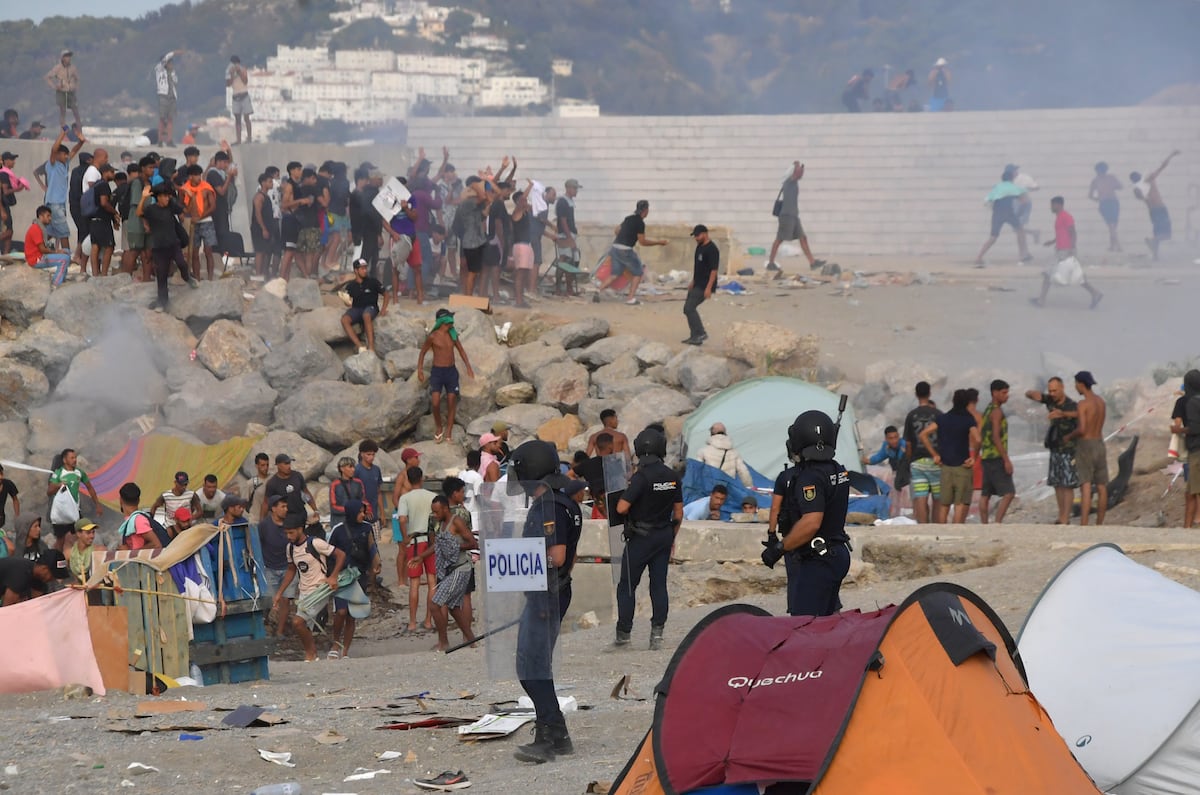
Margarita Robles acknowledged in the Spanish Congress that the government acted late during the mass migration crisis in Ceuta, while maintaining a direct public dispute with Fernando Grande-Marlaska over whether the National Intelligence Center (CNI) issued verbal warnings a day prior to the border crossings, according to reporting by EL PAÍS, El Mundo, elDiario.es, and La Vanguardia.
Conflicting Official Timelines Emerge in Madrid
The political fallout from the border arrivals intensified as cabinet ministers offered divergent accounts of what state security apparatuses knew before thousands of individuals crossed into the autonomous city. Margarita Robles stated in parliamentary sessions that the CNI had verbally informed the government one day prior to the mass surge. That assertion directly collided with positions held by the Ministry of the Interior.
According to elDiario.es, Moncloa flatly denied that any advance warnings reached members of the government from the CNI, with officials suggesting Robles simply “will not have explained herself well.” Meanwhile, the Government Delegation in Ceuta corroborated the Interior Ministry’s stance, formally contradicting Robles by denying receipt of any prior alerts concerning the impending migration movement, as reported by El Mundo.
https://x.com/el_pais/status/2092231478910312579
La Vanguardia noted that the public display of conflicting versions between Defense and Interior laid bare deep operational friction within the executive branch as officials scrambled to manage the political consequences of the border breach.
For municipal authorities, local businesses, and residents grappling with the sudden strain on public infrastructure, navigating conflicting institutional narratives adds an extra layer of uncertainty. When administrative frameworks stutter under sudden logistical pressure, municipal leaders often rely on structured legal frameworks and vetted administrative channels.
Local Rejection of Political Pacts and Regional Fallout
While ministers debated timelines in Madrid, local political actors in Ceuta rejected centralized overtures for broad bipartisan pacts. The local branch of the Partido Popular (PP) rebuffed a proposal for a grand pact put forward by the local PSOE chapter. The PP insisted that “the only pact possible is that of returns,” while accusing socialists of attempting to deflect responsibility away from Pedro Sánchez’s central administration.
The local Socialist leadership had previously called for a comprehensive agreement involving the Spanish government, the autonomous city, and local socioeconomic stakeholders to address long-term impacts on public safety, community coexistence, and municipal services. The PP countered that the socialist initiative was designed to shield the national executive from accountability, specifically criticizing Antonio Coronil for directing grievances at Ceuta’s president, Juan Vivas, rather than demanding immediate solutions from the government of Pedro Sánchez.
The strain on municipal services and emergency safety nets has left municipal agencies working beyond standard capacities. Restoring operational stability across regional facilities requires immediate logistical intervention.
International Reactions and European Border Security Stances
The humanitarian and diplomatic dimensions of the crisis drew reactions across Europe, as international bodies and foreign officials weighed in on border integrity and humanitarian protocols. According to OKDIARIO, European Commissioner for Home Affairs and Migration Magnus Brunner affirmed that Spain retains the full backing of the European Union in handling the border crisis, emphasizing that European external borders demand a decisive, rapid, and unified response.

At the same time, the Moroccan Human Rights Association (AMDH) issued a harsh critique, pointing to domestic Moroccan policies in the northern region as the root cause of the mass displacement. The NGO explicitly held the Moroccan state politically responsible for the conditions leading up to the incursions, demanding a transparent investigation into the tragedy, which Spanish authorities confirmed resulted in 67 deaths primarily due to drowning.
European capitals also calibrated their diplomatic messaging. German Vice-Chancellor Lars Klingbeil called for mutual solidarity and respect toward Spain, characterizing the mass crossings across the Tarajal breakwater as an explicit attempt to divide European political consensus on migration management. Meanwhile, maritime enforcement agencies remained on high alert; the Civil Guard in Ceuta intercepted and detained individuals attempting illegal maritime transfers across the Strait using small vessels and water scooters, routing detainees toward judicial proceedings while preparing irregular arrivals for repatriation.
As diplomatic negotiations and repatriation efforts continue, the long-term socioeconomic and legal ramifications for the autonomous city remain acute. Entities tasked with managing institutional continuity and public safety must maintain rigid compliance standards.