Spanish Cruise Passengers Disembark Amid Hantavirus Outbreak
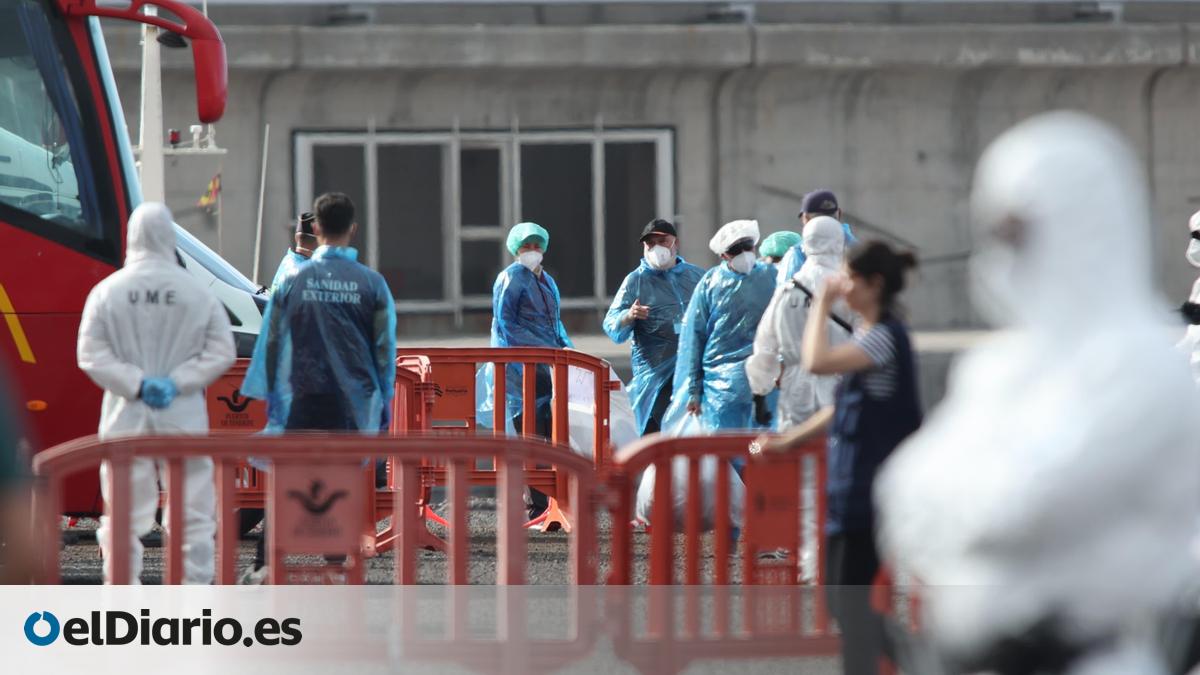
Spanish passengers from the MV Hondius cruise ship disembarked at Tenerife’s Granadilla port on May 10, 2026, following a hantavirus outbreak. Under strict security and health protocols, the group was transported to Madrid for mandatory quarantine and serological testing at the Hospital Central de la Defensa Gómez Ulla.
The arrival of the MV Hondius in the Canary Islands was less a homecoming and more a high-stakes medical operation. For nearly two weeks, passengers existed in a state of maritime limbo, suspended between the fear of an invisible pathogen and the desire for solid ground. When the vessel finally anchored, the atmosphere was charged with a palpable tension between regional autonomy and national health mandates.
The conflict peaked early on Sunday morning. Fernando Clavijo, the President of the Canary Islands, fought a public and political battle to prevent the ship from docking, attempting to block the vessel from anchoring in the port entirely. His concerns reflected a broader regional anxiety: the risk of introducing a rare, high-mortality virus into a tourist-dependent archipelago.
The “Sterile Bridge”: Logistics of a Controlled Exit
At approximately 9:30 AM local time, the first of the Spanish nationals began their transition to shore. The process was designed to be a closed loop, ensuring zero contact with the local population of Tenerife. Drone footage released by the Guardia Civil reveals a scene of clinical precision: passengers, clutching small bags of essential belongings, were shuttled from the cruise ship to auxiliary vessels using masks and full personal protective equipment (PPE).
Minister of Health Mónica García, speaking from the port of Granadilla, emphasized that the mechanism was functioning normally. Before any passenger stepped off the ship, teams from Exterior Health conducted epidemiological tests to ensure every individual was asymptomatic. While no passengers currently show symptoms, they are legally classified as “contacts” rather than “suspects.”
The evacuation occurred in two waves—the first consisting of eight people and the second of six. From the port, they were whisked away by the Military Emergencies Unit (UME) in a secure convoy to Tenerife South Airport. By noon, they were airborne, bound for Madrid.
For those managing the fallout of such an event, the logistical complexity is staggering. Coordinating between military transport, aviation authorities, and specialized medical facilities requires the precision of [Public Health Consultants] who specialize in biocontainment and emergency response.
The Biological Clock: Understanding the Andes Virus
The primary antagonist in this crisis is the Andes virus, a specific strain of hantavirus. While most hantaviruses are contracted via rodent excreta, the Andes strain is notoriously dangerous because of its potential for person-to-person transmission. This characteristic transforms a localized zoonotic event into a potential public health emergency.
Diana Rojas, the World Health Organization’s (WHO) chief of high-impact emergencies, warned from Tenerife that the virus possesses an unusually long incubation period.
“We cannot be sure that they will not develop symptoms until 42 days have passed,”
Rojas noted that while the WHO considers this Sunday as “Day Zero,” other nations are calculating the window based on when the last confirmed case left the ship. This discrepancy in timing creates a significant gap in international health surveillance, making the role of International Health Regulations (IHR) critical in synchronizing global responses.
The decision to bypass the pandemic hospital associated with the administration of Isabel Díaz Ayuso in favor of the Hospital Central de la Defensa Gómez Ulla underscores the need for highly specialized, military-grade isolation facilities. Patients there will undergo serological testing to detect antibodies and remain under strict quarantine.
Legal Mandates and the Quarantine Conflict
The transition from a ship to a hospital is not merely a medical move; it is a legal one. The Spanish judiciary has already ratified a mandatory quarantine for these passengers for at least seven days, pending a repeat PCR test. This move balances the individual’s right to movement against the collective right to health, a tension often litigated under the World Health Organization guidelines and national statutes.

Legal experts suggest that forced isolations of this nature often lead to protracted litigation regarding compensation and civil liberties. As the state exercises its police power to protect the public, affected travelers often seek the guidance of [Maritime Law Experts] to navigate the intersection of cruise line liability and sovereign health mandates.
Virginia Barcones, the Secretary General of Civil Protection and Emergencies of the Ministry of the Interior, remained firm on the safety of the operation, stating that the measures adopted eliminated any possibility of contagion to the Canary Island population.
A Systemic Warning
The MV Hondius incident is a case study in the fragility of global mobility. When a rare pathogen enters the cruise industry—a sector characterized by high-density living and international transit—the response must be instantaneous, and absolute. The reliance on the UME and the Gómez Ulla Hospital highlights a shift toward “securitizing” health, where medical crises are treated with military precision.
As we move further into an era of emerging zoonotic threats, the ability to execute “sterile” evacuations will become a standard requirement for maritime operators. Those who fail to prepare for these contingencies face not only catastrophic health outcomes but crippling legal liabilities. For organizations looking to fortify their emergency protocols, partnering with [Medical Quarantine Specialists] is no longer optional; it is a prerequisite for survival in a globalized world.
The 42-day countdown has begun. While the passengers are off the ship, the true test of the Spanish health system’s containment strategy will not be known until the biological clock finally runs out.