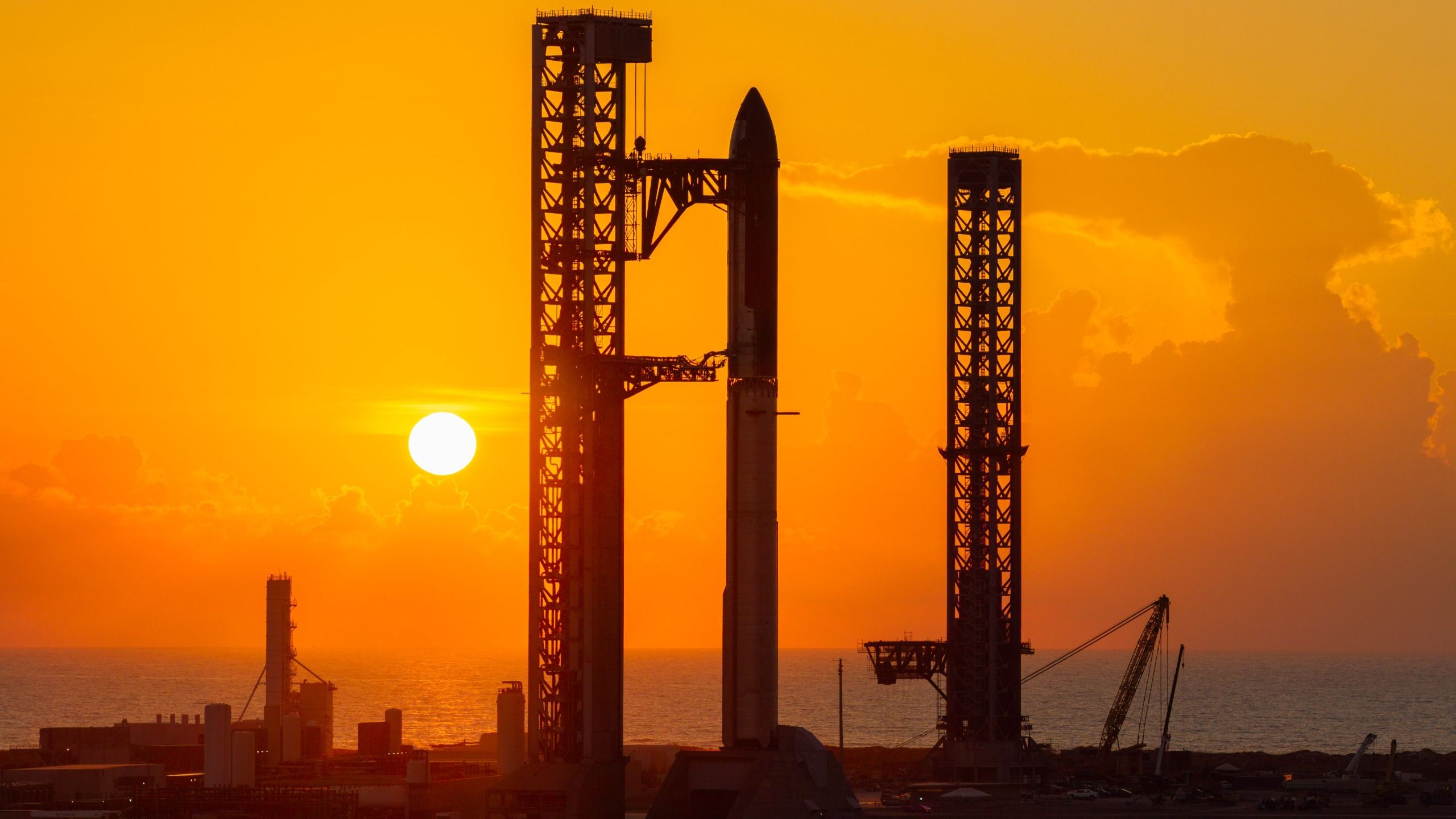
SpaceX to launch Starship on first orbital flight on September 28
SpaceX Prepares Starship Megarocket for First-Ever Orbital Flight on September 28
SpaceX is preparing to launch its massive Starship rocket on Monday, September 28, 2026, targeting an orbital trajectory for the first time in its testing history. The 14th test flight of the 407-foot-tall vehicle is scheduled to lift off from the company’s Starbase facility in South Texas during a 75-minute window opening at 8:15 a.m. EDT (1215 GMT; 7:15 a.m. local Texas time), according to launch schedules provided by SpaceX.
Quick Facts for Mission Control and IT Operations
- Launch Window: Monday, September 28, 2026, opening at 8:15 a.m. EDT from Starbase, Texas.
- Mission Profile: Flight 14 will deploy 26 next-generation Starlink Version 3 satellites into low Earth orbit before executing a Pacific Ocean splashdown near Chile.
- Vehicle Scale: The fully stacked V3 configuration stands at 407 feet, comprising the 236-foot Super Heavy booster and the 171-foot Ship upper stage.
Flight 14 Architecture and Orbital Parameters
Standing at Pad 2 in South Texas, the 14th test flight of SpaceX’s flagship vehicle represents a structural shift from previous suborbital profiles. Up to this point, Starship has completed 13 test missions since April 2023, none of which achieved full orbital velocity. Flight 14 aims to change that operational milestone by sending the 171-foot-tall Ship upper stage into low Earth orbit.
Once aloft, the spacecraft is scheduled to deploy 26 next-generation Starlink Version 3 internet satellites. These payloads mark the initial deployment phase for a planned megaconstellation that tech entrepreneur Elon Musk has stated will eventually scale to 100,000 spacecraft in low Earth orbit, supplementing the roughly 11,000 operational satellites currently in orbit. After completing six complete planetary orbits, the upper stage will initiate a controlled descent toward a splashdown in the Pacific Ocean off the coast of Chile, nearly 10 hours after liftoff. This contrasts sharply with prior suborbital flights, which capped operations at a maximum of 65 minutes with splashdowns targeted in the Indian Ocean off Western Australia.
Booster Separation and Launch Infrastructure Realities
The Super Heavy booster will follow a compressed timeline compared to the upper stage. Scheduled to separate shortly after liftoff, the booster will execute a controlled splashdown in the Gulf of Mexico approximately seven minutes into the mission, replicating the telemetry milestones of prior test flights. While SpaceX has successfully demonstrated the mechanical retrieval of three Super Heavy boosters using the launch tower’s “chopstick” arms at Starbase, catch operations for the Ship upper stage have not yet been attempted and will be deferred to a later flight test.
Beyond vehicle recovery, operational readiness requires clearing several engineering hurdles. Future missions beyond Earth orbit demand multiple rendezvous sequences with orbiting “tanker” configurations to replenish propellant reserves. SpaceX has not yet demonstrated off-Earth propellant transfer protocols in flight, making it a critical capability to validate before interplanetary deployments. The upper stage also requires integration of a fully functional life-support system to support crewed operations. NASA has selected the Ship design to serve as the inaugural crewed lunar lander for the Artemis program, targeting a human lunar landing during the Artemis IV mission in 2028.
System Telemetry and Execution Protocols
For engineers and aerospace observers monitoring the telemetry feeds, live coverage of the launch window will stream via SpaceX’s official web portal starting approximately 30 minutes prior to liftoff. Because the mission duration spans nearly ten hours of orbital transit, ground stations and tracking networks will maintain extended telemetry monitoring throughout the multi-orbit sequence.

# Example telemetry monitoring loop for orbital tracking
import time
import requests

def track_starship_telemetry(api_endpoint):
    active = True
    while active:
        response = requests.get(api_endpoint)
        data = response.json()
        if data.get("status") == "ORBIT_ACHIEVED":
            print("Telemetry confirmed: Starship reached target altitude.")
            active = False
        else:
            print("Monitoring flight phase: Ascent in progress...")
            time.sleep(10)

# Execute tracking sequence during launch window
# track_starship_telemetry("https://api.spacex.com/v4/launches/latest")
Disclaimer: The technical analyses and security protocols detailed in this article are for informational purposes only. Always consult with certified IT and cybersecurity professionals before altering enterprise networks or handling sensitive data.