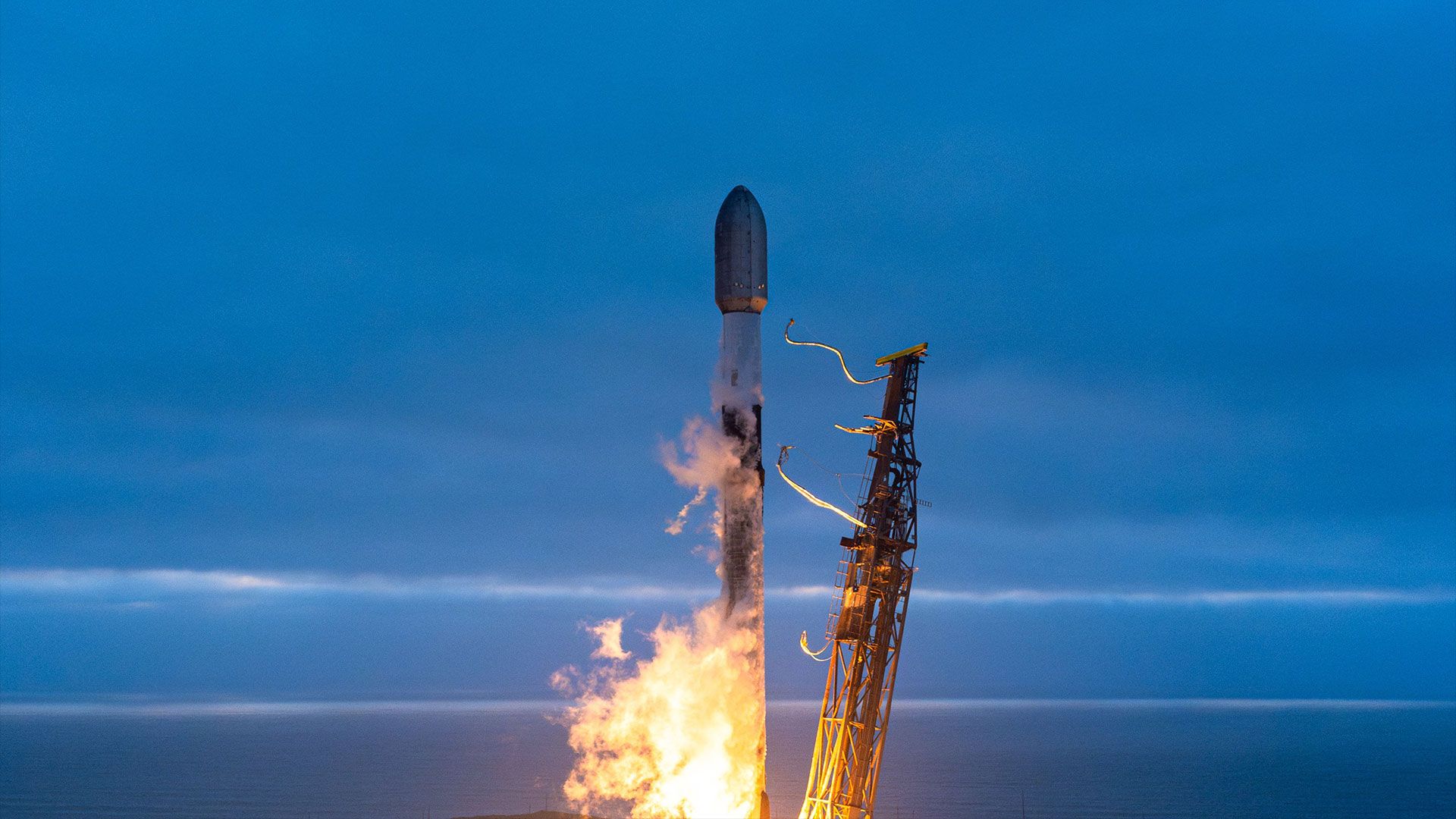
SpaceX Launches 24 Starlink Satellites via Falcon 9 from Vandenberg
SpaceX launched 24 Starlink satellites into orbit using a Falcon 9 rocket from Vandenberg Space Force Base in California on July 2, 2026, according to reports from Spaceflight Now. The mission continues the rapid expansion of the Starlink constellation to increase global broadband capacity and reduce signal latency for end-users.
- Deployment: 24 new satellites added to the Starlink LEO (Low Earth Orbit) shell.
- Infrastructure: Launch executed via Falcon 9 from Vandenberg SFB, utilizing established reusable booster recovery protocols.
- Impact: Increased orbital density translates to higher throughput and lower packet loss for enterprise satellite backhaul.
For CTOs and network architects, this isn’t just about another launch; it is about the physics of the “last mile” in remote connectivity. The primary bottleneck for satellite internet has always been the round-trip time (RTT) associated with Geostationary (GEO) satellites. By saturating LEO shells, SpaceX is effectively shortening the physical distance data must travel, pushing latency closer to terrestrial fiber levels. However, as the constellation grows, the complexity of hand-offs between satellites increases, requiring sophisticated software-defined networking (SDN) to maintain session persistence.
How the Falcon 9 Deployment Impacts Network Latency
The deployment of 24 additional nodes reduces the distance between the user terminal and the nearest active satellite. According to technical specifications available via Starlink’s official portal, LEO satellites orbit at altitudes significantly lower than traditional satellites, which allows for latency often below 40ms. This is critical for real-time applications such as VoIP, high-frequency trading, and remote server management.
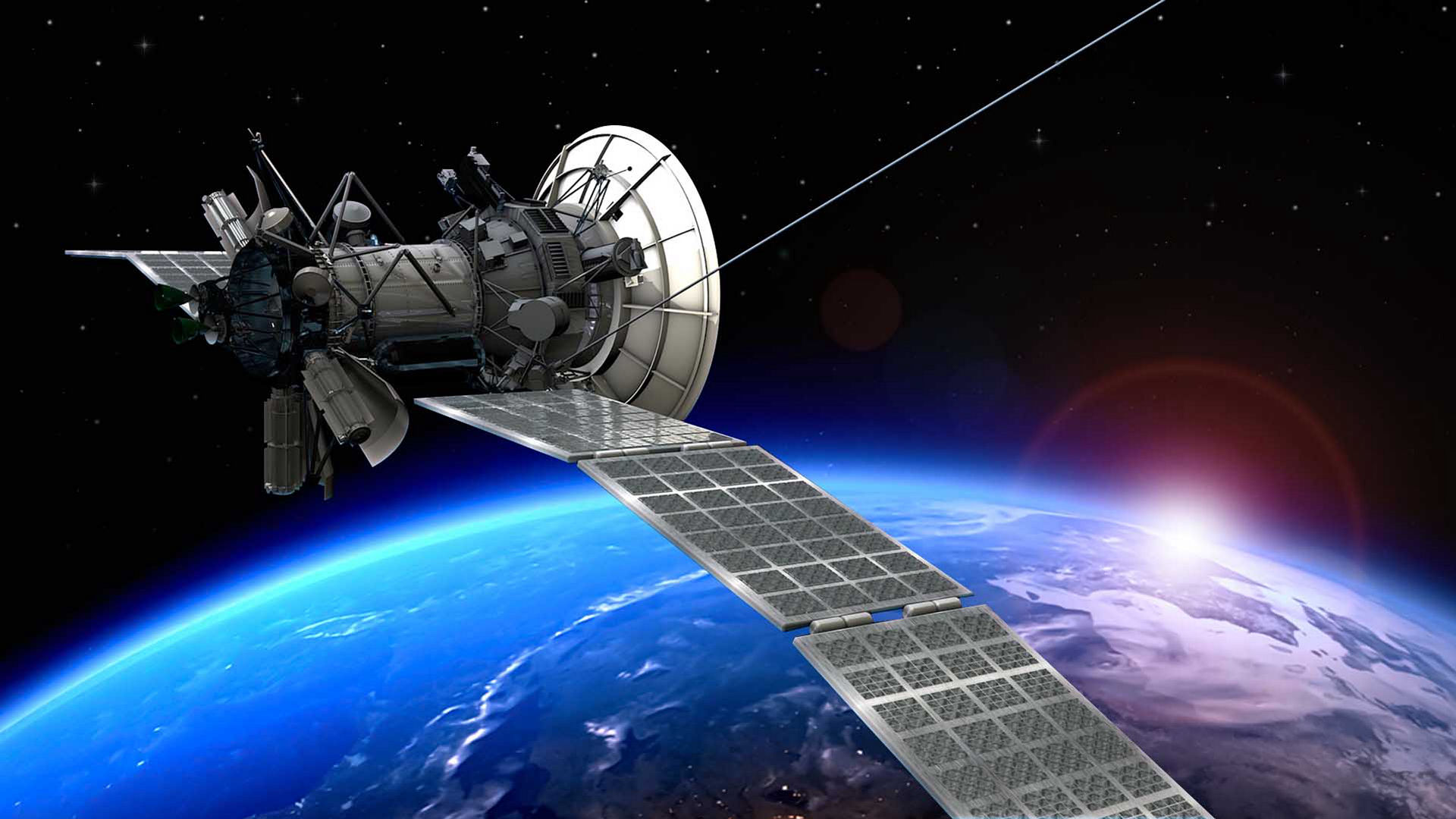
When enterprise environments scale these connections, they often encounter “jitter” during satellite hand-overs. To mitigate this, many firms are deploying [Managed Service Providers] to optimize their edge routing and ensure that failover mechanisms are seamless. The integration of these satellites into the existing mesh network requires precise orbital insertion to avoid signal interference and maximize coverage overlap.
LEO vs. GEO Infrastructure Comparison
| Metric | Starlink (LEO) | Traditional (GEO) | Technical Impact |
|---|---|---|---|
| Altitude | ~550 km | ~35,786 km | Drastic reduction in propagation delay. |
| Latency | 25ms – 50ms | 500ms – 700ms | Enables real-time SSH and API calls. |
| Coverage | Global Mesh | Fixed Point | Requires constant satellite hand-offs. |
The Engineering Reality: Managing Orbital Congestion
Scaling a constellation to thousands of units introduces a massive coordination problem. SpaceX utilizes automated collision avoidance systems, but the sheer volume of hardware in LEO increases the risk of “Kessler Syndrome”—a cascade of orbital debris. From a systems architecture perspective, this is a reliability problem. If a primary satellite node fails or is destroyed, the network must dynamically reroute traffic via inter-satellite laser links (ISLs).
For developers testing connectivity in remote regions, verifying the connection stability can be done via standard CLI tools. To check for packet loss and latency spikes during a Starlink session, the following command is standard for diagnosing the route to a known endpoint:
# Trace the network path to verify latency hops
mtr -rw google.com

# Test for packet loss over a 100-packet sample
ping -c 100 8.8.8.8 | grep "packet loss"
As these networks become the backbone for critical infrastructure, the security of the ground-to-space link becomes paramount. The potential for signal jamming or “man-in-the-middle” attacks on satellite telemetry means that corporations are now hiring [Cybersecurity Auditors] to perform rigorous penetration testing on their satellite-linked endpoints, ensuring that end-to-end encryption is maintained from the dish to the data center.
What Happens to the Falcon 9 Booster?
Following the delivery of the 24 satellites, the Falcon 9 first stage is designed for recovery. According to SpaceX’s flight data, the company employs autonomous spaceport drone ships (ASDS) or landing zones to retrieve boosters. This iterative reuse of hardware is what allows for the high cadence of launches seen at Vandenberg SFB. By treating rocket boosters as reusable assets rather than expendable hardware, the cost per kilogram to orbit has dropped precipitously, accelerating the deployment of the Starlink shell.

This rapid deployment cycle mirrors the continuous integration/continuous deployment (CI/CD) pipelines used in software engineering. SpaceX is essentially “shipping” hardware updates to the orbital environment in weekly sprints. For the IT sector, this means that satellite internet is no longer a static utility but a dynamic, evolving platform. Companies requiring high-availability uptime are increasingly integrating [Network Infrastructure Consultants] to build hybrid cloud architectures that blend Starlink with terrestrial LTE/5G and fiber backups.
The trajectory of this technology points toward a fully seamless global mesh. As the number of satellites increases, the reliance on ground stations (gateways) will decrease, with more traffic routed directly via lasers in the vacuum of space. This removes the bottleneck of terrestrial geography and puts the focus squarely on the efficiency of the onboard processing units and the robustness of the encryption protocols protecting the data stream.
Disclaimer: The technical analyses and security protocols detailed in this article are for informational purposes only. Always consult with certified IT and cybersecurity professionals before altering enterprise networks or handling sensitive data.